This is a blog version of a Facebook posting from April 6, 2025. The content was expanded on October 30, 2026.
Looking back at the Radiator Specialty Company explosion and fire in Indian Springs, NC, in Union County, on November 26, 1980.
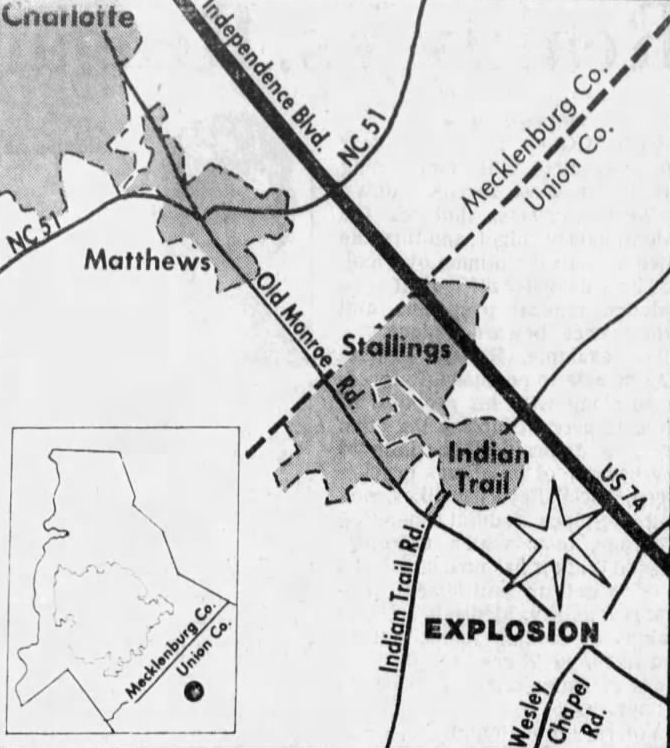
Was a Wednesday morning. The plant was located off US 74, about four miles from the Mecklenburg County line. The company dated to 1924, originating in Charlotte. The plan opened in 1972.
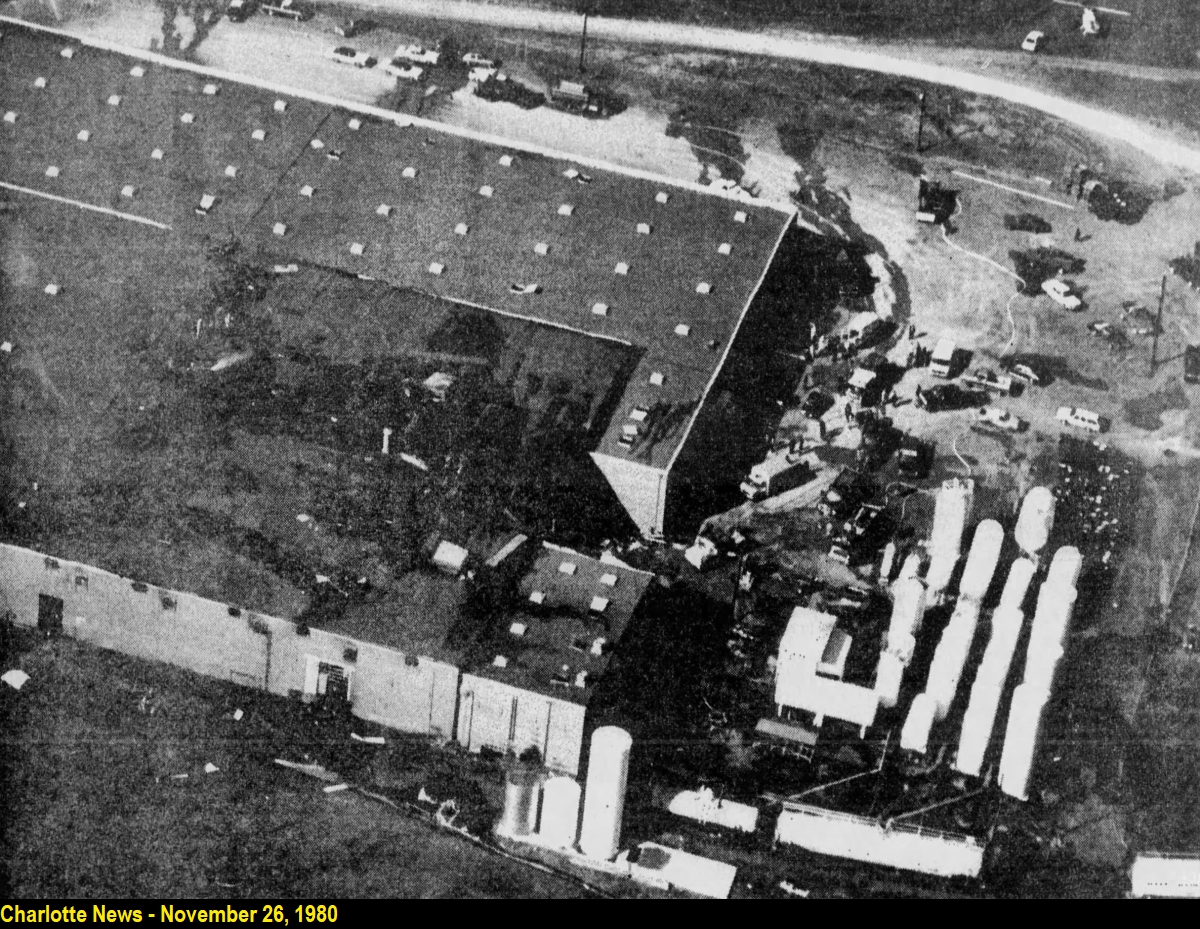
The facility included the main building, a one-story brick structure with 300,000 square-feet, plus bulk propane storage tanks.
About 150 workers were inside. And, that day, they were to have meal celebrating Thanksgiving.
Also, on September 30, the plant had suffered an explosion that injured two people. Subsequently, employees had been told by company officials to ignore the alarms that sounded for gas leaks. And those alarms had been sounding frequently, for several weeks.
That morning, around 8:00 a.m., six workers later said they heard at least one gas alarm go off. And when they asked their supervisors if they should leave the building, they were told to stay in the building.
One hour later, just after 9:00 a.m., an explosion occurred. The blast was felt up to ten miles away. It was the first in a chain of four explosions.
It was later learned that the explosion was caused by an apparent electrical short from a measuring scale on an assembly line. At the same time, there was a gas leak inside the plant. The spark from the short ignited the concentrated fumes.
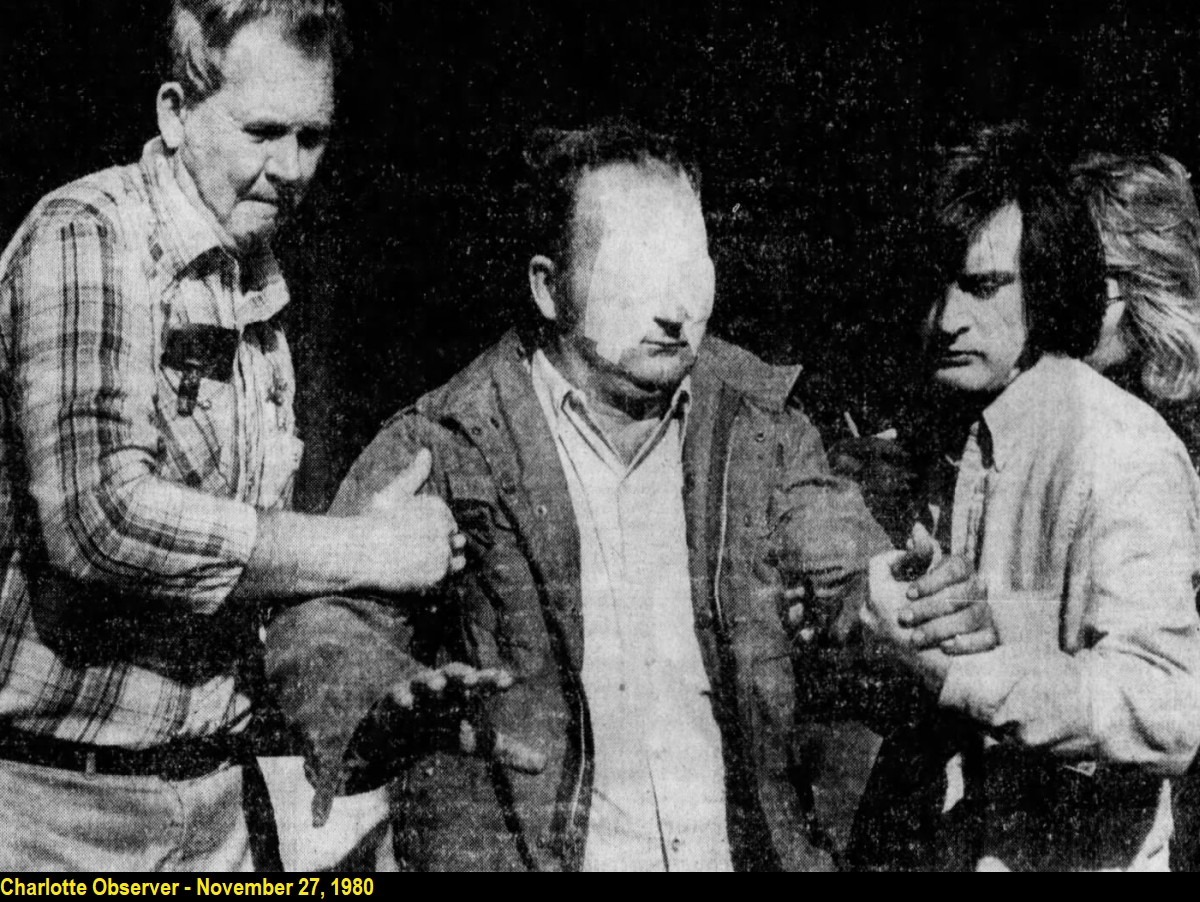
Many workers ran from the building with their clothes and hair on fire.
Flames Through The Roof
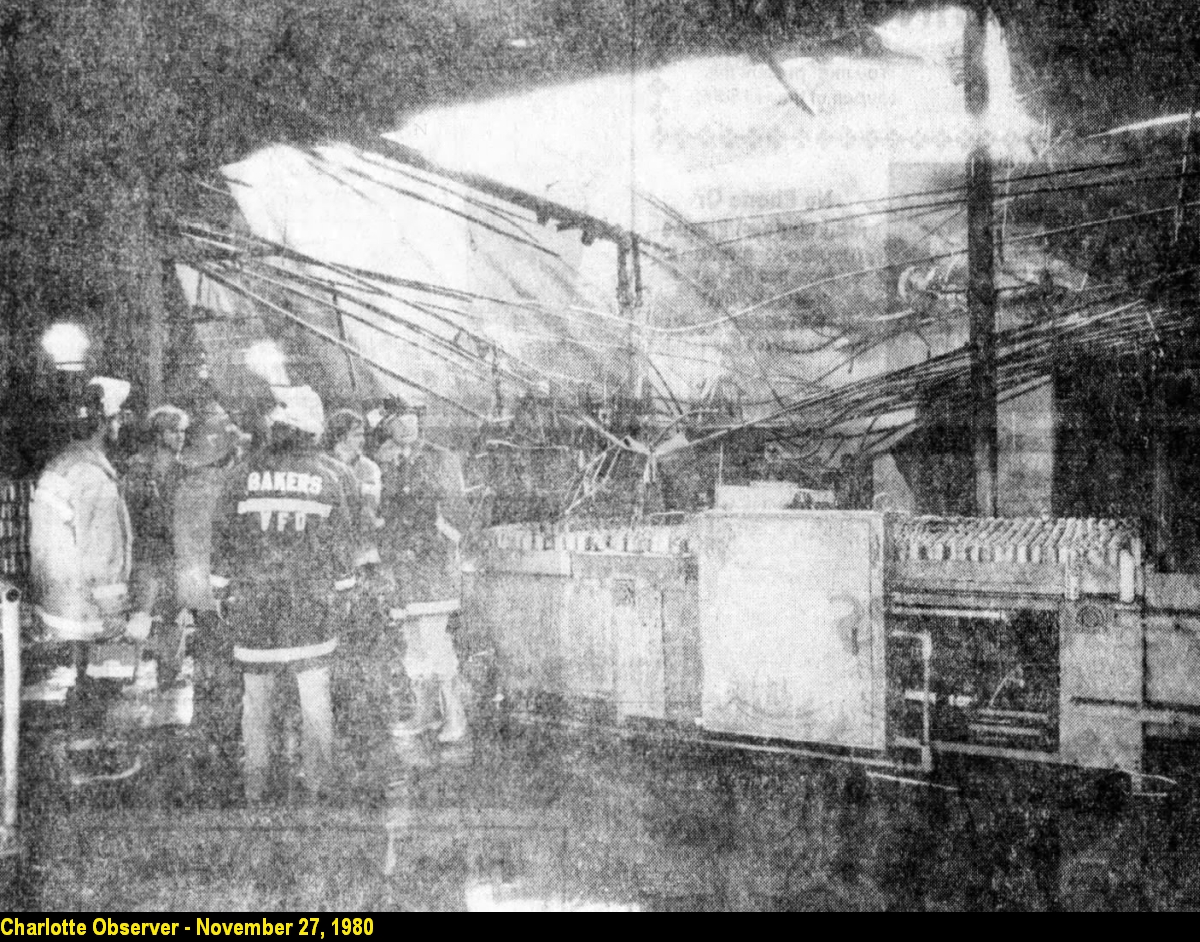
The multi-agency response included Indian Trail, Bakers, Hemby Bridge, Unionville, Stallings, and Wesley Chapel fire departments, along with rescue units from both Union and Mecklenburg counites.
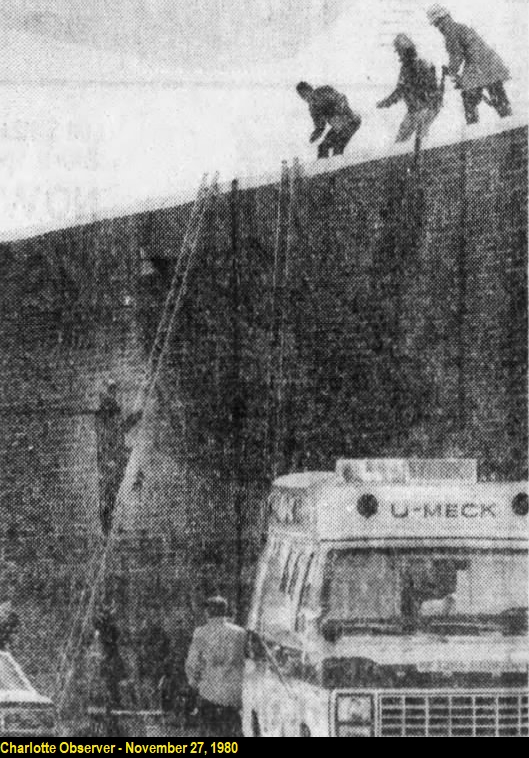
At least 20 tanker fire trucks–more likely, 20 pumpers or tankers–and 75 fire and rescue personnel responded to the alarm. Indian Trail, Bakers, Hemby Bridge, Unionville, Stallings, and Wesley Chapel fire departments responded, along with rescue units from both Union and Mecklenburg counties.
Stallings Assistant Fire Chief Rick Squires was one of the first firefighters to arrive at the plant, a one-story brick building with 300,000 square feet. He found flames coming from the roof and through the door. There were also 75 to 100 people running from the building.
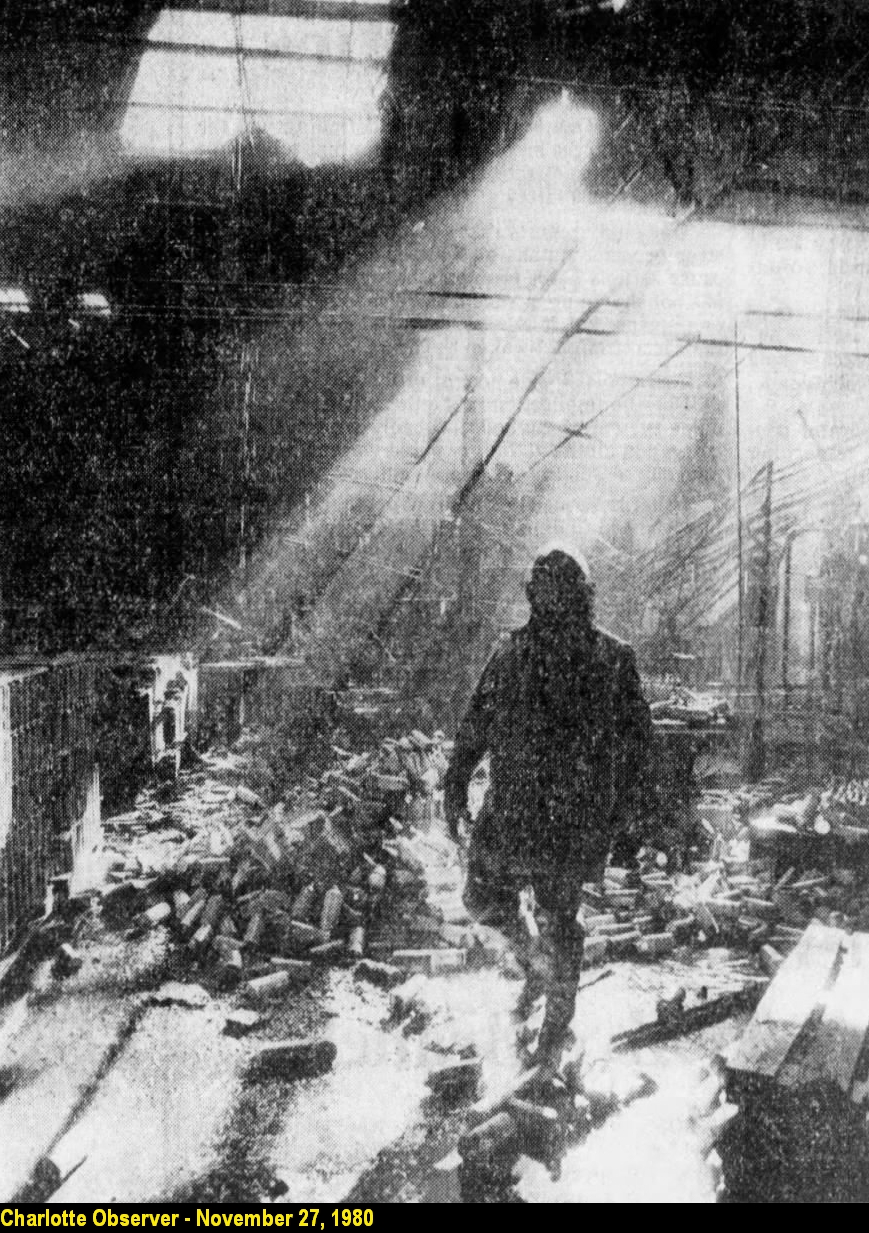
Though flames spread rapidly through the building, they were quickly extinguished after firefighters arrived. The heavy smoke, however, hampered efforts by rescuers to search the rubble for injured workers.
Some of the firefighters entered the building without breathing apparatus and were later treated for smoke inhalation.
Some Victims Airlifted
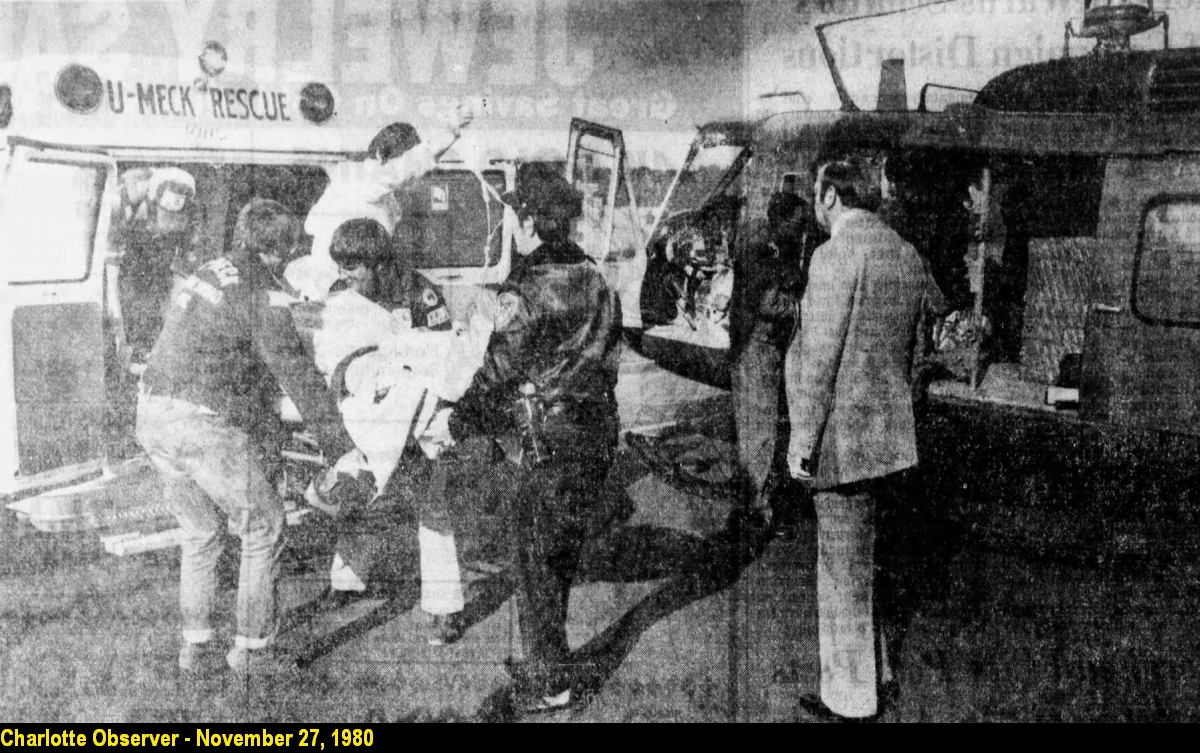
The explosion and fire injured 56 people, and killed two, including five with critical injuries who were airlifted to burn units in Charleston and Chapel Hill. The receiving facilities were:
- Union Memorial Hospital in Monroe. 40+ patients.
- Charlotte Memorial Hospital. Two patients.
- Mercy Hospital in Charlotte. Five patients.
- Presbyterian Hospital in Charlotte. Five patients.
- Medical University of South Carolina in Charleston, via helicopter. Three patients.
- North Carolina Memorial Hospital burn center in Chapel Hill. Two patients.
On December 10, Lora Barrino, 20, died of her burn injuries at the Medical University of South Carolina.
On December 11, Dorothy Graham, 28, died of her injuries at North Carolina Memorial Hospital in Chapel Hill.
Explosion Occurred Near Rear of Building
The explosion apparently occurred near the rear of the building, where brake fluid and other petroleum products were being processed. The force of the explosion created a huge hole in the roof and cracked the walls. But safety features in the building likely prevented more damage and casualties.
The company’s sprinkler system, which might have helped extinguish the fire, was blown apart in the explosions and wasn’t much help in containing the fire.
The area of the explosion was comprised of four “blowout rooms,” which were areas built with concrete walls and “blow-away roofs” so any explosion would spread fire upward and through the roof and not laterally through the building.
Report Later Issued
A report on the fire later published by Department of Agriculture’s Consumer Standards Division recommended that the company relocate potentially dangerous gas rooms at the plant.
The company was storing gases in accordance with the NFPA code, but the code [compliance?] “could be improved” for the charging rooms and propane gas. Currently, the charging room was in the middle of a larger room. It would have been safer to have a separate charging room.
Also, the company lacked a state-required permit for bulk storage of propane gas at the Indian Trail plant.
The company’s Chairman said he wasn’t aware that it needed approval to store propane gas. And the director of the aforementioned state division said none of his inspectors had looked at the plant before the explosion because they didn’t know that they had propane gas.
County Fire Code
As a result of the plant explosion and fire, Union County commissioners, on December 1, 1980, approved an action to study the possibility of a county fire code.
Commissioners also said that no one had pushed for a county fire code in recent years. However, county volunteer firefighters disagreed. They said that members of the Union County Firemen’s Association and the Union County Fire Commission had started new efforts at a county fire code about three weeks before the November 26 explosion and fire.
Today, Union County does not have a county-wide fire code. Instead, the county fire marshal’s office actively enforces the current North Carolina Fire Prevention Code.
Company History
Based in Charlotte, Radiator Specialty Company was started in 1924. The Indian Springs plant opened in 1972.
After the November 1980 explosion and fire, the Indian Springs plant was reopened. It had returned to operation either by or around October 31, 1981.
In August 1983, the company said they were expanding the plant by 36,000 square-feet.
The company ceased manufacturing operations in 2019 and sought corporate dissolution in 2020.
Sources
See this Google Drive folder of news clippings.