Fleet Photos – Ash-Rand Rescue & EMS

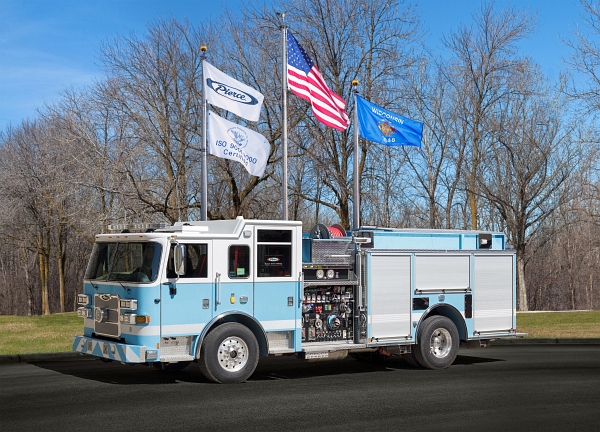
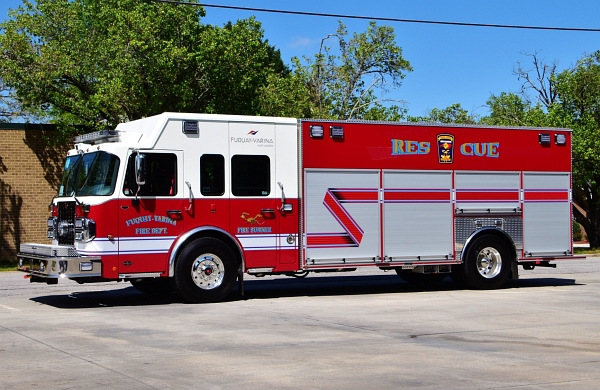
Happened upon the Ash-Rand Rescue building in Asheboro on Sunday, after a zoo visit. Found a school bus-turned-command post in the parking lot. The two-story building was chock full of rescue and EMS vehicles. (Something no longer seen in Wake County, where rescue services are nearly exclusively performed by fire departments. The exception is R.E.D.S, based in Garner in the old Garner Rescue & EMS building.)

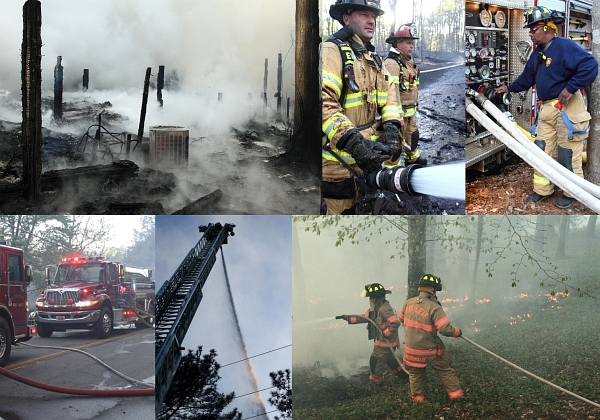
Here’s their fleet, as depicted on their web site. Plus my photo of the “Randolph County Search and Rescue” bus. They’re also part of North Carolina USAR Task Force 7, and have a trailer and towing vehicle. Learn more about their organization at www.ashrandrescue.com.

What other “big fleets” of rescue vehicles are found in the central Piedmont? Click to enlarge:


Ash-Rand Rescue & EMS Photos + Mike Legeros photo

Facebook Comments

History Map – Raleigh Fire Facilities, 1853 to 1912

For your Saturday viewing pleasure, here’s a new version of my Raleigh Fire Department Downtown History Map. We’ve seen this before in an earlier blog post. There’s also a PDF copy on my RFD history site.

This version displays fire department facilities from the volunteer era only. From the first engine house erected in 1853, to the formation of the career department in 1912 . Click once or twice to enlarge:

Facebook Comments

Fire Station Slide in North Charleston

Saw this on Twitter this morning, from WCIV4 reporter Rob Mallia as retweeted by FDMaps.com. Feature of North Charleston’s new Station 2 at 2800 Carner Avenue. (They’re the third-largest city in SC, incidentally.)

Formal opening ceremonies were held today. The 18,000 square-foot station houses two engines and a ladder company, has five “engine bays,” plus a training facility and offices for the arson squad. It replaces two prior facilities, old Station 2 and Station 8.

Sleeping quarters are on the second floor, and feature a slide (!) for rapid descent to the first floor. Here’s the accompanying news story. Google for more media coverage.


WCIV4 photo

Facebook Comments

Spencer Shops Fire Department Reel Team, 1924

From the North Carolina State Archives comes this picture of the Spencer Shops Fire Department (competition) reel team in 1924. They’re posed “in town” and beside the Methodist church at the corner of Fourth Street and Yadkin Avenue. The industrial fire brigade protected the Southern Railway’s Spencer Shops, once the railroad’s largest steam locomotive repair center.

The facility opened in 1896, and employed between 2,500 and 3,000 people at any one time. The original buildings included shop buildings, a storehouse, an office building, and the famous thirty-seven bay roundhouse. Also originated from the site was the town of Spencer, incorporated in 1901.

The shops closed in 1960, and the site stayed active as a rail yard for freight into the late 1970s. Today, the facility is occupied by the North Carolina Transportation Museum. The railway began donating parcels in 1977 and eventually the entire site.

As for the fire department, it operated from at least 1913 until after 1972. Presuming they were exclusively volunteer, with workers pressed into service for emergencies.

Sanborn Fire Insurance maps cite the department in 1913 as having three hose companies of eleven men each, and about 2,000 feet of 2 1/2-inch hose. Presuming hand hose reels for each. Did they operate motorized apparatus in later decades? To be determined. How many hydrants did they have, and what was the system’s capacity? To be determined.

The adjoining towns of Spencer and East Spencer also had fire departments as early as 1913. The railroad firefighters assisted the town fire departments as needed. Notes the 1913 map, they “received pay for all calls in Spencer.” The fire alarm system for all three departments was the whistle at the Spencer Shops, at least through 1939.

This photo also appears in the book Southern Railway’s Historic Spencer Shops by Larry K. Neal Jr., as published by Arcadia Publishing in their Images of America series. Notes the author in the caption to this photo, citing a 1920 news story, the shop fire company “could run water in forty-five seconds at any time from any shop building on a surprise alarm.”

What’s the story on the uniforms they’re wearing? That’s likely tournament garb. The shop firefighters competed in state firemen’s competitions in the 1910s and 1920s. As these compiled scores (PDF) note, they won the hand reel contest in 1916, 1920, 1926, and 1928. Among other contests. Click to enlarge:

2016-01-27-shop
Courtesy of the North Carolina State Archives

Facebook Comments

Vintage News Story on Black Firefighters – Carolina Times, 1952

Here’s an interesting slice of social history, beginning with the provocative headline “Negro Firemen Acquit Themselves Well In Few Dixie Cities; Durham Hasn’t Warmed Up To Idea.”

It was found via North Carolina Newspapers, a neat site with access to hundreds of digitized newspapers from around the state. Below is the front page of Durham’s Carolina Times from January 5, 1952. The story’s about black firefighters in southern cities, and is based on a prior article in a periodical named New South.

The context of the article is the city of Durham’s efforts at the time to add African-Americans to their firefighting force. Eight were hired in October 1958 and staffed a new Station 4 that was opened at Fayetteville and Pekoe streets. It was located in Durham’s historic Hayti community, a neighborhood founded as an independent black community shortly after the Civil War. (The earlier Station 4 was demolished during construction of the Durham Freeway. Read about that.)

There are numerous digitized Carolina Times articles from the 1950s, chronicling efforts in Durham to add black career firefighters. (The city was served by the “colored members” of the volunteer Excelsior Hook and Ladder Company beginning in the mid-1880s.)

The first proposal for career members was floated as early as 1949, noted a Durham Morning Herald story on July 22 of that year. (See source.) In North Carolina’s cities, black firefighters were first hired in Winston-Salem in 1951, Durham in 1958, Greensboro in 1961, and Raleigh in 1963. (See archived blog posting.)

Read this article via NC newspapers. Then commence searching the site for others. Lots of great reading, both about Durham and other cities and towns and their fire department histories.

Facebook Comments

Vintage Photo of Pilot’s First Fire Apparatus

Found this in my files, a vintage photo (photographed, not scanned) from the Pilot Fire Department in Franklin County. These were their first fire engines. Right is a 1952 Ford/____ pumper, ex-Wendell. (That a Howe body?) Bought in 1974 when PFD was organized. Left is a former gasoline tanker that was donated and converted into a water tanker by firefighters. Readers know the make, model, or year of the tanker? Or where either truck is today? Click to enlarge:

Facebook Comments

Durham County EMS Adds Major Incident Unit

Durham County EMS has taken delivery of a new Major Incident Response Vehicle (MIRV). The 2015 Freightliner 192/Hackney is named MIRV-1. It carries multi-patient incident equipment and supplies for 25 people, including marking cones for triage, treatment, and transportation areas.

MIRV is also well-equipped for the winter storm that passed through. The truck has a large generator and light tower, three chainsaws and associated equipment, and a four-person cab, if a small warming space is needed. See the original posting on Facebook by DCEMS.

Next question, what other local/area EMS systems operate similar units? Wake County EMS has Truck 1, a 2006 Sterling/Hackney that we’ve seen many times (see blog archives posting). Who else?

2015-01-21-dcems

Facebook Comments

What if No One Answered the Call – PKSFD Recruitment, 2006

Pine Knoll Shores Fire Department recruitment ad, from the Shore Line newspaper, June 1, 2006. Via digital version via the History Committee of the Town of Pine Knoll Shores via North Carolina Newspapers.

Facebook Comments

Elizabeth City Fire Department Planning, 1962 and 1968

Found a pair of Elizabeth City community facility documents from 1962 and 1968. The second appears to be a follow-up document. Here’s what they recorded about the fire department.

Planning in 1962

FIRE PROTECTION

Few other community services, if any, enjoy the wide-spread appeal and popular acceptance as the fire fighting organization. The very obvious and dramatic appeal of the service performed contribute in marked degree to the enthusiasm and pride with which a community views its Fire Department and the men who staff it. Click to enlarge:

CONSIDERATIONS

In planning Fire Station locations, special consideration is given to the standards set forth by the National Board of Fire Underwriters.

STANDARDS FOR FIRE STATION LOCATIONS

TYPE OF DISTRICT / RECOMMENDED MAXIMUM DISTANCE FROM FIRE STATION

High Value and Dense Development – 3/4 Mile
Typical Residential Development – 1 1/2 Miles
Scattered Residential Development – 3 Miles

PERSONNEL

The Department consists of eighteen full-time employees and a force of forty-one volunteer firemen to augment the full-time staff. The eighteen full-time firemen work on shifts of twenty-four hours on duty and twenty-four hours off duty; but subject to call back to duty. The forty-one volunteers are simply subject to call. Each year four men are sent to Fire School in Charlotte, North Carolina, and one man is sent to the Firemen’s Association meeting.

EXISTING FACILITIES

The operation of the Elizabeth City Fire Department is administered by the Fire Commission composed of seven members appointed by the City Council. The Fire Department provides fire protection for the city and part of the county.

The department operates out of a new fire station built in 1956. The Station is located at the corner of Elizabeth Street and Pool Street and represents an investment of $80,000.00. The building is a one story, brick constructed unit with a front and rear entrance for the fire trucks to enter and leave. Within the station itself, is a dormitory which will accommodate fourteen men and two officers’ quarters. There is a complete shower and wash room-locker room, a large lounge equipped with television, radio, pool table, and other amusements. There are a Chief’s office, a Dispatcher’s office, and a complete electric kitchen and pantry. The Station also has an apparatus room 74 x 48 feet which is sufficient room to house the seven fire trucks, the Chief’s car, and the other equipment. The entire building is served by loud-speakers to notify all the men when a fire alarm is sounded.

Fire apparatus and rescue equipment represents an investment of approximately $130,000.00. This includes:

  • 1 – 500 gallon per minute pumper
  • 2 – 750 gallon per minute pumpers
  • 2 – 1,000 gallon per minute pumpers
  • 1 – 85 foot aerial ladder truck
  • 1 – Fire Chief Station Wagon containing rescue equipment.

Other equipment consists of: a rescue boat; resuscitators; fresh air masks; auxiliary lights and power plant; hose dryer; hose washing machine; ample supply of fire hose; and numerous other rescue and fire fighting equipment. Also, there is a complete two-way radio communication system between the fire station and the fire trucks.

The location of the fire station is closely related to the location of the highest value properties (CENTRAL BUSINESS DISTRICT) and the system of railroads that cross the city. The station is located to quickly serve the major part of the CBD without danger of being stopped by a train blocking the street. Also, all parts of the city can be reached from the fire station without having to cross a railroad.

It is the policy of the Fire Department to send all available equipment to the CBD when a fire occurs. When a fire occurs in a residential area, two trucks are sent and more if needed. The city is satisfactorily equipped with fire-hydrants. The hydrants and water mains are added when new areas develop. Winslow Acres, a new development, has three hydrants and the Edgewood Area has completely new fire hydrants. The static pressure varies between 55 and 58 pounds over the entire city, and the Fire Department can pump 4,000 gallons of water per minute if necessary.

PROPOSALS

1. The National Board of Fire Underwriters has set up a standard for the number of pumper companies a city should maintain in service. This formula is: number of pumper companies = 0.85 + 0.12P where P = population in thousands, and the population is less than 50,000. As Elizabeth City’s 1960 population was 14,062, they should maintain three pumper companies.

2. The National Board of Fire Underwriters normally recommends twenty years as the life of fire department apparatus to be maintained in service. Thus, it is recommended that the Elizabeth City Fire Department discontinue the use of the 1923 American LaFrance, 750 gallon per minute pumper, and that the 1929 American LaFrance, 1,000 gallon per minute pumper be placed in reserve at the present time.

3. In the near future considerations should be made towards replacing the 1942 Seagrave 1,000 gallon per minute pumper as it is twenty years old.

4. By 1980 the 1951 Chevrolet (Oren), 500 gallon per minute pumper; the 1955 Howe, 750 gallon per minute pumper; and the 1955 American LaFrance, 85 foot aerial ladder truck should be replaced or brought up-to-date.

5. Residential development is moving towards the Southern end of the City. The furtherest point of the City limits in this area is approximately three miles from the existing fire station. This area is also separated from the City proper by Charles Creek. Thus, a new substation is proposed to serve this area. An ideal location would be on the corner of Southern Avenue extended and Edgewood Drive. This block is to be used for the building of a new shopping center. Here a new substation could serve all the surrounding areas from a central position.

6. In the near future a larger source of raw water will have to be found and developed.

Click to enlarge:

See original document.

Planning in 1968

We’ll just include a couple excerpts here, noting some facts and figures:

Personnel consists of:

  • 1 Chief
  • 1 Asst. Chief
  • 1 Captain
  • 2 Lieutenants
  • 12 Full-time Firemen
  • 40 Volunteers

Rolling stock consists of:

  • 1928 American LaFrance 1000 GPM pumper, reserve
  • 1950 Oren 500 GPM pumper
  • 1955 Howe 750 GPM pumper
  • 1965 Howe 1000 GPM pumper
  • 1966 Howe 1000 GPM pumper
  • 1955 American LaFrance 85-foot aerial ladder
  • 1964 Chevy panel truck
  • 1967 Station wagon

Other notes. Sixteen call boxes in the city for fire reporting. Base station added to radio system in 1967. Contracted by county to answer calls outside city. Fire department has Class 5 insurance rating (for rural area, or both city/rural?).

See original document, which includes another planning map.

More History

For more ECFD history, see these archived blog postings:

And here are the entries in John Peckham’s American LaFrance database:

  • 1914 ALF Type 10 Combination – #525 – Shipped 2/6/14 – “Minnie Lee” on hood, Chief’s daughter
  • 1917 ALF Type 75 triple combination – #1715 – Shipped 10/10/17 – “Virginia” on hood, Chief’s sister
  • 1917 Brockway/ALF combination service truck – #B-322 – Note: Not a factory registration number, assigned by Peckham. Also, “Broadway” and “1917” added by Legeros. Presuming the same truck. 1921 Type 75 triple combination – #3601 – Shipped 11/10/21
  • 1929 ALF Type 145 triple combination – #6561 – Shipped 3/15/1929
  • 1955 ALF Type 800? 7-85-AJO aerial ladder – # L-5332 – Shipped 11/30/1955

And for early ECFD history, check out these historical fire department and fire protection laws.

Facebook Comments

Exploring Charlotte Fire’s New Headquarters

We recently paid a visit to the Charlotte Fire Department’s new headquarters. Opened last year, the two-story, 36,000 square-foot facility is located at 500 Dalton Avenue. That’s just north of uptown, on a prominent parcel between Statesville Avenue and North Graham Street. The triangular, ten-acre site was last occupied by a Sealtest plant and office building. They made ice cream.

This is CFD’s second dedicated headquarters. The first was built beside the old City Hall at Fourth and Davidson streets and was co-located with Station 1. That building was demolished in 1991, and fire administration relocated to the Charlotte-Mecklenburg Government Center. Later they moved to lease spaces on 7th Street (fire prevention) and 9th Street (everyone else).

The $16 million facility was dedicated on April 11, 2015. The architects were Charlotte firm Tobin Starr. (See their project page.) The facility culminated a five-year project that started when the department began looking for property in 2010. (They considered renovating the Sealtest office building, but code compliance proved cost-prohibitive.) The city’s also hoping that the building will spur redevelopment efforts along the corridor. They’re also planning expansions on the site itself. Next is a new 911 center, to be built in the rear. (Or is that the front?) The center is currently housed at Station 1 at 221 N. Myers Street.

What’s inside the impressive brick, stone, steel, and glass structure? Some 70 employees who work in the offices of the Fire Chief, his Command Staff, the Fire Prevention Bureau, the EM department, and IT department. The building’s also expandable, and was designed to serve CFD for the next century. That’s right, a hundred years. “We desperately try to build every building to last 100 years,” said Deputy Chief Rich Granger in this Charlotte Observer story from last year.

Among the design features, notes this FireRescue1 story, are the use of high-performance materials, including high-efficiency heating, cooling, and lighting systems. They’ve maximized access to natural daylight and included five large skylights on the second floor. The building’s designed for 24/7 operation and includes emergency power supplies. There’s also a large conference room that can serve as both meeting space and as a venue for promotional ceremonies and other functions. It’s called Fireman’s Hall.

But let’s talk about that lobby.

Of particular interest to Yours Truly is the building’s lobby, which also functions as a mini-museum. Displayed are three hand- and horse-drawn pieces of apparatus: a 1903 American LaFrance steam engine, an 1866 Jeffers hand engine, and a hand hose reel. The hand engine is particularly impressive both in presentation (the polished wood and metal surfaces absolutely gleam) and its history (operated by white Hornet Fire Company until 1871, then transferred to the black Neptune fire company).

The hand engine was sold in 1901, and moved to Marblehead, Massachusetts. Five years later, it was sold to the Westfield Veterans Association and used exclusively for tournaments. Fast-forward a hundred years and Charlotte Fire Department members located the thing in Newberry, MA. It was displayed in the American Hand Engine Society Museum since the 1990s. The museum agreed to sell the engine to its original owners, and it soon returned to the Queen City.

Below is a video of both engines in action at the Raleigh fire expo in 2011. See more photos of the new building and its antiques.

As for the Charlotte Fire Department, they’re the largest in the state. Stats from last year’s Charlotte Observer article cite 1,172 employees (and now 42 stations), and in 2014 (?) answered 103,473 calls, conducted 42,000 inspections, and 7,000 building plans reviews.

Now for the reader question. What other impressive headquarters buildings do readers like in the Carolinas?


Facebook Comments