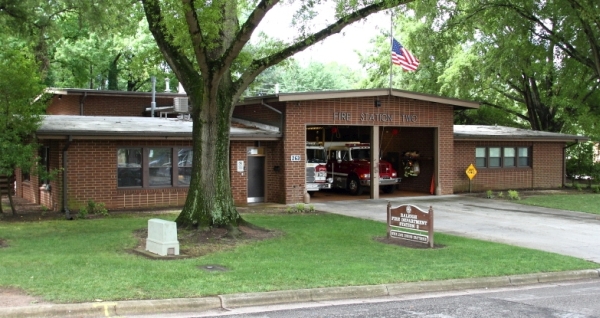
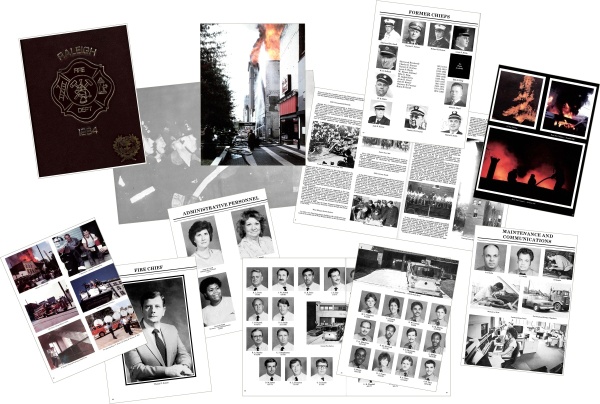
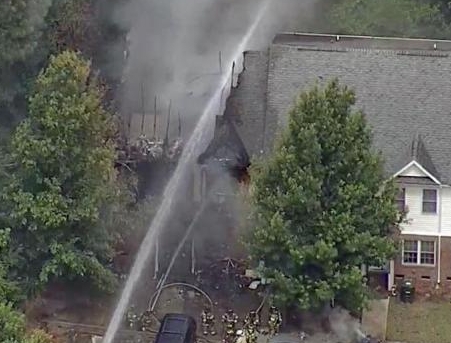
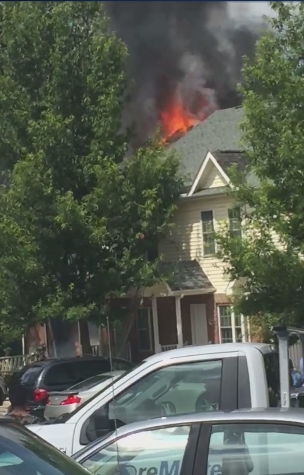
Five Alarms in Downtown Raleigh – Moved to New Site

March 26
This posting and its content has been moved to a dedicated page on the Raleigh Fire Museum web site.

Head over to www.raleighfiremuseum.org/content/metropolitan.

2016-03-26-rfd

March 22
WNCN news links added, more suppression details, incident notes formatted, canteen service added, need to add to diagram “A/B/C/D explanation.”

March 21
Added more news links, more damage details and times, etc. 

March 20
Adding more photo and video links, more details to the incident details, etc.

March 19
Added more incident notes.

March 18
Let’s add some news and media links…

March 17
Five alarms were struck last night, at 400 West North Street in downtown Raleigh. Largest  downtown fire in decades. Lots to report. See run card on this new site.

Facebook Comments

Wake County Fire Commission Meeting – March 16, 2017

A regular meeting of the Wake County Fire Commission will be held on Thursday, March 16, 2017. The location is the Wake County Emergency Service Education Center, 221 South Rogers Lane. They’ll be in Suite 160, the large conference room. The meeting starts at 7:00 p.m.

Agenda is below. View the meeting documents.

  • Meeting Called to Order: Chairman Billy Myrick
    • Invocation
    • Pledge of allegiance
    • Roll of Members Present
  • Items of Business
    • Approval of Agenda
    • Adoption of Minutes for January 26, 2017 Regular Meeting
    • Adoption of Minutes for March 2, 2017 Special Called Meeting
  • Regular Agenda
    • Staffing and Deployment Recommendations
    • County Wide Infectious Control Manual
    • Facility Assessments
  • Information Agenda
    • Fire Tax Financial Report
    • Standing Committee Updates
      • Administrative
      • Apparatus
      • Budget
      • Communications
      • Equipment
      • Facility
      • Staffing and Compensation
      • Steering
      • Training
    • Chair Report
    • Fire Services Director Report
  • Other Business
  • Public Comments:
    • Comments from the public will be received at the time appointed by the Chairman of the Fire Commission for 30 minutes maximum time allotted, with a maximum of 3 minutes per person. A signup sheet for those who wish to speak during the public comments section of the meeting is located at the entrance of the meeting room.
  • Adjournment – Next Meeting May 18, 2017
Facebook Comments

Architect Selected for New Raleigh Fire Headquarters and Central Fire Station

On February 21, 2017, the City Council selected Davis Kane Architects to provide professional services for the fire department’s new Headquarters and Fire Station 1.

Note the recently published minutes (PDF), they’ll provide “architectural; engineering and other design services; environmental and surveying services; cost estimating and construction related services in anticipation of relocating Fire Station One and potential to establish a headquarters facility for the Fire Department.”

We have blogged before the Headquarters/Station 1 project, when the FY17 budget was approved in May 2016. Let’s take a longer look at the project, and the two facilities themselves.

New Downtown Fire Department Facility

This project will combine Headquarters (administrative offices) and Central Fire Station (Station 1). These have been long-simmering projects, identified as facility needs for a few years now. 

The office space component was attempted earlier as part of the Lightner Public Safety Center, developed in the 2000s. That was a seventeen-story structure (!)  proposed for the northwest corner of Hargett and McDowell streets. The project was aborted in 2010.1

Headquarters

2017-03-12-rfd-sta1-2
Dillon Building – Google Maps

The administrative offices of the Raleigh Fire Department are currently housed in the Dillon Building at 310 W. Martin Street. That’s just around the corner from Station 1. They’ve occupied the space since 1994.

Prior locations of fire department offices included:

  • 1993 to 1997 – Career Department Center, housed in old Station 4 – 2913 Wake Forest Road
  • 1991 to 1994 – Professional Building – 127 W. Hargett Street
  • 1984 to 1991 – Municipal Building – 222 W. Hargett Street
  • 1982 to 1984 – Keeter Training Center – 105 Keeter Center Drive
  • 1953 to 1991 (plus later periods) – Station 1.

Headquarters, as the letters read on the second-floor door, includes workspaces for:

  • Office of the Fire Chief
  • Office of the Fire Marshal
  • Information Technology
  • Assistant Chief of Operations and staff
  • Assistant Chief of Services
  • Assistant Chief of Training

Currently that’s some forty-five or fifty people who occupy or share offices on the second floor and the mezzanine.

Central Fire Station

2017-03-12-rfd-sta1-3

The city’s largest engine house sits on a prime piece of downtown real estate at 220 S. Dawson Street. It also faces Nash Square, home to the North Carolina Fallen Firefighters Memorial.

The fire station site is a valuable one, and just as choice as the adjoining Dillon Building. The corner lot proper at Dawson and Martin, meanwhile, is occupied by old Union Station.

2017-03-12-rfd-sta1-1

Earlier Fire Stations

Central Fire Station opened in 1953, and on a site that was purchased over a decade earlier, when Station 1 on West Morgan Street was closed. The 1896 structure had been condemned for years, and the fire department re-opened old Station 2 on South Salisbury Street.

It was intended as a short-term solution. That was August 1941. Then Pearl Harbor was attacked in December, and the resources for (and priorities for) such projects were wiped off the table.

2017-03-12-rfd-sta1-4
Station 1 after closure in 1941, left. Station 1 at old Station 2, right. Courtesy North Carolina State Archives

Station 1 on South Salisbury Street operated from 1941 to 1953, and housed Engine 1 and Engine 2. See, the two ladder trucks–the 1939/1916 American LaFrance tiller and the 1922 American LaFrance service truck–were moved to Fire Station 2 at Memorial Auditorium. They were too big for the Salisbury Street fire station.

They displaced Engine 2, which was housed at Station 1 until 1949. That year, a permanent Station 6 opened, and the service truck was moved there, and Engine 2 returned to its quarters at the auditorium. Got it?

The Dawson Street Fire Station

2017-03-12-rfd-sta1-12

Station 1 is solid, squat structure of bricks and blocks. Two stories with 11,200 square-feet of heated square feet, which was palatial when it opened, but is way too small for current needs. Planned is 21,000 square-feet for its replacement., nearly double the current size.

Upstairs are bedrooms, bathrooms, and a small day room. Downstairs is a radio room (or watch room), two offices, two bathrooms, and a small kitchen slash dining room. The rear apparatus bay also serves as the downstairs day room, with a quartet of chairs and couches in the back corner, by the kitchen and rear door.

2017-03-12-rfd-sta1-8

Five vehicles are parked on the tile apparatus floor: Engine 1, Engine 13, Ladder 4 (one of the city’s two “tiller” trucks), Car 401 (the investigator’s unit), and Car 402 (the investigator’s back-up unit).

There’s also a long wooden rack along the north wall, where all the firefighter’s coats and helmets hang. Below, on a long ledge, are their bunker pants and boots.

And two fire poles. Station 1 has them, along with Station 3 and the soon-to-be-rebuilt Station 6. Which, at last report, won’t have a fire pole.

2017-03-12-rfd-sta1-5
The alarm house behind Station 1.

Exercise equipment is stored in a unique outbuilding, in the rear of the parking lot: the two-story, 1942 alarm house.2

Also, fun fact, the cars at the fire station must be reshuffled each day, to make room for the next day’s incoming firefighters! The parking lot simply isn’t large enough.

2017-03-12-rfd-sta1-6

See this web page of mine for earlier history of Station 1, both the present building and earlier locations.

New Headquarters/Fire Station

For years, these facility needs have been percolating. In their five-year strategic plan (PDF) published in 2015, the fire department identified a strategic objective to relocate both Station 1 and Headquarters.

Earlier this year, the project was moved to the forefront and initial funding was approved in the FY17 budget for $23,855 over four years.

Here’s the program description, from the FY17 budget document:

To meet the Fire Department’s operational and administrative needs, and to facilitate economic development efforts in the downtown Warehouse district, the CIP funds a replacement for Fire Station 1 and a replacement administrative space for Fire Department management staff. Staff tentatively expects to construct a new station up to 21,000 square feet, an administration space up to 13,000 square feet. The project budget also funds land acquisition and a parking deck. Depending on the site selected for the station, additional land and a parking deck may not be necessary in this case, the project budget will be decreased.

Next Steps

Site selection is underway, with a location in the area of the Convention Center. Programming has also started, as fire department officials and other stakeholders determine the scope and functions of the facility.

From conversations we’ve heard, it sounds like a multi-story building with a fire station on the ground level and couple stories of office space. Plus parking, perhaps a parking deck. 

Watch this space for future updates. We’ll update this posting, versus creating new ones. This’ll be our single source for reporting project news. 

More to come!

Footnotes

1 Here’s a city council presentation (PDF) about the Lightner Public Safety project from 2008. It was planned to house both fire and police headquarters, the city/county emergency communications center, and other agencies, as well as a 600-seat assembly hall, cafe, and credit union. 

2The alarm house was erected in 1942, to house the equipment of the electric-telegraph fire alarm system. Its construction included using materials recycled from the 1896 fire station. The two-story structure served many purposes over the decades, from a dispatch center to office space to a records room. Read a history of the building.

Facebook Comments

Town of Smithfield Buying Building For Second Fire Station

The town of Smithfield this week announced the planned purchase of the former Johnston Ambulance Service at 1200 Highway 70 Business, as a location for a second fire station.

The 6,450 square-foot building was erected in 2007. The ambulance company ceased operations in August 2016. Here’s a Google Maps street view picture of the structure:

2017-03-11-sfd

Here’s the press release:

March 8, 2017
For Immediate Release

The Mayor and Town Council are pleased to announce that they have entered into an agreement to purchase the once Johnston Ambulance Service property located on Highway 70 West in Smithfield for $425,000. When the opportunity to purchase the property presented itself, the Council determined this would be an ideal location for a second Fire Station. The structure on site fits the needs of a Fire Station by providing apparatus bays as well as a space for operational duties. The property is perfectly located to provide coverage for the West Smithfield and for increased residential, commercial and industrial growth in the area. The Mayor and Town Council are committed to ensuring that all citizens and visitors have a safe place to live, work and play in the Town of Smithfield.

For additional information, please contact Tim Kerigan at 919.934.2216 ext. 1109 or via email at tim.kerigan@smithfield-nc.com


Facebook Comments

Wake County Civil Defense Siren Snapshot – September 1972

Found a neat snapshot of the county Civil Defense siren system, from September 1972. Source is an unidentified newspaper article dated September 9, 1982. Likely the Fuquay-Varina Independent

The story is about the Fuquay-Varina Rural Fire Department having recently purchased and installed a new ten-horsepower emergency warning siren.

It was purchased with the aid of the Fuquay-Varina Civil Defense Office, and matching funds from the federal government, which paid half of the $3,000 cost. And had three emergency signals:

  • Fire Signal – Series of rapidly alternating high and low-pitch tones.
    Hear example (either exact or similar) found on YouTube. 
    This alerted the volunteer firefighters. 
  • Alert Warning – Steady three to five-minute sustained, double-tone blast.
    Hear example found on YouTube.
    Designed for alerting the public to a “possible threat to the general safety of the community.” This was a signal for residents to tune into local radio or television stations, for information on such situations from a tornado sighting to “strategic warning of an anticipating enemy attack.”
  • Attack Warning – High- and low-note combination, changing from low to high volume, creating an wavering effect, for three to five minutes.
    Hear example found on YouTube.
    Used only for “warning of an actual enemy attack.” 

The article also includes a number of nifty historical points about the county-wide siren system in September 1972:

  • Raleigh has five sirens.
  • Cary has one siren.
  • Garner has one siren.
  • Holly Springs has one siren being installed.
  • Wendell has one siren.
  • Zebulon has one siren.

All have three-signal capabilities, like the new Fuquay-Varina siren. Nearby towns with similar sirens include Angier and other towns in Harnett County. 

All of the county sirens, and all three of their signals, can be activated “by radio beam” from the Raleigh/Wake County Emergency Communications Center (ECC). Following a siren activation, “county fire radio net” announcements are made to the appropriate fire department.

The ECC is in “constant contact” with the National Warning Center “via hotline,” and is monitored on a 24-hour basis. The alert and attack warning signals are tested on the first Wednesday of each month at 11:55 a.m., from the ECC

Facebook Comments

Production Starts on Raleigh’s Third Tiller and Two Engines

Pierce Manufacturing has started production on the Raleigh Fire Department’s third (!) tiller, as well as two new engines:

Job #30630 is a Pierce Arrow XT tiller, 1500/200/100′. Similar to Ladder 9, which was delivered in 2015. The other tiller is Ladder 4, a 2010 Pierce Arrow XT.

Job #30631-1 and #30631-2 are a pair of Pierce Enforcer pumpers, 1500/500/20. They’ll be similar to Engine 29, also delivered in 2015, but with ground ladders returning to the rear of the truck, and no generator aboard. All scene lighting with be 12-volt LED lights.

You can watch the trucks being built on the Atlantic Emergency Solutions Trucks in Production page. Delivery is expected in late spring. Unsure which companies are getting which trucks. 

Here are excerpts of the drawings, which we didn’t have room to feature in the last issue of the Raleigh Fire Department Newsletter. Click to enlarge:

2017-03-04-rfd

Facebook Comments

Garner Orders Rosenbauer Pumper-Tanker

From this Facebook posting by C.W. Williams, Garner Fire Rescue has ordered a Rosenbauer customer-chassis top-mount pumper-tanker, 1250/1000.

Rosenbauer won the bid for county-funded engines and tankers, for Fy17 and FY18. Four engines (DHFD, EWFD, FFD, WNHFD) and three custom-chassis tankers (FVFD x2, WFFD) were planned for purchase. See comments in this blog posting from September.

Believe Garner is piggy-backing on the engine bid. How many Rosenbauer rigs are we now operating in Wake County? It’s a handful and growing… Click to enlarge:

2017-03-04-gfda

Facebook Comments

Wake County Fire Service – Staffing & Deployment Study Presentation

Change log will go here, as this posting is edited with any corrections or clarifications.

What does our county-funded fire service need, both now and going forward? That’s a question that Wake County Fire Services and the Wake County Fire Commission have been trying to answer for some years now.

Strategic Planning Starts – 2013

It began as an initiative under Fire Services Director Mike Wright, after his hiring in 2013. And with roots going back to 2005, with the adoption of the Fire Service Tax District Long Range Business Plan (read plan).

Through his tenure in 2014, Director Wright’s office developed a strategic framework for analyzing the needs of the county-funded fire service. (Or, more specifically, the county fire service tax district.) That framework was a big beast, with such prominent pieces as Cost Shares, Standards of Cover, Apparatus/Equipment/Facilities, Efficiencies/Cost Savings/Consolidations, and Revenue/Tax Rate. Read this blog post for some background.

Cost Share, Funding, and Service Delivery Report – 2014

The study on cost shares was completed in the fall of 2014. Read blog post about the preliminary report, and then this blog post (scroll to bottom) with links to the final report, and recommendations therein.

Wright retired on December 31, 2014, and this strategic planning was shifted into idle, while an interim director filled that position. 

Staffing and Deployment Study – 2015 to 2017

Things resumed in mid-2015, with the hiring of Fire Services Director Nick Campasano. And work started on another big piece of the puzzle: staffing and deployment. e.g., what resources are needed to effectively fight fires in the fire tax district, and what does the data show therein? 

Last night, the first round of results from the Staffing and Deployment Study were presented at a special-called fire commission meeting. Director Campasano gave a two-hour presentation about the study, its sources, its methodologies, assorted data points, and eight recommendations.

(Unlike the Cost Shares Study, conducted by an external firm, the Staffing and Deployment Study was conducted and created entirely by county staff, and with participation by each fire department. And overseen by a Steering Committee, comprised of fire commission members. Believe that’s right.)

In April, the complete report–with all the data, and all the explanations–will be presented to the Steering Committee, to receive their inputs. Then a combination of both will be presented to the fire commission in May, for their approval and transmission to the County Commissioners. Got it?

View the Presentation

For now, here’s a PDF of the slides that were presented last night. Plus a few things that Mr. Blogger noted. We’ll get a transcription of the presentation at a future fire commission meeting, maybe the regular one planned in two weeks. Watch this space.

Read, read again, interpret, and examine. It’s all fabulous interesting and begs numerous questions and thought exercises about where to go, and what will happen next.

Continue reading ‘Wake County Fire Service – Staffing & Deployment Study Presentation’ »

Facebook Comments

Special Called Wake County Fire Commission Meeting – March 2, 2017

March 3, 2017
See this blog posting, for a summary of the presentation, and a PDF copy of the presentation slides.

February 28, 2017
On Thursday, March 2, 2017, a special called meeting of the Wake County Fire Commission will be held, and at a new location.

They’re now meeting at the Wake County Emergency Service Education Center, 221 South Rogers Lane. They’ll be in Suite 160, the large conference room. The meeting starts at 7:00 p.m.

The purpose of the meeting is to review the finds from the Staffing and Deployment Study. 

Agenda:

Meeting Called to Order: Chairman Billy Myrick

  • Invocation
  • Roll of Members Present

Items of Business

  • Approval of Agenda
  • Review of Findings from Staffing & Deployment Study

Public Comments:

  • Comments from the public will be received at the time appointed by the Chairman of the Fire Commission for 30 minutes maximum time allotted, with a maximum of 3 minutes per person. A signup sheet for those who wish to speak during the public comments section of the meeting is located at the entrance of the meeting room.

Adjournment – Next Meeting March 16, 2017

Facebook Comments

Johnston County Updates – New Rescue in Benson, New BC Truck in Clayton

Couple updates from Johnston County. The Clayton Fire Department has placed this utility truck in service as a new Battalion Chief vehicle. It’s designated BC1. Photos from fire photographer Jason Thompson.

2017-02-19-joco1

2017-02-19-joco2Jason Thompson photos

Meanwhile, the Benson Fire Department has placed a new Rescue 1 in service, with Raleigh’s old 1991 Simon-Duplex/E-One haz-mat truck. It was received last year, has been refurbished, and is now in service. It replaces Rescue 50, 1996 Ford light rescue, which is now for sale. Fire photographer Lee Wilson took these pictures last week.

2017-02-19-joco3 2017-02-19-joco4Lee Wilson photos

The history of Raleigh’s rig?

  • Purchase price: $284,000.
  • Delivered June 10, 1991.
  • Placed in service as Haz-Mat 1 at Station 20 on August 14 or 15, 1991.
  • Relocated to Station 2 on November 5, 2004.
  • Changed to support unit in May-June 2006, after delivery of 2006 Freightliner/Hackney tractor-drawn replacement. Renamed SR 1.
  • Retired on February 6, 2013.
  • Sold in 2016.

Read more Raleigh fire apparatus history.

Facebook Comments