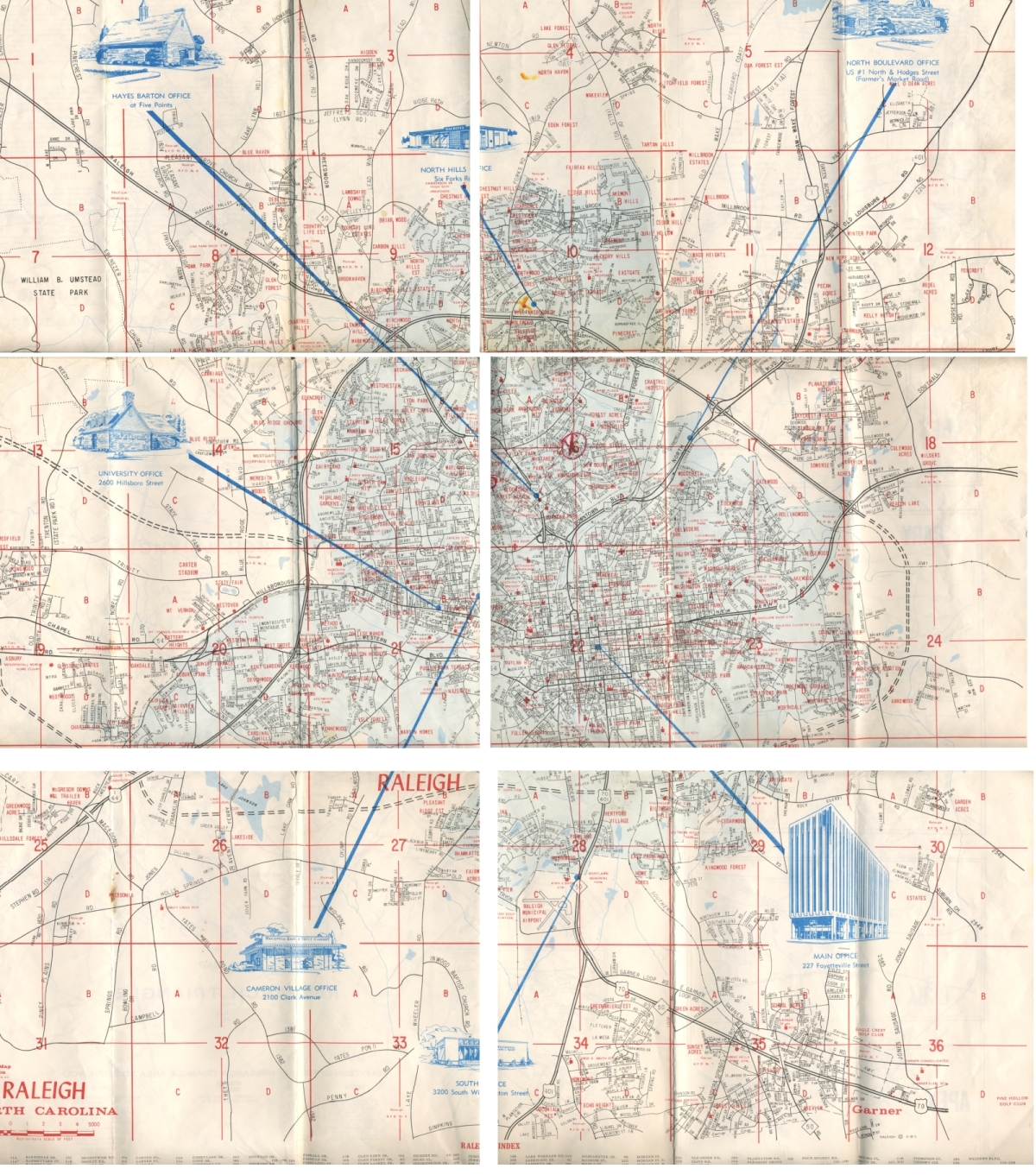
From our archives, incomplete parts of a vintage Raleigh street map, circa 1960s.
Download larger version (PDF, 61MB)
Facebook Comments
From our archives, incomplete parts of a vintage Raleigh street map, circa 1960s.
Download larger version (PDF, 61MB)
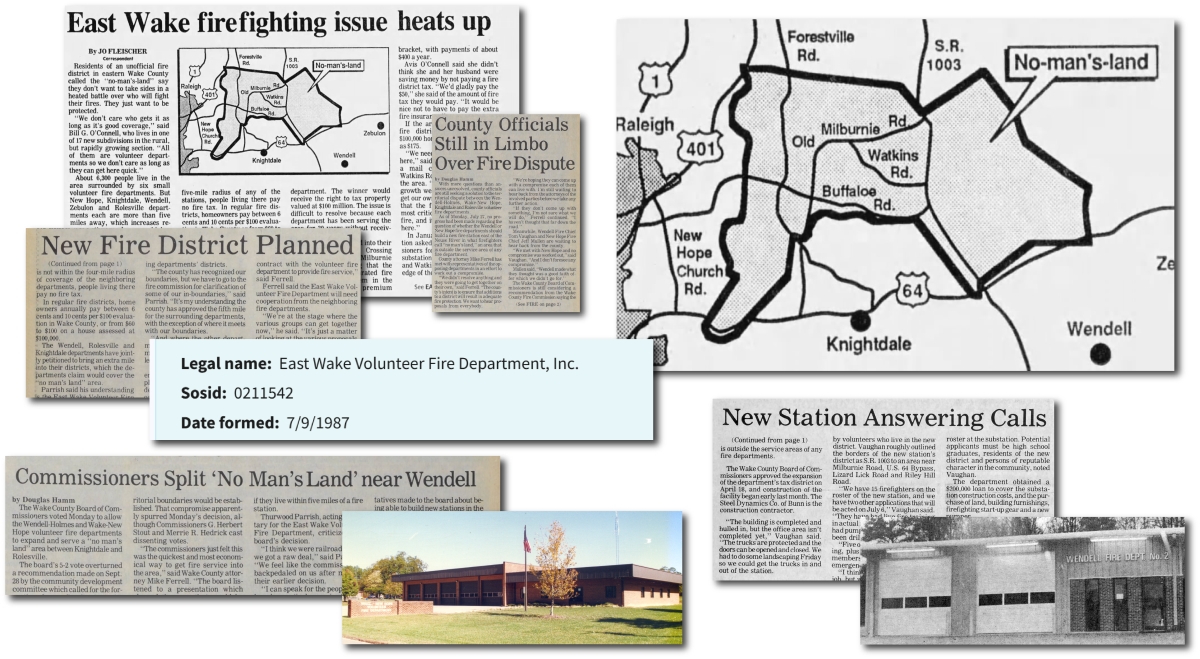
Wake County history hit. For our Sunday reading, let’s take a deep dive into the story of New Hope Station 2 (now their main station) and Wendell Station 2. Turning the clock back at the fall of 1987, when county commissioners considered proposals to add fire protection to the so-called “no man’s land” in eastern Wake County.
Some 6,300 people lived in the area that was surrounded by four volunteer fire departments: New Hope, Knightdale, Rolesville, and Wendell. But each was more than five miles away, which meant longer response times and higher insurance rates.
Reported the News and Observer during that period, each department answered calls in the area under a “cooperative agreement,” but their trucks had to travel “seven or eight miles over congested roads” to reach the area.
Two of the departments, New Hope and Wendell, each wanted to establish “substations” in the heart of the area, which could “support only one department.” And the “winner would receive the right to tax property valued at $100.”
But the issue had proved difficult to resolve, because both New Hope and Wendell had been serving the area for 30 years and without receiving any tax revenue.
One homeowner was cited as paying about $400 per year for insurance in the “rural, unrated fire district.” That meant they had the highest insurance premium bracket.
But if the area became an “official fire district,” insurance on a $100,000 home could drop as much as $175, noted the story.
Source: News and Observer, September 7, 1987.
Before We Continue
Continue reading ‘New Hope Station 2, Wendell Station 2, and No Man’s Land’ »
This is a blog version of a Facebook posting from August 2025.
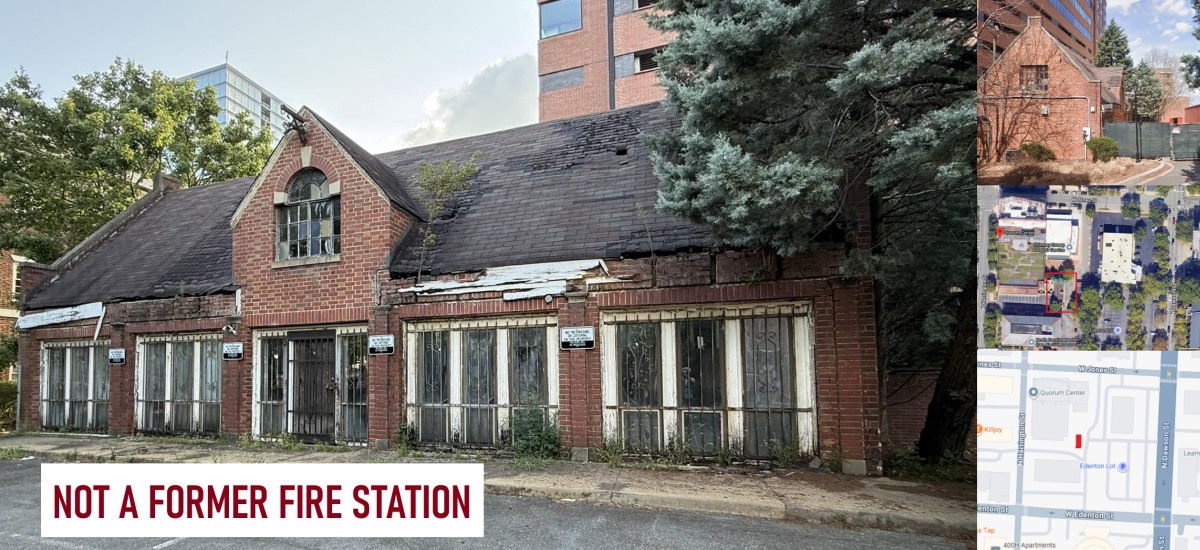
Not an old engine house. Located behind the Quorum Center on West Jones Street, this old building in downtown Raleigh is not a former fire station. However, that’s the story that some Raleigh-ites have heard over the years and decades.
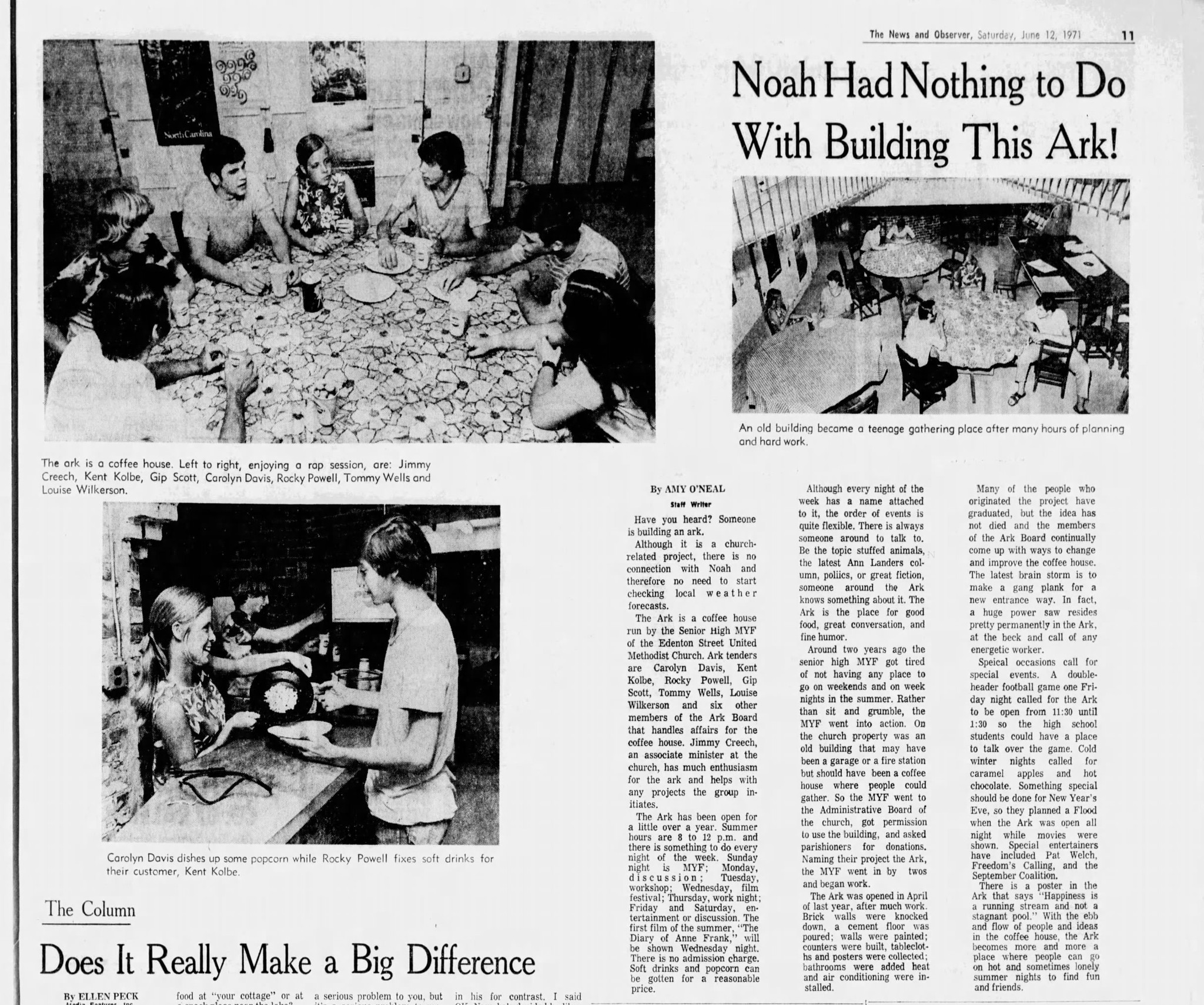
That’s also what the News and Observer said about the building on June 12, 1971, which at the time was operating as a coffee house run by high school members of nearby Edenton Street United Methodist Church, located one block east. It was called the Ark, and it opened in April 1970. See article in comments.
“Noah had nothing to do with building this ark”
Noted the newspaper with that eye-catching headline, the old building was owned by the church and “may have been a garage or a fire station.” The Senior High Methodist Youth Fellowship members converted the building into a meeting space and coffee shops.
They raised money through donations from parishioners, knocked down brick walls, poured a cement floor, added bathrooms along with heating and air conditioning.
Local history hunter Heather Leah learned of the building last week and asked about its history in the Facebook group You know you grew up in Raleigh, North Carolina when… Here’s that posting
Respondents remembered the building’s history as the Ark as well as a later outreach ministries center. Others recalled the stories that it served as a fire station during the horse-drawn era of the fire department.
The building had an upstairs section as well as a hole in the floor, which, as the story was told, was where a presumed fire pole was located. They recalled that when the church took ownership of the property in the 1960s, the hole was widened, and a railing was erected. This allowed those upstairs and downstairs to see each other.
But Was the Building Ever Used as a Fire Station?
Negative says Legeros, who is 99.9% sure that the building never ever served the Raleigh Fire Department, and notably not during the horse-drawn years, which ended soon after the volunteer fire department changed to the current career organization in 1912.
It more likely served as a carriage house, e.g. stables for horses and their wagons. Observe what looks like a beam over the second-story window, which would have been used to hoist hay bales for storage in a loft space. With floor openings to feed the horses by dropping hay onto the first floor.
Another clue is the sharp A-frame roof, which would have been ill-suited to bedrooms and other second floor living quarters for the firemen.
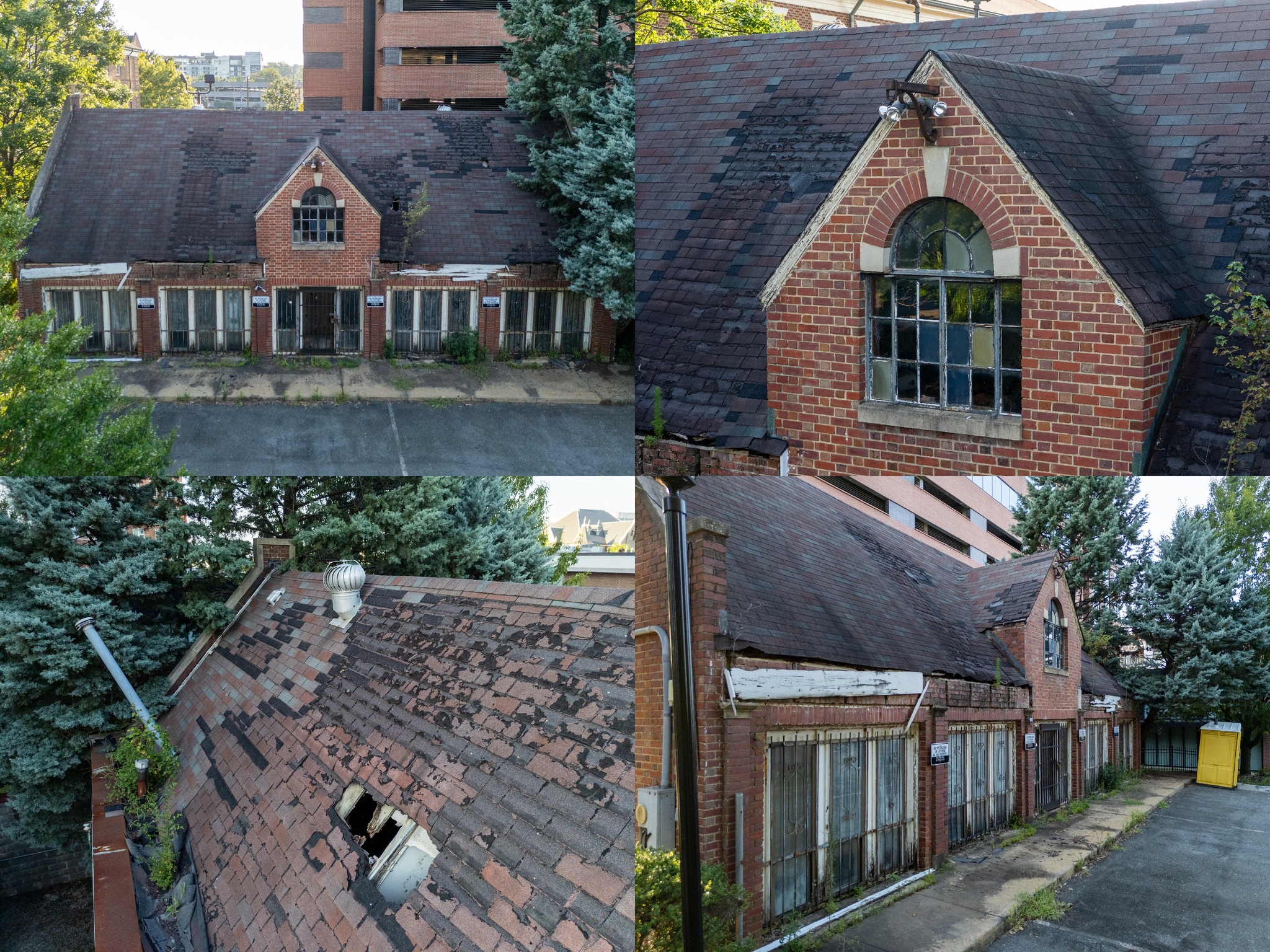 Mike Legeros photos, August 2025
The strongest evidence that the building isn’t a former fire station is the absence of any written citations in the dozens (hundreds?) of historical records that Legeros has combed since the early 2000s.
For example, wasn’t noted in the fire department annual reports[1], nor listed in the city directory listings[2], nor shown in Sanborn Fire Insurance Maps[3]. Nor in newspaper articles, nor in research and writings of earlier historians, like Elizabeth Reid Murray.
[1] legeros.com/ralwake/raleigh/history/reports/annual-reports
[2] digitalnc.org/collections/city-directories
[3] flickr.com/photos/raleighfiremuseum/albums/72157687720558482
That’s our interpretation of the building and its history, as cited and observed thus far. But let’s add one disclaimer. No, we’re not 100% certain that the building never ever and ever never housed a horse-drawn “fire wagon.” We’d need a time machine for that degree of verification.
In the aforementioned history posting[4], one of the respondents recalls its history as a “carriage house for some of the large old houses along Edenton Street.” That seems the best explanation.
[4] https://www.facebook.com/share/p/1Nb5mMkZBc
Where to find documentation of the building’s history? Digital Sanborn Maps[5] are a good, go-to start. We’ve browsed through them but haven’t yet found anything other than an unlabeled drawing of the building.
[5] https://guides.lib.unc.edu/historicalmaps/sanborn
Digitized deeds and property maps are the next step, via the Wake County web site.
Props to Heather for re-finding the building and starting the conversations to re-learn about its history.
Learn More About Raleigh’s Former Fire Stations
Here’s a page with all known/documented volunteer-era fire station locations.
Here’s a visual history and map. (PDF)
See a Scary Amount of Raleigh Fire History
Here’s our master page of all things hysterically historical about RFD.
Chart updated October 15, 2025. Posting created August 23, 2023. This is a blog version of an earlier Facebook posting.
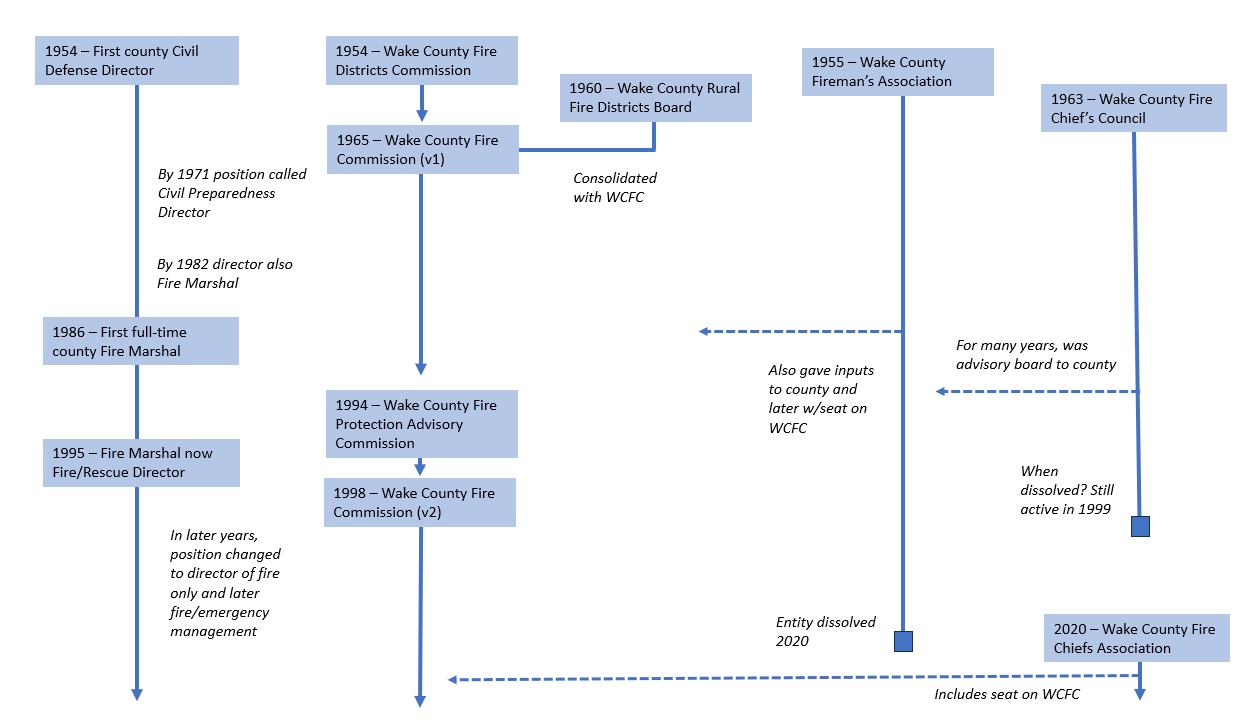
Presenting a new infographic, a high-level history of fire service governance in Wake County.
Source is this research on the history of Wake County fire protection and fire service governance.
See also this history chart of all Wake County fire departments.
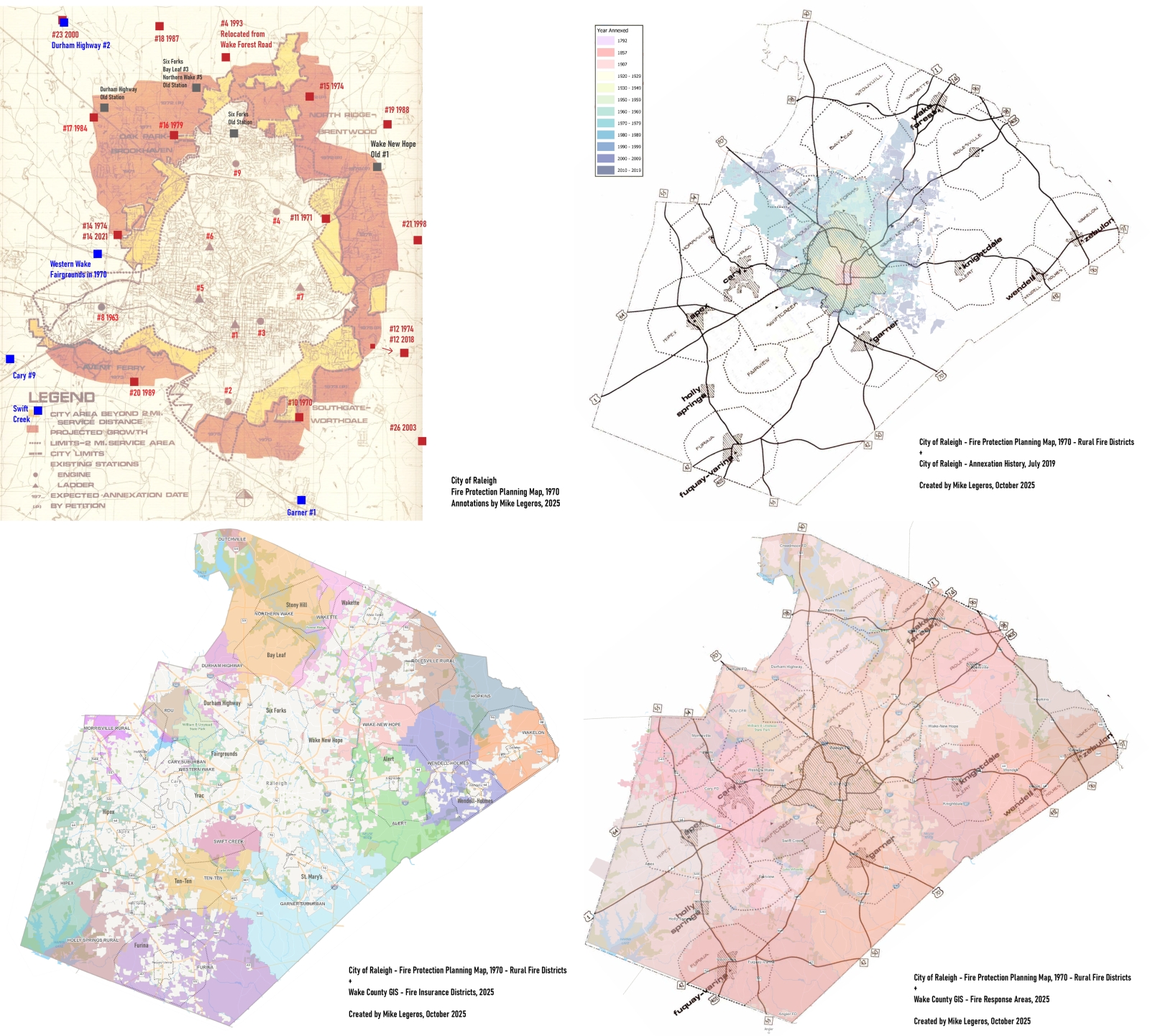
Comparing maps that appeared in a City of Raleigh fire protection planning document in 1970 with other map data:
Sources:
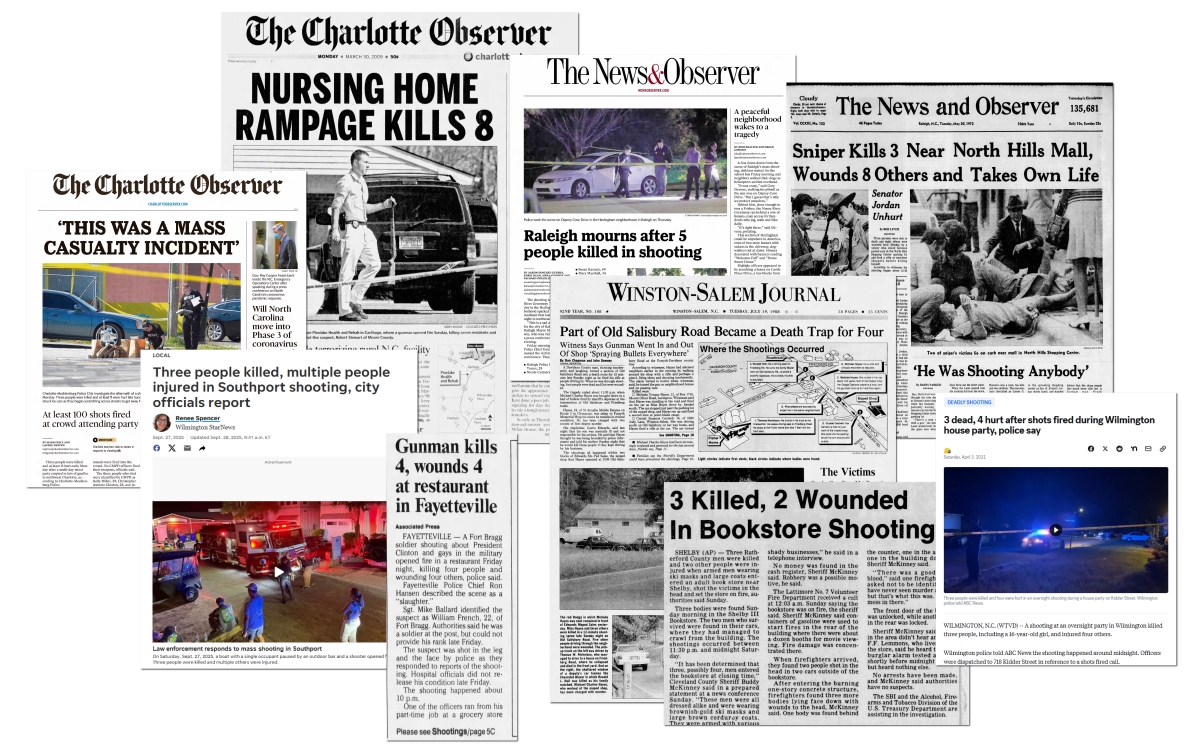
Research notes on the deadliest mass shootings in North Carolina history, expanded from this Facebook posting on September 28, 2025. These notes are still undergoing review and revisions.
Supplement to Mike Legeros deadliest disaster database.
Abbreviations: SP (Single Perpetrator) MP (Multiple Perpetrators)
|
Type |
Incident |
Date / Location |
Killed |
Wounded |
Total Casualties |
Source |
|
SP |
Carthage Nursing Home Shooting |
March 29, 2009, Carthage, NC |
8 |
3 (including perpetrator) |
11 |
Wikipedia “Carthage nursing home shooting” |
|
SP |
1906 Asheville Shooting, business district |
November 13, 1906, Asheville, NC |
5 |
12 |
17 |
Wikipedia “1906 Asheville shooting” |
|
SP |
East Raleigh / Hedingham Shooting |
October 13, 2022, Raleigh, NC |
5 |
3 (including perpetrator) |
8 |
Legeros “Historical Perspective on Mass Shootings in Raleigh”, web |
|
SP |
North Hills Sniper |
May 29, 1972, Raleigh, NC |
4 (including perpetrator) |
8 |
12 |
Legeros “Sniper Attacks North Hills Mall”, web |
|
SP |
Old Salisbury Road Shooting |
July 17, 1988, Winston‑Salem, NC |
4 |
6 (including perpetrator) |
10 |
Wikipedia “Old Salisbury Road shooting” |
|
SP |
Luigi’s Restaurant Shooting |
August 6, 1993, Fayetteville, NC |
4 |
7 (or 8 in some accounts) |
11 |
Wikipedia “Luigi’s Restaurant shooting |
| SP? | Wilmington, Kidder Street, House Party | April 3, 2021, Wilmington, NC | 3 | 4 | 7 | |
|
SP |
Southport Waterfront / American Fish Company Shooting |
September 27, 2025, Southport, NC |
3 |
5 |
8 |
Wikipedia “2025 Southport shooting” |
|
SP |
Shelby Bookstore Murders |
January 17, 1987, Shelby, NC |
3 |
2 |
5 |
Wikipedia “Shelby bookstore murders |
|
SP |
UNC Charlotte Classroom Shooting |
April 30, 2019, Charlotte, NC |
2 |
4 |
6 |
Wikipedia “2019 University of North Carolina at Charlotte shooting” |
|
MP |
Wilmington Insurrection |
November 10, 1898, Wilmington, NC |
14 to 300 |
|
|
Wikipedia “Wilmington massacre” |
|
MP |
Greensboro Massacre, protest march |
November 3, 1979, Greensboro, NC |
5 |
12 |
17 |
Wikipedia “Greensboro massacre” |
| MP | Charlotte Juneteenth Shooting, block party | June 22, 2020, Charlotte, NC | 4 | 10 | 14 | Various |
Exclusions
Excluded incident types include:
Other Notable Mass Shootings, with Fewer Fatalities
Other Mass Shootings, Selected Citations
Notes and Disclaimers
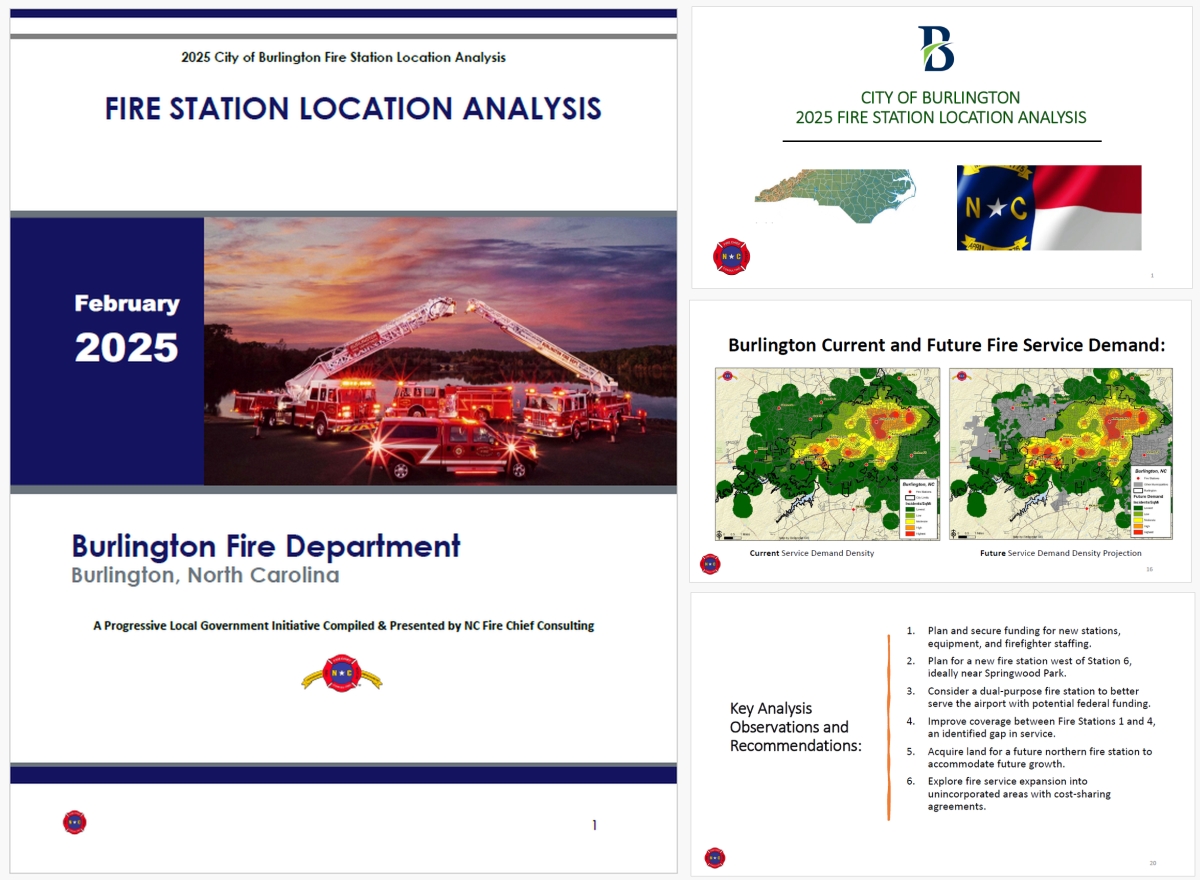
Here’s the fire station location analysis for Burlington, NC, that was recently received by city council.
See presentation slides + report. (PDF, 40MB)
This is an ongoing blog posting about relocating Raleigh Fire Station 15.
Contents
September 2025 – Project Schedule
What’s the latest project update? Here’s the current project schedule, from the official project page:
June 2025 – Call for Artists for Public Art
On [goes here], an RFQ was issued for creating public artwork at replacement Fire Station 15. The budget is $105,000 to design and fabricate. Up to three semi-finalists would be selected to interview and paid a $100 honorarium. The deadline for submission was June 30, 2025.
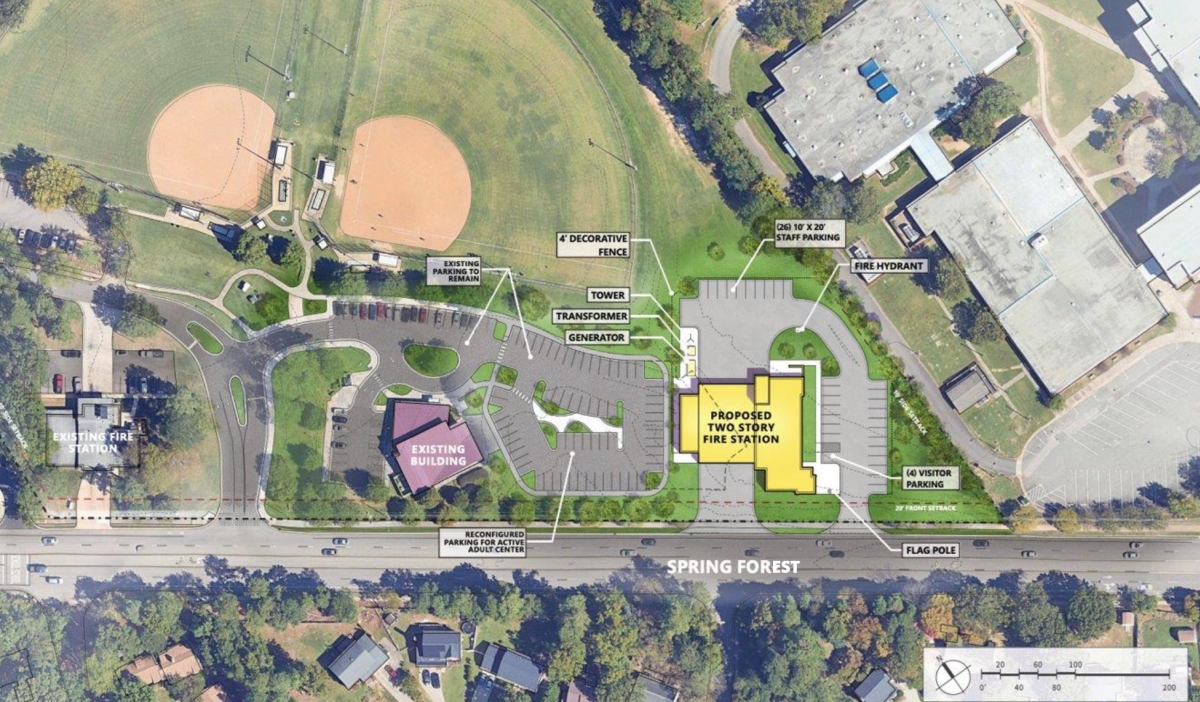
The RFQ document included conceptual design renderings and a site plan. More about the art project.
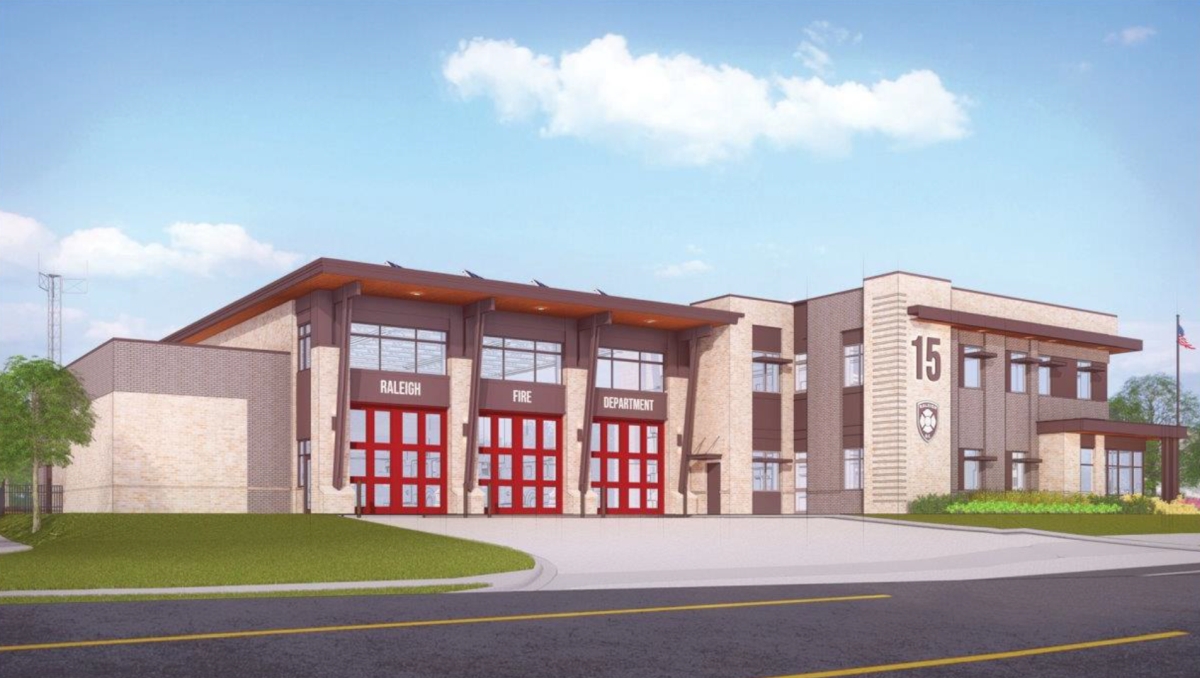
Conceptual rendering
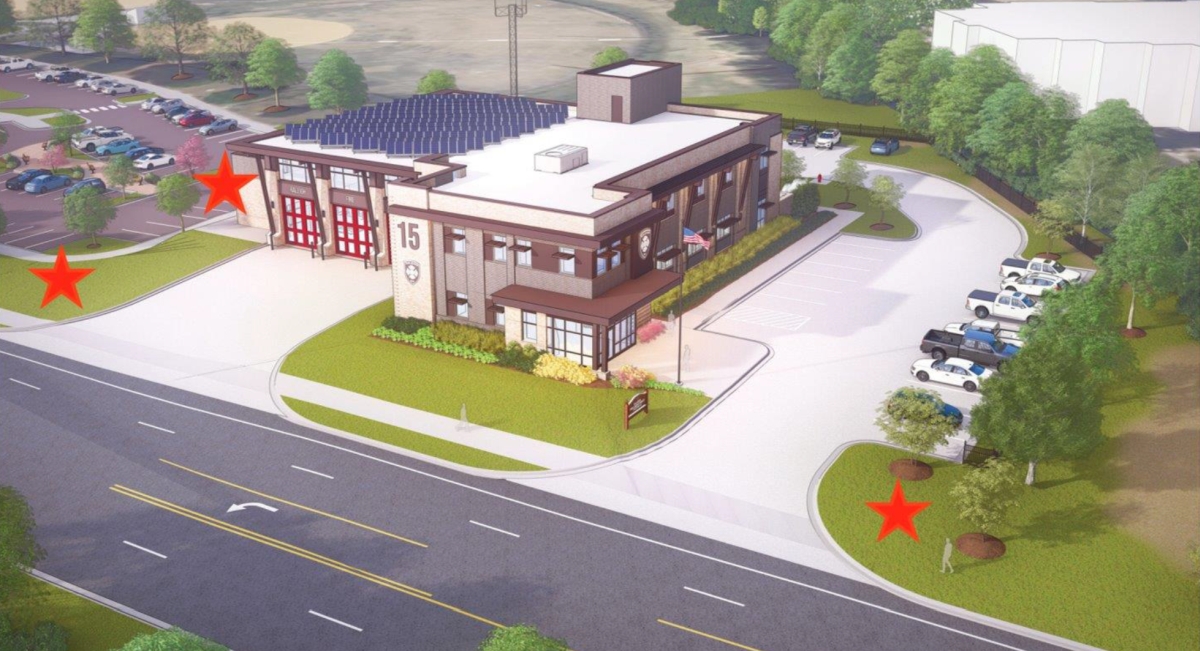 Conceptual rendering
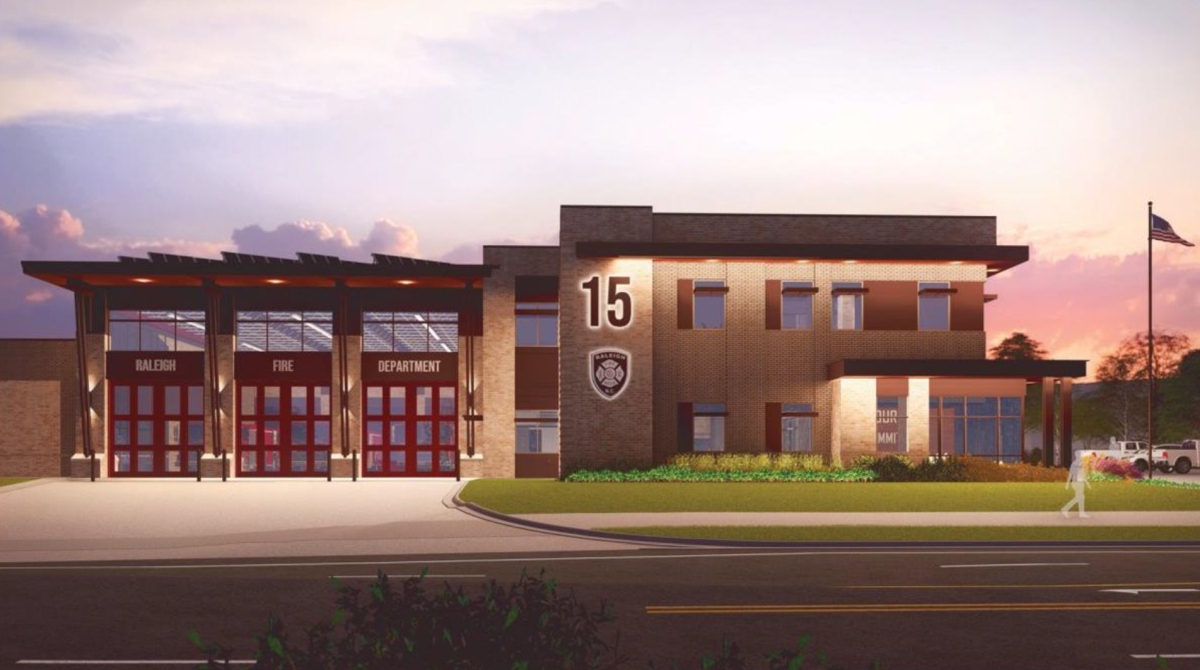
Conceptual rendering, night view
July 2, 2024 – Contract For Design Services Awarded
On July 2, 2024, the contract for design service was awarded to ADW Architects, for just over $2 million. The RFQ for proposals was advertised January 5, 2024. There were eight applicants. Project staff received the applications on February 9, 2024. City council authorized execution of the contract as part of their consent agenda at their July 2, 2024 meeting.
January 2024 – Construction Bids Solicited
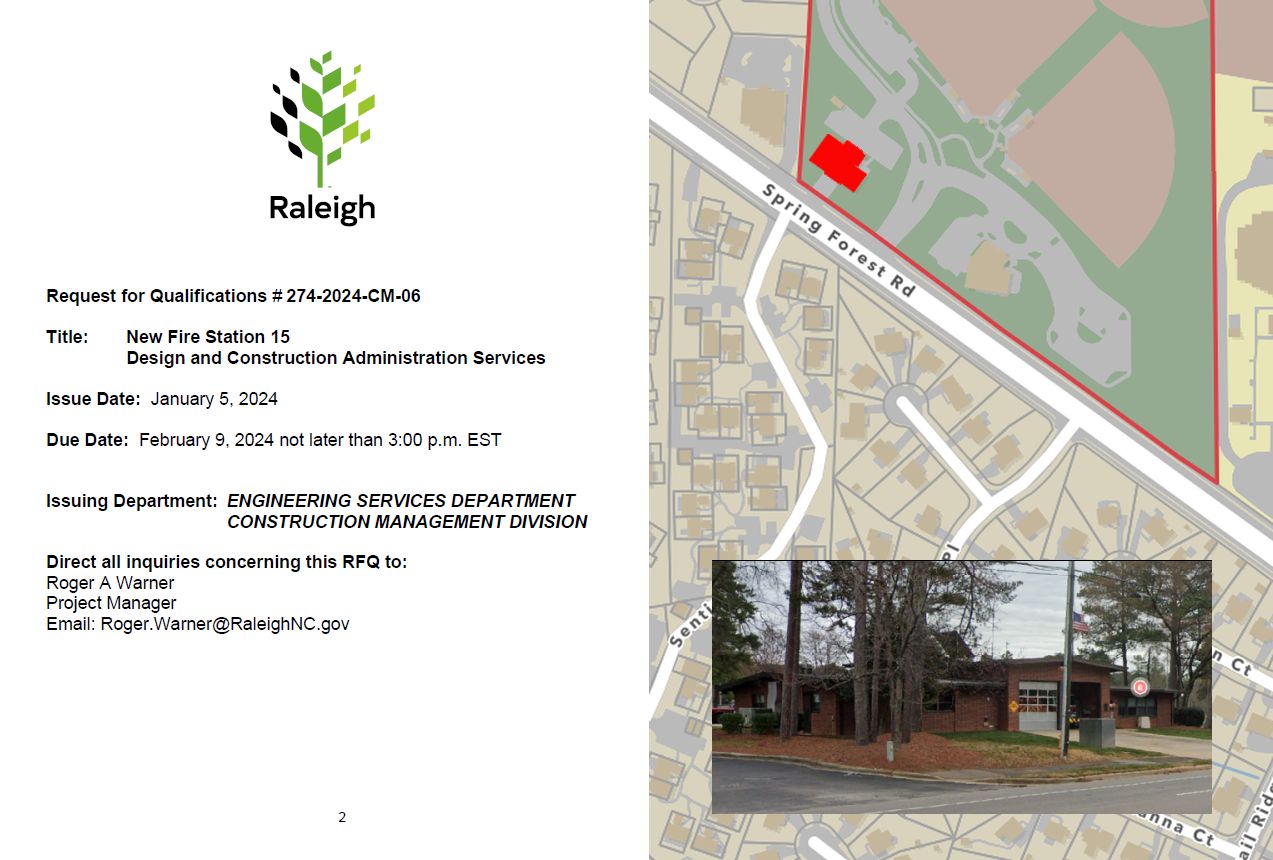
On January 5, 2024, an RFQ was issued for design and construction management services for relocating Raleigh Fire Station 15. The new facility is planned with ~17,000 square-feet and a construction budget of ~$13.5M, plus city contingency of $1.7M and projected escalation of $3.5M through end of construction in January 2027. The proposed site is on Spring Forest Road at Millbrook Exchange Park, near the current station. The RFQ is # 274-2024-CM-06.
Current Fire Station 15 opened on November 13, 1974. It’s a one-story structure with two drive-through bays and 5,664 square-feet. Changes over the years have included the expansion of the rear apparatus bay in 1996, to accommodate a larger aerial apparatus. It currently houses Engine 15 and Ladder 15. Over the years, it has also housed a battalion chief and a haz-mat unit. The Explorer Post was also based there for many years.
May 2023 – Replacement Station Budgeted
On May 16, 2023 – the proposed FY24 budget for the City of Raleigh was announced. Capital projects included $5.85M in FY24 and $11.5M in FY25 for replacing Fire Station 15.
March 2022 – New Doors Installed Continue reading ‘Relocating Fire Station 15 – Project Schedule’ »
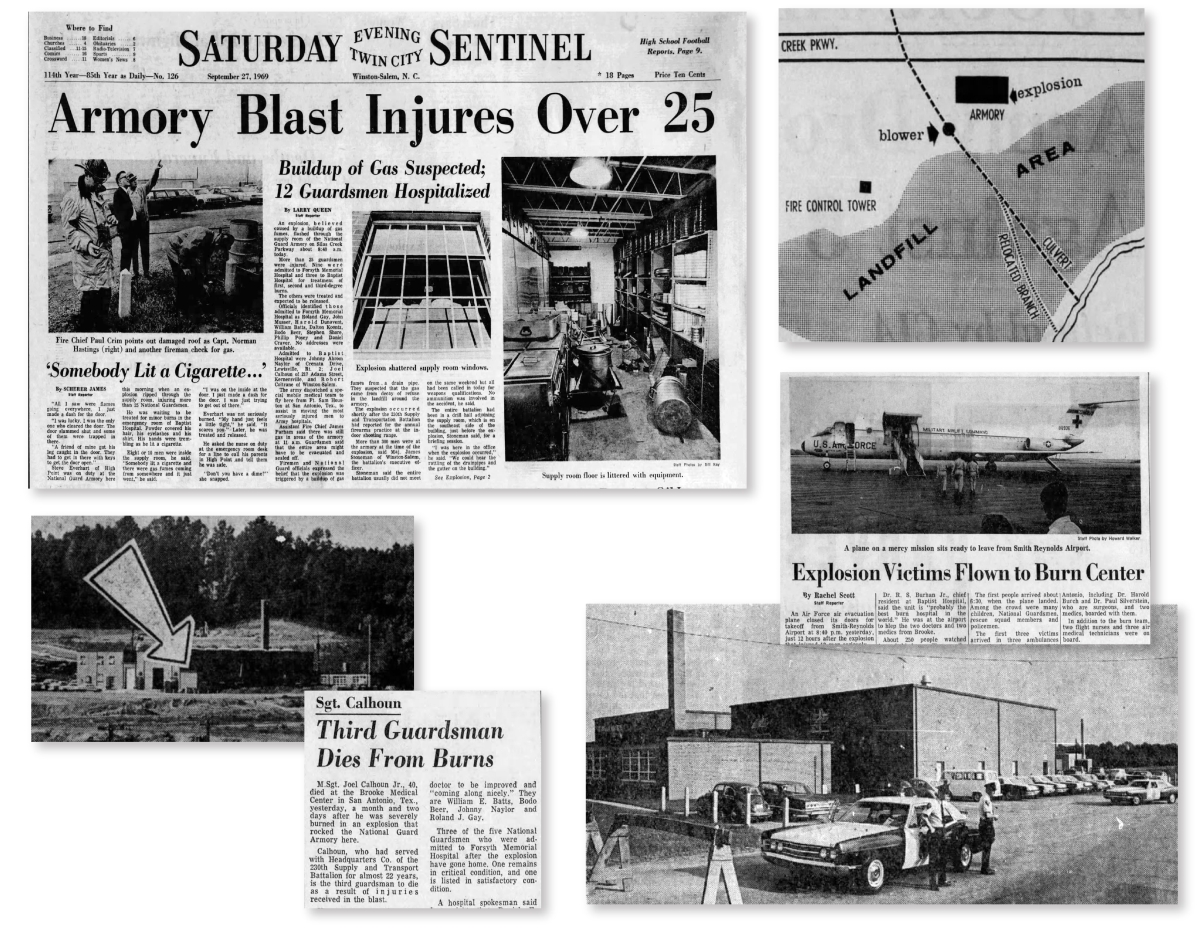
View clippings and other documents
Introduction
On Saturday, September 26, 1969, a methane explosion and flash fire at the National Guard Armory on Silas Creek Parkway in Winston-Salem injured 25 members of the North Carolina National Guard. Seven of the most seriously injured were flown to an Army burn center in Texas. Three later died.
Of the 22 remaining injured guardsmen, nine were hospitalized for long periods and eventually declared 30 percent to 100 percent disabled. They were all awarded full disability benefits by the federal government.
The explosion was caused by colorless and odorless methane gas created by decaying garbage at the nearby sanitary landfill. The armory was located less than 100 yards from the landfill. And there had been at least two prior explosions in the vicinity of the city landfill but none that had caused serious injuries.
The emergency response included the Winston-Salem Fire Department and a dozen or more ambulances including the county ambulance service, local rescue squad ambulances, and funeral home ambulances. Plus, numerous police officers, some who transported patients in their patrol cars. The city police academy was also located in a building that adjoined the armory.
The armory was also located near the fire department drill tower and training grounds, which also adjoined the old landfill site.
Timeline of Events Continue reading ‘Winston-Salem Armory Explosion – September 26, 1969’ »
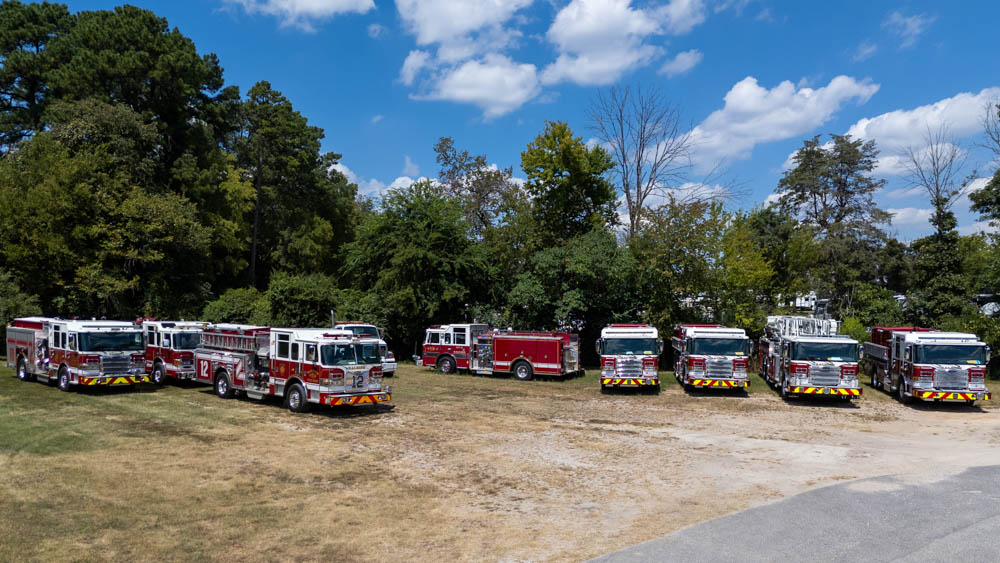
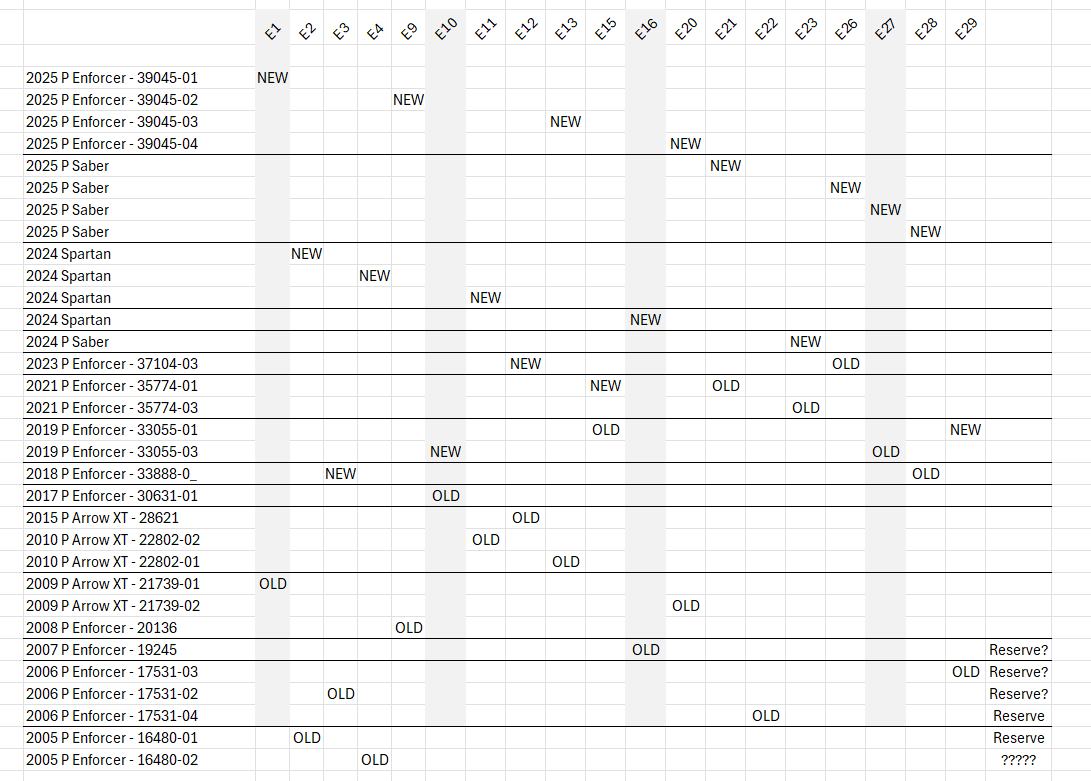
It’s the season of engine swaps in Raleigh, with four new Pierce Sabers and four new Pierce Enforcers delivered this summer. The four Sabers were recently placed in service as Engines 21 26 27 28. The older pumpers assigned to each company have been reassigned to other companies.
Here’s a tracking chart of these and other pumping engine reassignments. It also includes the late 2024 deliveries–one Pierce Saber and four Spartans–and a few of the existing reserves.
Still collecting job numbers for the Sabers and last year’s Spartans.
See our apparatus registry for the master data: https://www.legeros.com/ralwake/raleigh/apparatus/