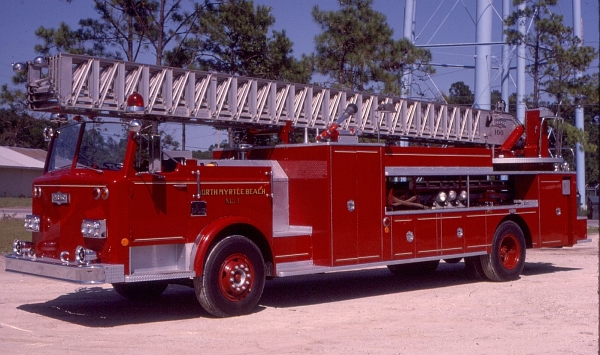
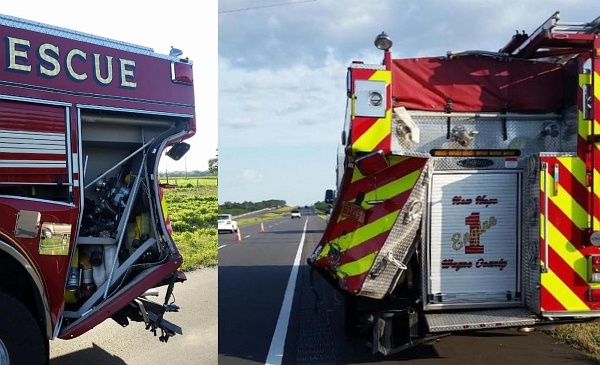
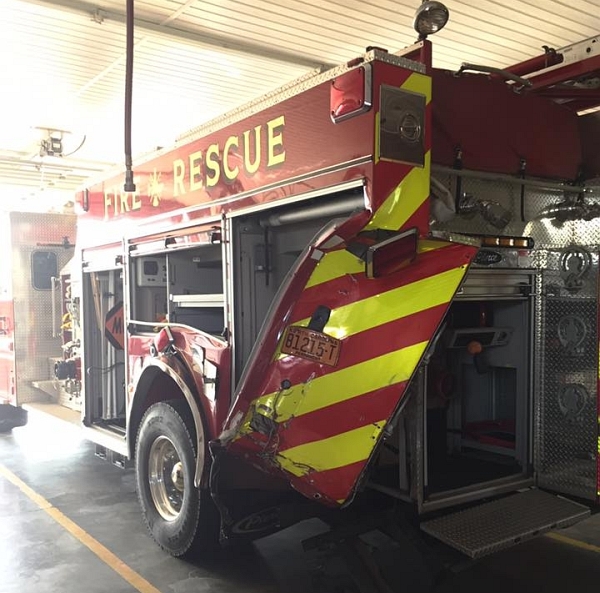
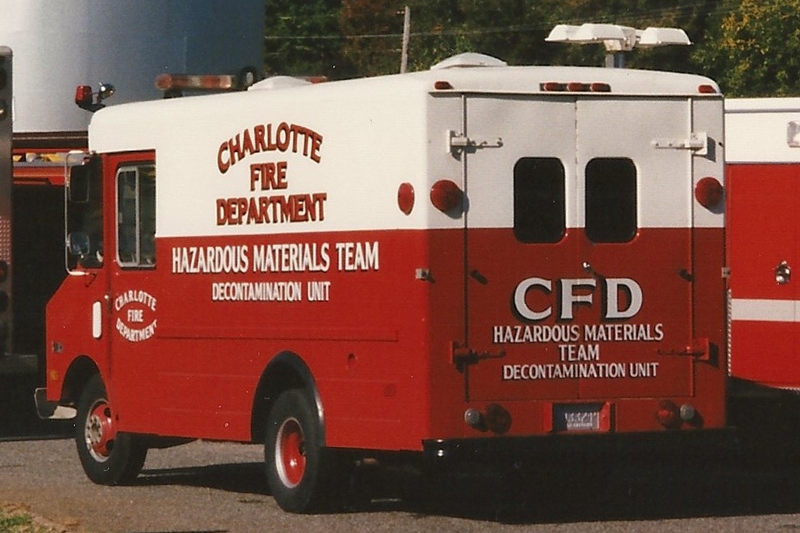
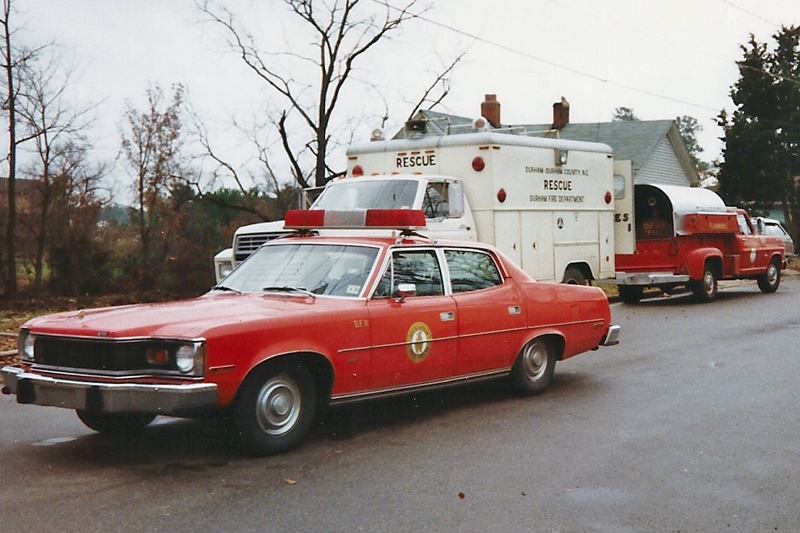
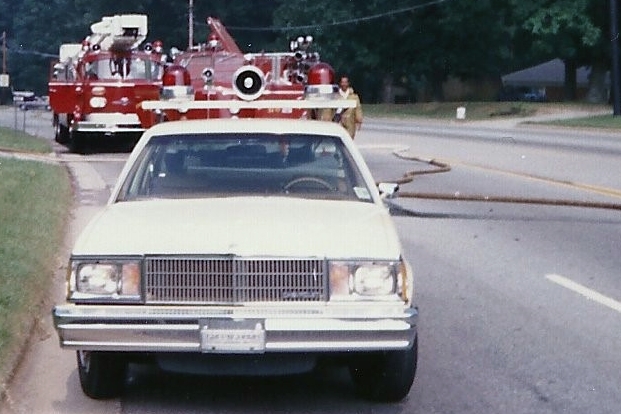
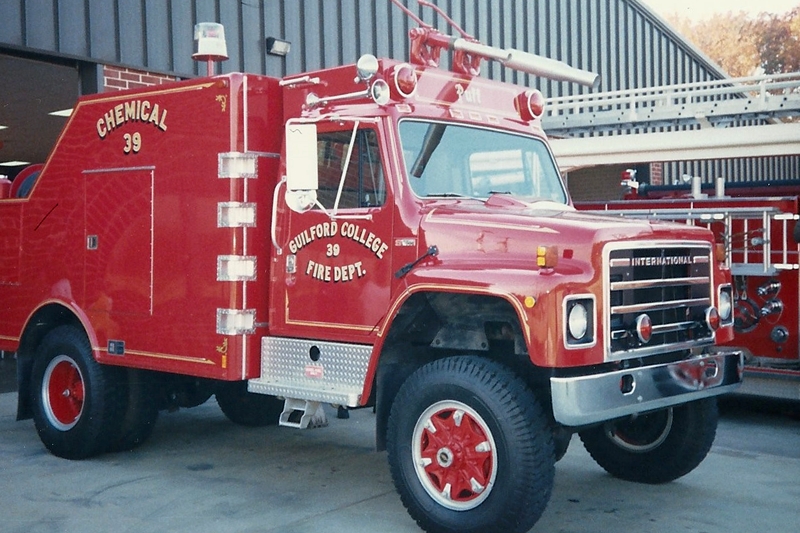
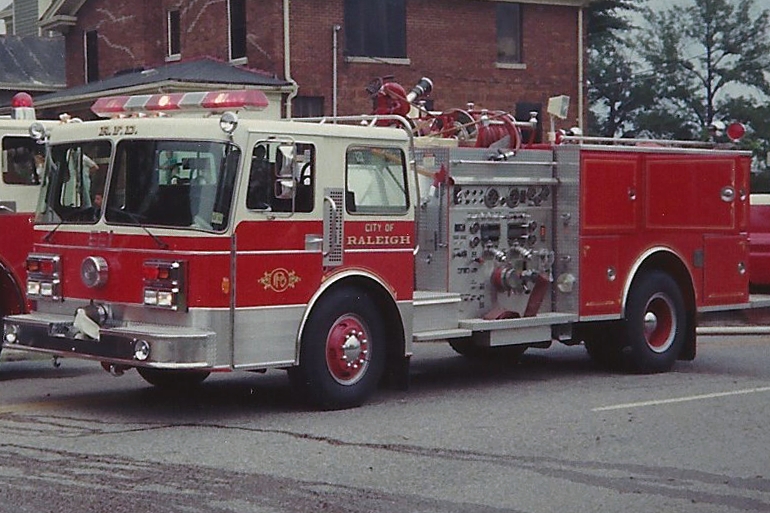
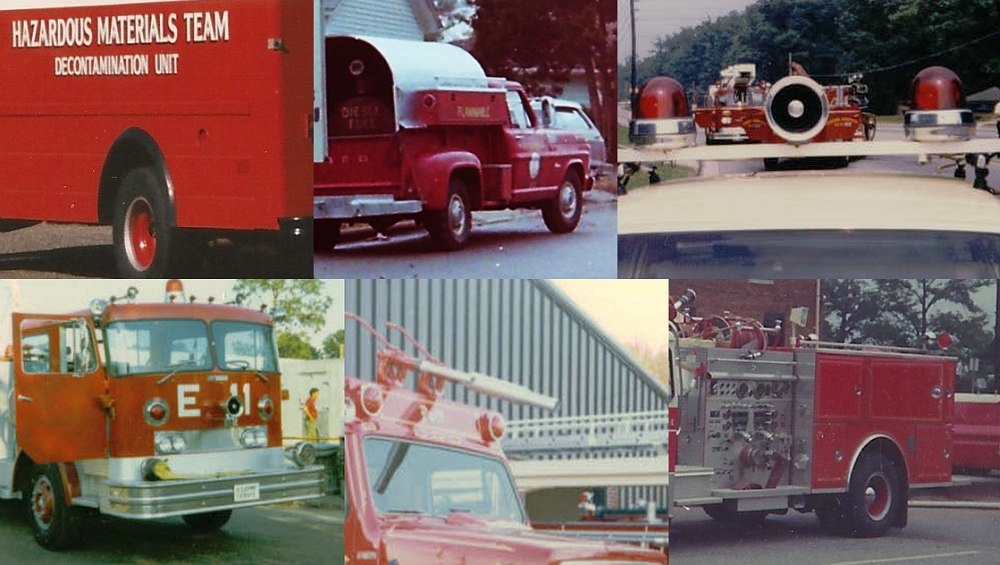
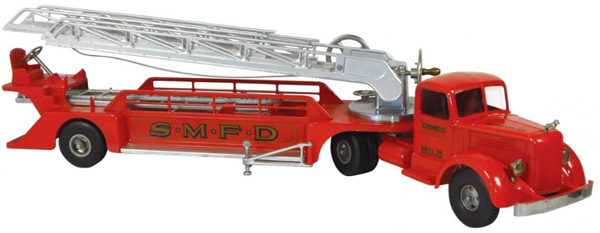
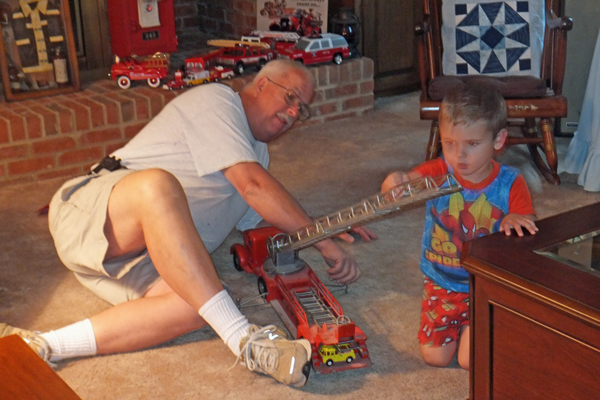
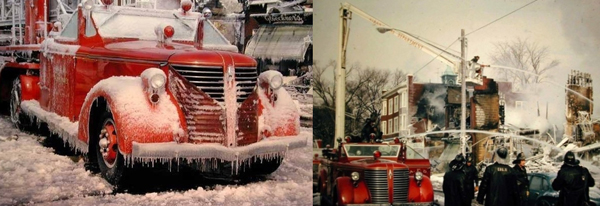
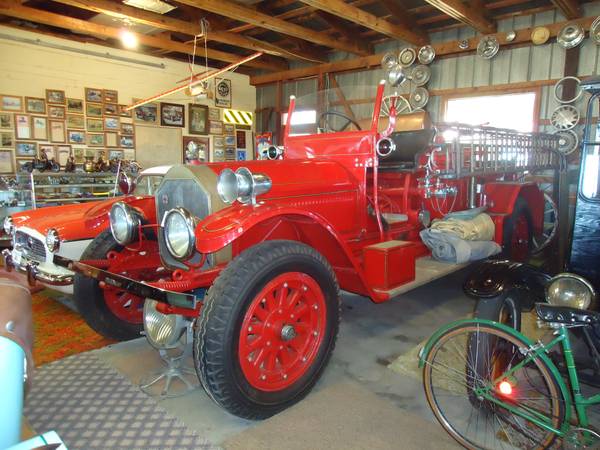
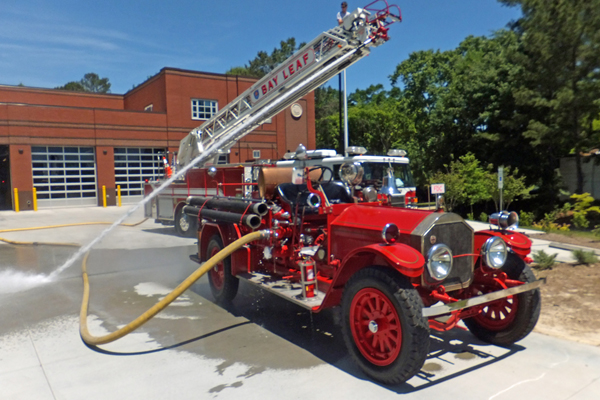
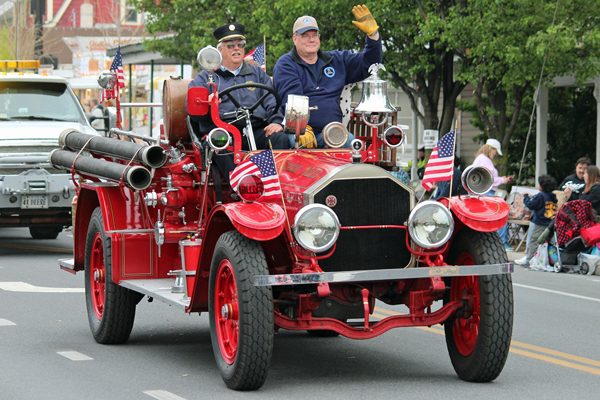
Found for sale on eBay, vintage dealer photos of Howe fire apparatus from what looks like the 1970s. The Garner Fire Department had a pair of these International/Howe pumpers, one 1974 model and one 1976 model. Same size pump and tank on each. Readers may have more information on these trucks. Click to enlarge:
Updated – Wake County Fire Commission Meetings – May 5 & May 12, 2016
May 10, 2016
Here’s the agenda for the May 12 meeting. See accompanying agenda packet (PDF):
- Meeting Called to Order: Chairman Lucius Jones
- Invocation
- Roll of Members Present
- Public Comments
- Comments from the public will be received at the time appointed by the Chairman of the Fire
Commission for 30 minutes maximum time allotted, with a maximum of 3 minutes per person. A
signup sheet for those who wish to speak during the public comments section of the meeting is
located at the entrance of the meeting room.
- Comments from the public will be received at the time appointed by the Chairman of the Fire
- Items of Business
- Approval of Agenda
- Adoption of Minutes for March 17, 2016 Regular Meeting
- Regular Agenda
- Consideration of Fire Tax District Budget Committee and Staff Recommended FY 2017
Operating Budget and FY 17-23 Fire CIP - Fire Commission Apparatus Sub-committee Polices, Procedures and Replacement Schedule
- Fire Commission Equipment Sub-committee Polices, Procedures and Replacement Schedule
- Fire Commission Appointment of Apparatus Committee Chair
- Consideration of Fire Tax District Budget Committee and Staff Recommended FY 2017
- Information Agenda
- Fire Tax Financial Report
- Standing Committee Updates
- Administrative
- Apparatus
- Budget
- Communications
- Equipment
- Facility
- Staffing and Compensation
- Steering
- Training
- Chair Report
- Fire Services Director Report
- Operations Director Report
- Logistics Manager Report
- Other Business
- Adjournment – Next Meeting July 21, 2016
April 26, 2016
Two upcoming meetings of the Wake County Fire Commission:
Thursday, May 5, 2016
7:00 PM
Wake County EMS Training Facility
Lower Level of Commons Building
The purpose of the meeting is for the Fire Commission and Fire Commission Budget Sub-Committee to hold a Work Session to review and discuss FY 2017 Fire Tax Budget considerations.
—
Thursday, May 12, 2016
7:00 PM
Wake County Public Safety Center, Conference Room C-170
330 S. Salisbury Street, Raleigh, NC 27601
Entry via Wake County Sheriff’s Office
This is a special-called meeting.
Vintage Photo of Raleigh Service Truck in 1987
For your Monday evening enjoyment, here’s another vintage photo from David Raynor, this one of a Raleigh service ladder truck, operating at a fire at St. Mary’s and Hargett streets in 1987.
That’s Truck 15, a 1964 GMC that was shop-built using the ladder rack from Raleigh’s first service truck, a 1922 American LaFrance. It previously served as Truck 8, hence the letter. Read about the history of the truck.
Click to enlarge:
Johnston County Line of Duty Deaths – Historical Perspective
On Saturday and the same day that the state’s fallen firefighters were honored in a ceremony at Nash Square in downtown Raleigh, another member of the North Carolina fire service died in the line of duty.
Kenly Firefighter John M. Davis Jr., 45, suffered a heart attack while working at the scene of an overturned vehicle and subsequent extrication on Princeton Kenly Road. He experienced chest pains and was transported to the hospital, where he later died.
Here’s a FireNews story about his passing, and information on the arrangements. The funeral will be Thursday, May 12, at 11:00 a.m. at Kenly Funeral and Cremations, 103 E. 2nd Street. Burial will follow at Center Ridge Presbyterian Church, 2712 Glendale Road.
Davis is the eighth line-of-duty death in Johnston County’s history, and the first for the Kenly Fire Department in its 75+ year history. And all of the deaths have been cardiac or illness related.

Left to right: Crocker, Barbour, Lee, Daniels, and Davis.
Missing images for Narron, Lee, and Ellington.
Below are details on Johnston County’s line-of-duty deaths, from my fallen firefighter database.
| Name | Age | Rank | Death | Department | Narrative |
| McDaniel Narron | 56 | 8/3/76 | Antioch | Died of a heart attack while operating the pump at a fire at his residence on RFD #1 in Middlesex. | |
| James H. Lee | 67 | 6/25/91 | Wilson’s Mills | Died of a rare heart condition several days after participating in water shuttle operations at a large tire fire in Princeton. | |
| George E. Crocker | 32 | Chief | 6/22/08 | Pine Level | Died of a heart attack at home, after responding to a fire and three EMS incidents. He was found deceased the next morning. |
| Jonathan “Johnny” L. Littleton | 40 | Captain | 8/19/10 | Pine Level | Died at home the day after participating in training. |
| Richard “Ricky” L. Barbour | 55 | Chief | 2/4/11 | Wilson’s Mills | Died of a heart attack, after complaining of chest pains the day after responding to a woods fire. |
| Thomas G. Lee | 67 | Firefighter | 2/1/14 | Four Oaks | Died at his home after an apparent heart attack within 24 hours of responding to the station for a motor-vehicle accident call. |
| Christopher J. Daniels | 40 | Lieutenant | 8/17/15 | Pine Level | Found unresponsive at the fire station about ninety minutes after the start of shift, and following his normal routine of running for thirty minutes. |
| John M. Davis Jr. | 45 | Firefighter | 4/7/16 | Kenly | Died at the hospital after suffering a heart attack at the scene of a motor-vehicle accident and extrication on Princeton Kenly Road. |
New Crash Truck Delivered at Airport – September 1969
In September 1969, a new fire engine was delivered at Raleigh-Durham Airport. The Ansul 480 “aircraft crash rescue vehicle” was built on a 1969 International Harvster Loadstar chassis by Southeastern Safety Appliance Company in Charlotte. The Airport Authority authorized its purchase on August 5 of that year. It cost $32,250.50.
The truck was equipped with 1,350 of Purple K dry chemical extinguishing agent, and 250 of gallons of “light water.” The latter was water pre-mixed with foam concentrate. The rig was also the airport’s first pump-and-roll (er, spray-and-roll) rig, and its first larger-capacity truck. It was designated CT-2, later CT-12, later CFR-12. And remained on the roster in the 1990s, as memory serves.
Previously, the firefighting fleet consisted of two trucks: a 1950s pick-me-up truck with an Ansul dry-chemical system (600 or 650 pounds of Purple K) and a World War II-era 1946 International/Bean with a high-pressure pump, 300 gallons of water, and 30 gallons of foam. (Likely an Army Class 125 crash truck.) See my page of apparatus info for complete histories.
The 1969 International/Ansul crash truck was demonstrated on Tuesday, September 23. The next day’s Raleigh Times reported that “nine hundred gallons of jet fuel and 100 gallons of gasoline went up in a searing column of smoke and heat. But half a minute later, the blaze was tamed by a new fire truck.” The truck also helped improve the airport’s “fire rating.” But the rating dropped again, after an Eastern DC-8-61 landed.
Airport Manager Henry Boyd said “ideas were being kicked around” on how to raise the airport’s rating again. The old apparatus would also be retained.1 Who were the firefighters that operated the truck? Those were “sales service personnel” who “had been trained in life saving and fire control.” (Full-time firefighters were added in 1977. Fire crews continued their secondary duties as ramp crews until about 1979, when the airport sold its aircraft fueling business.)
The airport soon had a military surplus 1959 Walter Class 1500 crash truck on the roster, likely obtained around 1970. That probably or certainly raised the airport’s fire rating back to the top. Then in 1973, a new Walter CB300 crash truck was purchased, with further improved the airport’s firefighting capabilities.
Here are a trio of Raleigh Times photographs from the demonstration. If the top image looks familiar, it’s also the cover photo of Mr. Blogger’s book Raleigh & Wake County Firefighting – Part II, published in 2004 by Arcadia. See more info on his books. Or learn more history of the airport fire department.

Raleigh Times photographs, courtesy (Raleigh) News & Observer, via North Carolina State Archives
And here’s the truck in later years. Left is a snapshot scanned from the old photos are the airport fire station. right is a picture by Lee Wilson.

1The Times story described the existing apparatus as “converted foam generator World War II brush fire fighter, 650 pounds of dry chemicals, and Purple K extinguishers on all airport vehicles.”
North Carolina Fallen Firefighters Ceremony – May 7, 2016
This Saturday, May 7, 2016, the annual North Carolina Fallen Firefighters Memorial Service will be conducted at Nash Square in downtown Raleigh. The event starts at 1:00 p.m. and will be preceded with a parade at 10:00 a.m., featuring honor guards, pipes and drums, and fire apparatus. See event information.
In addition, motorcyclists from across the state will participate in the annual Red Helmet Ride that day, to support the families of the fallen members and the North Carolina Fallen Firefighters Foundation. View the flyer (PDF).
Eight firefighters will be added to the memorial wall this year. Six perished in 2015, and two are legacy additions from earlier decades.
The memorial was dedicated in 2006, and contains the names of over 280 firefighters and fire service members who’ve died in the line of duty since 1902.
This Year’s Honored
| Robert W. Young | Winston-Salem FD | 11/17/1918 |
| Joe T. Sowell | Hamlet FD | 5/14/1969 |
| Amy L. Pierce | Badin Lake FD | 3/17/2015 |
| James A. Hicks | North Carolina Air National Guard Fire and Emergency Services | 7/27/2015 |
| James D. Robinson | Brasstown FD | 8/14/2015 |
| Christopher J. Daniels | Pine Level FD | 8/17/2015 |
| Carl C. Phillips | Locke Township FD | 8/27/2015 |
| Sidney Weiner | No. 7 Township Fire & Rescue | 12/15/2015 |
Details on those who died in 2015:
- Daniels, 40, was found unresponsive at the fire station about ninety minutes after the start of shift, and following his normal routine of running for thirty minutes. He was a career Lieutenant. Read USAF info.
- Hicks, 44, was found unresponsive in his bunkroom several hours after responding to a mutual aid structure fire. He was pronounced dead at the fire station. He was a career Captain. Read USAF info.
- Phillips, 41, died of an apparent heart attack several hours after responding to a motor-vehicle collision. He was a career Lieutenant. Read USAF info.
- Pierce, 49, was a volunteer Firefighter. She was also a career paramedic.
- Robinson, 59, was found unresponsive, while on standby at a local race track. He was treated at the scene, and passed away after transport to the hospital. He was a volunteer Fire Chief. By day he was a music teacher at a folk music school. Read USAF info.
- Winer, 91, died of injuries as a result of a motor-vehicle collision on October 20, 2015, while operating a department small truck for non-emergency purposes. He sustained serious fractures to both feet and a subsequent leg amputation. He was a volunteer Firefighter. Read USAF info.
And about the legacy additions:
- Sowell, 38, died at the hospital after suffering a heart attack at the wheel of a pumper, while returning from a midday fire. He was a volunteer member, and worked for the Seaboard Railroad as Operator (Engineer?). Read Richmond County Daily Journal story from May 3.
- Young, 30, died of a gunshot during a period of civil and racial unrest. He was a volunteer Firefighter. By day he was a shoe salesman. Read a pair of blog posts about the incident: Part 1 and Part 2.
Mecklenburg County Line of Duty Deaths – Historical Perspective
Arrangements were announced today [link expired] for Pineville Firefighter Richard Sheltra, who died in the line of duty at a strip mall fire in Charlotte on Saturday. Sheltra is the seventeenth line-of-duty death in (or from ) Mecklenburg County. The first were recorded in 1914, when Charlotte Fire Chief J. Harvey Wallace and Captain William B. Glenn were killed while fighting a barn fire, when dynamite exploded in a nearby house.
From 1914 to 2016, twelve members of the Charlotte Fire Department have died in the line of duty, and four members of the North Carolina Air National Guard. They were detailed to South Dakota and killed in an air tanker crash in 2012.
Mecklenburg County has also experienced the greatest number of LODDs in the state, followed by Forsyth County (14), Wake County (11), and Buncombe (10) and Cumberland (10) counties.

Top to bottom, left to right: Wallace, Glenn, Spittle, Mendenhall, Cathey, Westnidge, Black, Munday, Pettus, Long, Copeland, Franklin, Cannon, David, McCormick, Mikeal, Sheltra
From my fallen firefighter database:
| Name | Age | Rank | Death | Department | Narrative |
| J. Harvey Wallace | 40 | Chief | 07/01/14 | Charlotte | Both killed while fighting a barn fire, when dynamite exploded in a nearby house. |
| William B. Glenn | 49 | Captain | 07/01/14 | Charlotte | |
| George W. Spittle | 39 | Firefighter? | 03/10/17 | Charlotte | Died of injuries sustained after the engine he was riding was struck by a street car, while responding to a call. |
| Robert E. Mendenhall | 37 | Captain | 05/17/28 | Charlotte | Died after being ejected from the engine he was riding, after a collision with a grocery truck while responding to a county-assistance call. |
| W. Graham Cathey | 24 | Firefighter | 01/08/29 | Charlotte | Killed when struck by a utility pole, while working on the fire alarm system. |
| Joseph S. Westnedge | 30 | Firefighter | 03/06/34 | Charlotte | Died at Presbyterian Hospital in Charlotte, from injuries after the engine he was riding struck a tree, while responding to a fire. |
| Pruitt L. Black | 29 | Firefighter? | 04/01/34 | Charlotte | Died after he tripped on his bunker pants and fell headfirst down the pole hole at Station 4. |
| James M. Munday | 50 | Assistant Chief | 03/08/55 | Charlotte | Died of coronary occlusion in 800 block of East Trade Street. |
| Marshall G. Pettus | 55 | Captain | 03/19/68 | Charlotte | Died at Mercy Hospital, thirty minutes after suffering a coronary occlusion. |
| Kent F. Long | 44 | Firefighter II | 12/01/06 | Charlotte | Died after collapsing at Station 23 while exercising and after responding to multiple calls during his shift. |
| Michael W. Copeland | 50 | Captain | 01/25/03 | Charlotte | Died of a heart attack at a live fire training exercise, after just stepping off the apparatus to take command of the incident. |
| Mark T. Franklin | 46 | Engineer | 11/30/03 | Charlotte | Died of a massive pulmonary embolism as a result of a knee surgery to repair damage sustained while pulling hose at a fire on Apr 18, 2003. |
| Robert S. Cannon | 50 | Senior Master Sgt./Flight Engineer | 07/01/12 | NC Air National Guard | Four members of the 145th Airlift Wing were killed when their Air Force C-130, carrying a modular forest firefighting system, crashed in South Dakota on the White Draw fire near Edgemont. |
| Ryan S. David | 35 | Major/Navigator | 07/01/12 | NC Air National Guard | |
| Joseph M. McCormick | 36 | Major/Instructor Pilot | 07/01/12 | NC Air National Guard | |
| Paul K. Mikeal | 42 | Lt. Col./Evaluator Pilot | 07/01/12 | NC Air National Guard | |
| Richard Sheltra | 20 | Firefighter | 4/30/16 | Pineville | Died as result of inhalation of products of combustion, while fighting a three-alarm fire at a strip mall. |
New Oshkosh Striker 3000 Delivered at Airport
On Thursday morning, a new crash truck was delivered to Raleigh-Durham International Airport. The 2016 Oshkosh Striker 3000, 2000/3200/420/450#/460# plus Snozzle is the first new ARFF rig since 2000, and the first lime apparatus in a quarter century.
The truck was purchased with 85% of funding from federal and state sources, thus the safety yellow color. Which is a requirement of the program. Designated CFR 4, it will replace a 2000 Oshkosh T-3000, 1950/3000/420/450#. The airport is evaluating retaining the older truck as a reserve rig.
Here’s a video of the apparatus being unloaded:
And a posed picture, before it was moved into a bay at the maintenance building.

See more photos, from both Legeros and RDU Fire-Rescue. Next steps including receiving and mounting equipment, and training of personnel from Oshkosh reps.
Read more about the truck and its features, in our prior posting.
Historical Perspective
Click once or twice to enlarge:
Photo credits, top to bottom, left to right: Durham Morning Herald, Lee Wilson, News & Observer, RDU Fire-Rescue, Dale Johnson, Lee Wilson, Pete Brock.
By my count, this is the tenth crash truck delivered to the airport:
- 1946 International/Bean, likely Army Class 125, with high-pressure 50-60 GPM pump, 300/20 f.
- 1969 International/Ansul Magnum 480 dry-chemical unit, 1350#/200 l.w.
- 1959 Walter Class 1500, 1500/950/200 f. (obtained circa 1970)
- 1973 Walter CB3000, 1500/300/500 f. (later rehabbed by CRES in 1990)
- 1977 Walter B1500, 1000/1500/180 f. (later rehabbed by CRES in 1990)
- 1989/1977 CRES/Walter B1500 , specs. TBD
- 2000 Oshkosh TI-1500, 1500/1500/210 f./450#
- 2000 Oshkosh TI-3000, 1950/3000/420 f./450#.
Not counting mini-pumpers and smaller trucks with dry chemical equipment:
- 1952 Chevrolet pick-up with dry-chemical equipment, 450#/50 l.w.
- 1959 Chevrolet pick-up with dry-chemical equipment, 400#
- 1966 Chevrolet pick-up with dry-chemical equipment, 400#
- 1979 Chevrolet/Reading/Ansul rescue truck with dry-chemical unit, 450#/50 l.w.
- 1991 Ford/E-One mini-pumper, 250/200/30 f.
- 2001 Ford F-550/4 Guys mini-pumper, 500/250/20 f.
Travel Report – Hose Reels & Hose Houses
In days of old, when crews were bold, and motor trucks hadn’t been invented, hydrant pressure was used to fight fire. Simply supply hose and nozzles–and a water system with hydrants–and your fire department was equipped. Reels of hose pulled by hand were common, and notably in small towns. (Though they were used in cities of all sizes as well.1)
Hose houses were small structures where reels and equipment were stored. Or just large boxes, placed beside fire hydrants, and containing hose, nozzles, and equipment. (Industrial and institutional facilities also employed such methods.)
Here are examples of both, as found while roaming Nevada last week. Top photos were taken at the Central Nevada Museum in Tonopah, and show a hand hose reel and hose house from the town of Manhattan, circa 1906. Bottom are hose houses and equipment therein in Belmont.
Belmont also has a fire station and, from the size of the building, at least a couple pieces of apparatus. Saw, say, four or six of these hose houses among the handful of streets that constitute the town center. There may have been a couple more.
Why have both? Belmont is the site of a ghost town, and appears to have a small quantity of residents. In the event of fire, any persons could connect and attack, and without waiting for the fire department to arrive. Or its presumably volunteer members to reach both the town and the station.
Click once or twice to enlarge:
1Hydrants and hand reels were added in Raleigh in 1887, and soon switched to horse-drawn hose wagons. Wendell used hand reels starting around 1919. Wake Forest added theirs in 1921. Zebulon added their reels about the same time.
Fallen Firefighter Research Resource – Find a Grave
On Saturday, May 7, 2016, the annual memorial service for North Carolina’s fallen firefighters will be held at Nash Square in downtown Raleigh. More about that event in an upcoming blog post. ‘Tis also the season for Mr. Blogger to update his records, notably his fallen firefighter database.
Rediscovered a nifty research resource on that front. Find a Grave, a web site with burial records on 145 million (!) people from all over the world. Did a cursory search on about a dozen fallen firefighters (across decades and centuries) and found records for eight.
What’s so great about burial information, you ask? For research purposes, the entries may also contain complete names, birth and death dates, biographical information, and narratives about their deaths. In one case, a scanned death certificate was also included.
My first findings?
Details about Robert Young, a volunteer fireman in Winston-Salem, killed in a race riot in 1918. (He’s being added to the state memorial this year.) Proper first name for John Gaskill, a New Bern fireman killed in 1904. My records always listed him as “Johnnie.” And a full name for Henry Barnett, one of three Asheville firemen killed in a train wreck in 1891, as they were returning from the state firemen’s convention.
Give it a whirl.