Elm City Derailment and Haz-Mat – May 11, 1987

This is a blog version of a Facebook posting from September 14, 2026.

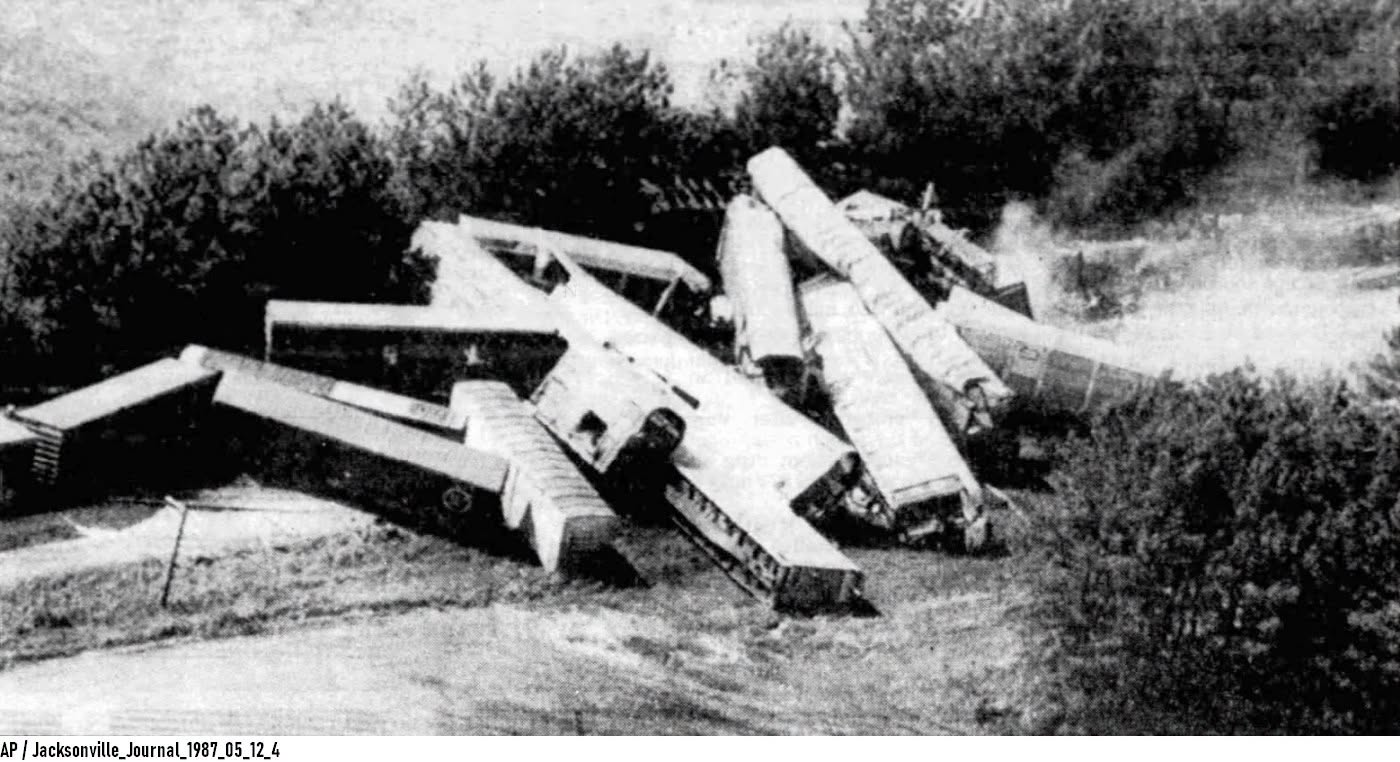
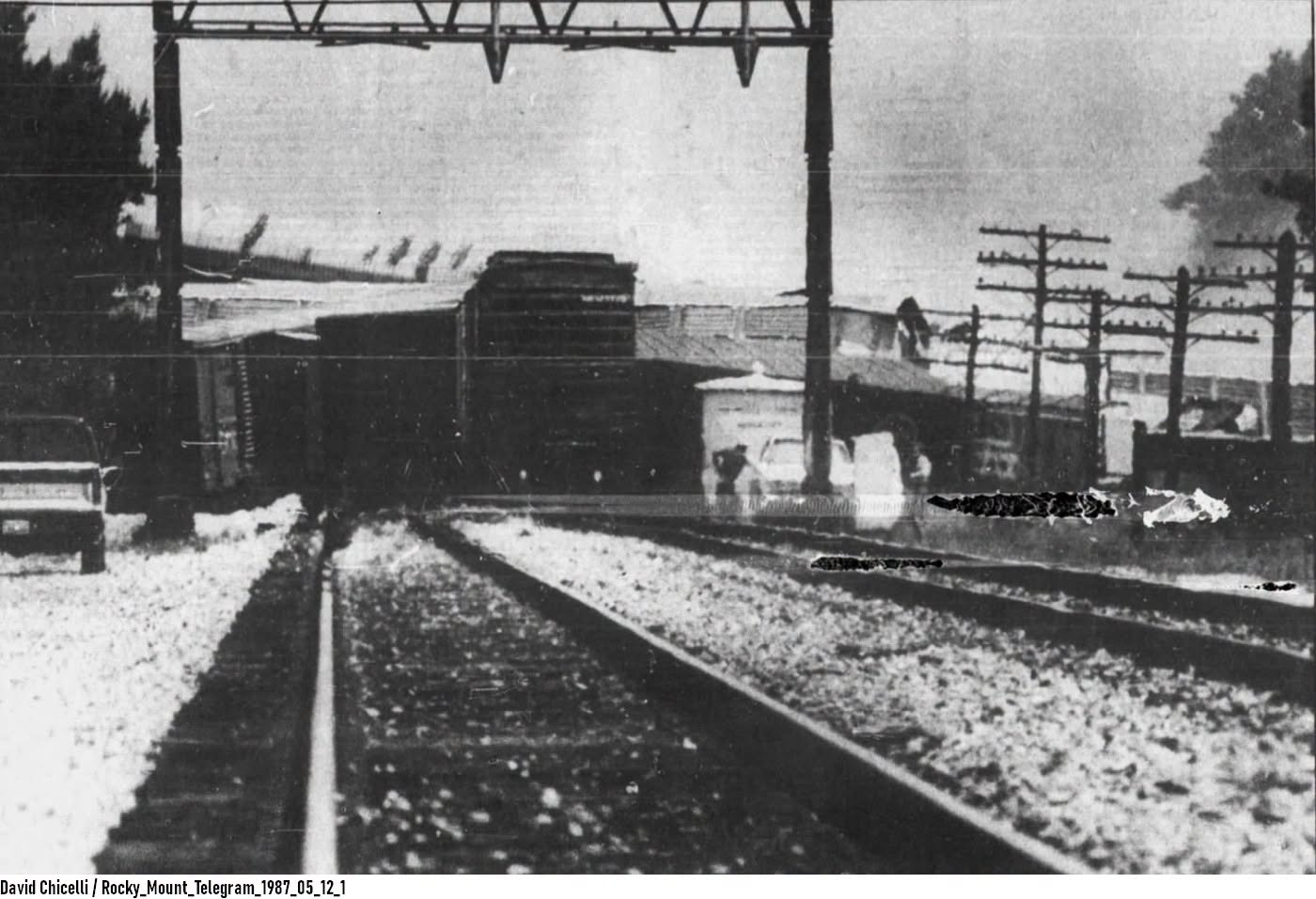
Looking back at the May 11, 1987, derailment and haz-mat incident south of Elm City in Wilson County. At about 10:30 a.m., at least 27 cars of a CSX freight train derailed. Many were overturned and started leaking sulfuric acid. Some 2,800 area residents were evacuated.

Here’s what the next day’s Rocky Mount Evening Telegram wrote about the incident:

Train derails; Elm City evacuated
Sulfuric acid cloud released

From AP & Staff Reports

ELM CITY — About 2,800 residents were evacuated Monday after about 115,000 gallons of toxic sulfuric acid leaked following a train derailment south of Elm City.

No one was reported injured in the accident and only a few complained of throat irritation from the chemical compound. But a patient of the Friendly Elms Rest Home suffered a cardiac seizure while being moved to safety in adjoining Nash County.

At least 27 cars of a CSX Transportation tanker derailed about 10:30 a.m. about a half-mile from the intersection of State Road 1330 and Old U.S. 301. Many of the derailed cars were overturned, and the poisonous gas floated west in a large white cloud toward Sharpsburg.

Railroad officials said a wheel and axle assembly overheated, causing the wheel to fall off the axle.

Authorities were expected to set upright the ruptured 137-car train today, after the remaining acid was pumped out. The tanker was patched last night.

“The tanker is laying on its side, so only about half of it has drained out,” said Fire Chief Doug Batts, the commander at the scene. “The railroad people don’t want to try to right it for fear the patch would break.”

The acid cloud began dissipating by mid-afternoon Monday and cleared in the evening. By about 6 p.m., the cloud was about 150 feet long and hovering about 50 feet above the ground.

Most residents were allowed to return last night.

Wilson County Sheriff Wayne Gay said 30 families who live within a half-mile of the derailment would not be allowed back to their homes until the afternoon.

Moments after the wreck, the rest home and students of both Elm City schools were evacuated to N.E.W. Academy at Sharpsburg. The evacuees were transported by school buses, ambulances and personal vehicles.

But the academy had to be abandoned as the cloud, which at its height was about 500 feet across, approached. Thirty-two rest home patients were transported to a Red Cross shelter at Coopers Elementary School on N.C. 58 near Sandy Cross.

Officials from Nash County Emergency Management Services and countywide emergency personnel aided with transport and facilitating patients’ needs.
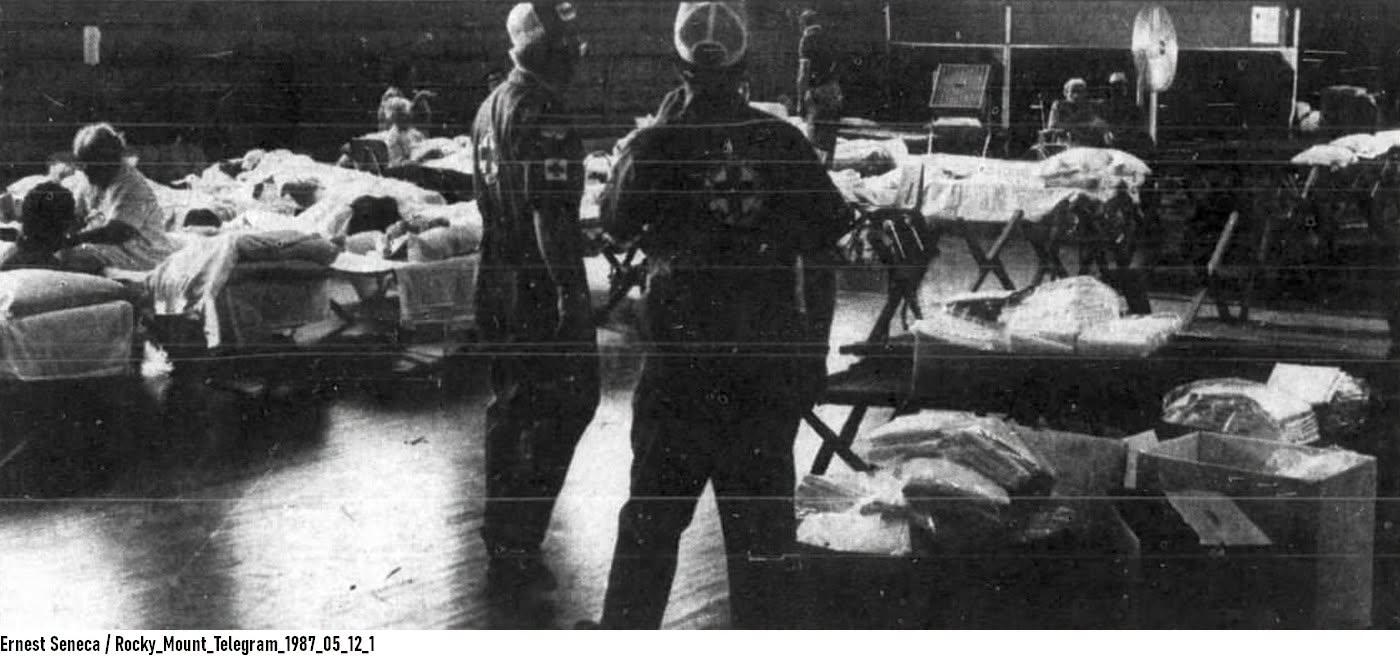
Army cots were set up inside the gymnasium, and the school’s cafeteria staff fed the group a spaghetti dinner. Nurses from Nash and Wilson County health departments provided medical assistance.

The patients were expected to be returned to the home today.

Sharpsburg was on alert during the incident. Police Chief Wayne Hathaway had reserve officers on standby, and fire department volunteers waited at the Town Hall.

Hathaway, who drove a busload of rest home patients to N.E.W. and later escorted a convoy of ambulances to the Coopers school, said Sharpsburg was fortunate not to have been affected by the gas.

“We didn’t know how the wind would be blowing,” he said of the alert status maintained during the day. The drifting cloud could be seen from the railroad tracks in Sharpsburg.

The ruptured tanker held oleum, a form of sulfuric acid used in the manufacture of chemicals, dyes, explosives and petroleum products, officials said. The highly toxic and corrosive material can ignite wood and other organic matter, they said.

Oleum also can be hazardous to the environment, but officials with the N.C. Division of Environmental Management said there was no threat to ground or surface water.

“The main concern is the air quality at this point,” Bryson Jenkins, a spokesman for the division, said.

Firefighters were unable to douse the site with water because the material is highly combustible.

“If they try extinguishing it with water, it will explode,” a spokesman from Wilson County Emergency Management Services told The Telegram.

“The EPA people are spreading lime to neutralize it, and those ditches are just bubbling,” said Pat Nicholson, an Elm City firefighter who lives 300 yards from the wreck scene.

Originally, authorities were waiting for the cloud to dissipate and for federal authorities to complete their inspection of the scene before righting the tanker.

Nicholson said firefighters met with some resistance when they first tried to evacuate the town.

“Most of the old folks didn’t want to leave,” he said. “And other people thought it was a thrill. We were going through town with the trucks and loudspeakers warning people to leave.

“But when we went back through a second time and told them this wasn’t a drill, most of them started to leave,” Nicholson said.

Some residents told firefighters “they wouldn’t leave until they smelled it,” he said. “I was in town and believe me, you could smell it.”

Highway Patrol troopers blocked roads leading into town and rerouted motorists.

In Washington, Amtrak officials said the derailment closed the track and impeded the movement of several passenger trains.

Amtrak spokesman John Jacobsen said the northbound and southbound Palmetto between New York and Savannah, Ga., were interrupted, with the southbound run terminated at Richmond, Va., and northbound held in Wilson.

“We’re going to bus the passengers between those two cities,” Jacobsen said.

Three other trains were rerouted on other tracks, he added.

The train had been en route from Hamlet to Richmond, VA.
Facebook Comments

Lenoir County Fireworks Explosion – June 10, 2022

See related postings about fireworks incidents and disasters in this series: Part 1 | Part 2  | Part 3

Looking back at the outside fire that ignited fireworks stored on a farm in Lenoir County on June 10, 2022. The resulting explosion killed a farmer and injured three firefighters. 

This incident occurred at 4871 Bulltown Road in La Grange, where a farmer had started a controlled burn at his hay farm, to burn off the fields. Also on the property was a shipping container with commercial-grade fireworks.

At ~3:15 p.m., La Grange Fire, North Lenoir Fire, and the North Carolina Forest Service were dispatched to a brush fire threatening a structure. As units were en route, dispatch told them that a field fire had caught hale bales on fire and next to a building with fireworks inside.

From radio traffic, La Grange Engine 3 arrived at ~3:24 p.m. Believe they were the first fire unit. They reported a large brush fire. From later reports, conditions on arrival were some 50 large bales of hay burning next to a 40-foot shipping container.

Arriving firefighters also found farmer Randy Herring, the property owner, working to contain the fire.

By the time of the explosion, units on scene included E3 (LFD) TA2 (LFD) Car 6 (LFD) (Command) E2 (NLFD) TA1 (?) SQ34 (?) SQ1 (?) and possibly a Lenoir County EMS unit.

Explosion Occurred 22 Minutes Later Continue reading ‘Lenoir County Fireworks Explosion – June 10, 2022’ »

Facebook Comments

Southern Produce Warehouse Fire – March 1988

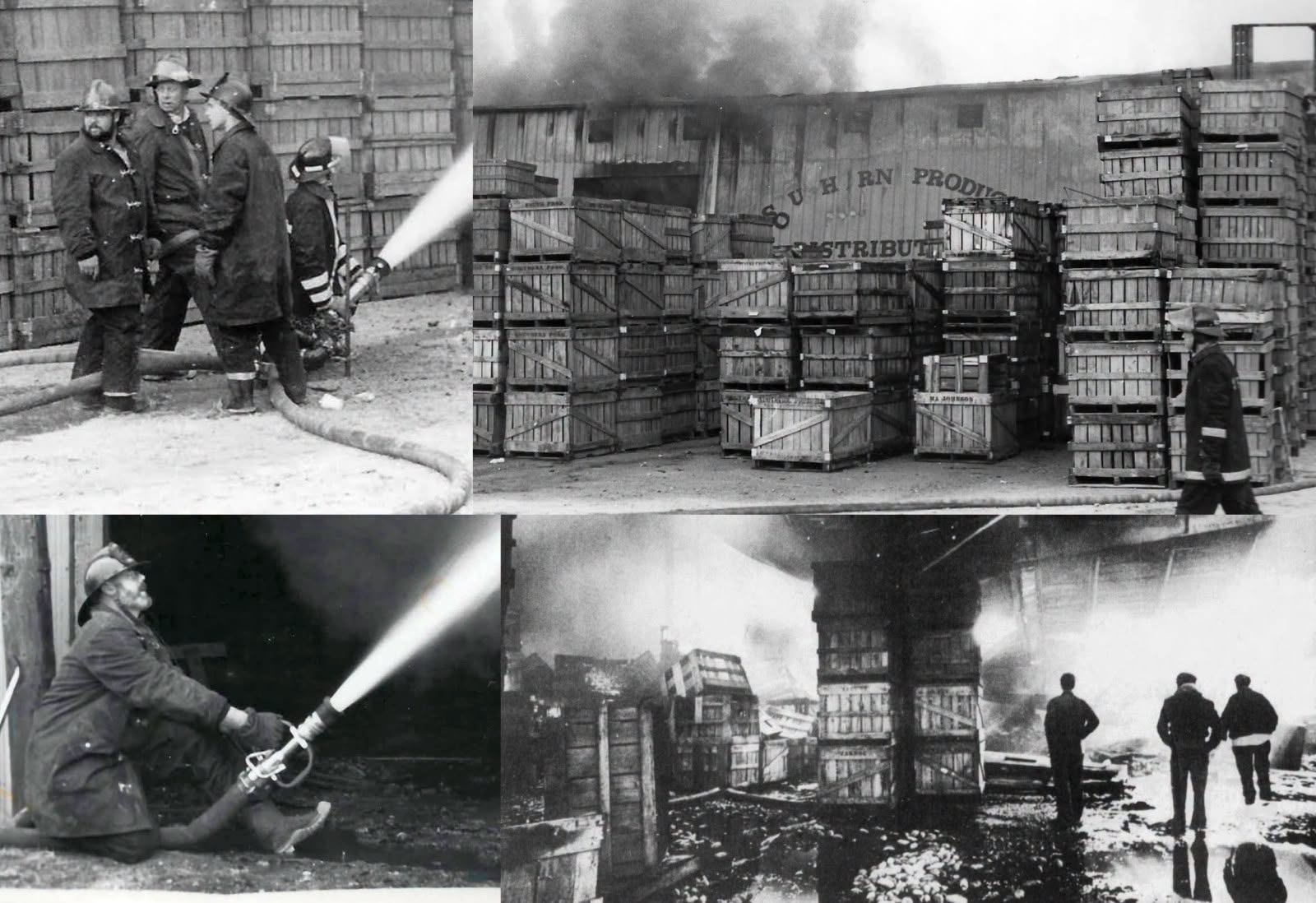
In Duplin County in March 1988, a refrigerated produce warehouse operated by Southern Produce Distributors was destroyed by fire. The building was located on Highway 403, just west of Faison. The building measured approximately 275 feet long, 300 feet wide, and 30 feet high—about 82,500 square feet.

A passing motorist discovered the fire at approximately 2:45 p.m. on Sunday, March 6, 1988. The result response brought 18 fire departments from Duplin, Wayne, and Sampson counties: Faison, Calypso, Warsaw, Kenansville, Beulaville, Sarecta, Oak Wolfe, Pleasant Grove, Rose Hill, Magnolia, Mount Olive, Rosewood, Smith Chapel, Indian Springs, Grantham, Dudley, Turkey, Halls, and Piney Grove.

The main body of fire was brought under control by Monday, but firefighters continued extinguishing smoldering hot spots nearly 18 hours after the fire was discovered. 

Their efforts were complicated by large numbers of crates packed with sweet potatoes. The crates had to be removed before crews could reach the back corners of the warehouse. The building contained 95,000 bushels of the sweet potatoes. 

Assisting the volunteer firefighters were state prison inmates. Later that month, and despite some opposition, they were sent again to help clean the site. Prison officials could only recall two other similar instances. In 1984, inmates helped with manpower to clean up after tornadoes struck eastern North Carolina. In 1985, they helped during forest fires in western North Carolina. 

Faison Deputy Chief Glenn Jernigan expected extinguishment operations to continue through Monday night, reported newspapers.

On Tuesday, smoke still billowed from the building, and firefighters were still spraying water. Said company vice president Nelson Precythe, it was still “smoldering in there” but was “really just a hot bed of coals.” 

Chief Jernigan said welding had been performed inside the warehouse approximately one hour before the fire was discovered and that the welding was a possible cause.

By Tuesday, several million gallons of water had been poured on the fire, reported newspapers quoting Duplin County Emergency Services Director Hiram Brinson. 

The building was destroyed. No official damage estimate was initially available, but sources believed the loss could considerably exceed $1 million. 

Despite the loss, Southern Produce resumed selling sweet potatoes from a separate office the following morning and used another grower’s facility to pack its orders.

By May 20, 1988, approximately one month after the fire, the company had constructed replacement packing and refrigerated facilities of approximately the same size. An adjoining building of equal size was added about a year later. 

Southern Produce suffered another major warehouse fire at its Faison property in April 2009.

Sources

Goldsboro News-Argus, March 7, 1988, “Fire destroys produce company” 

Goldsboro News-Argus, March 8, 1988, “Faison damage still not determined”

Associated Press via Jacksonville Daily News, March 22, 1988, “Martin OK’d using inmates to clean site of Duplin fire”


Facebook Comments

News & Observer Coverage of Imperial Foods Fire – September 3, 1991

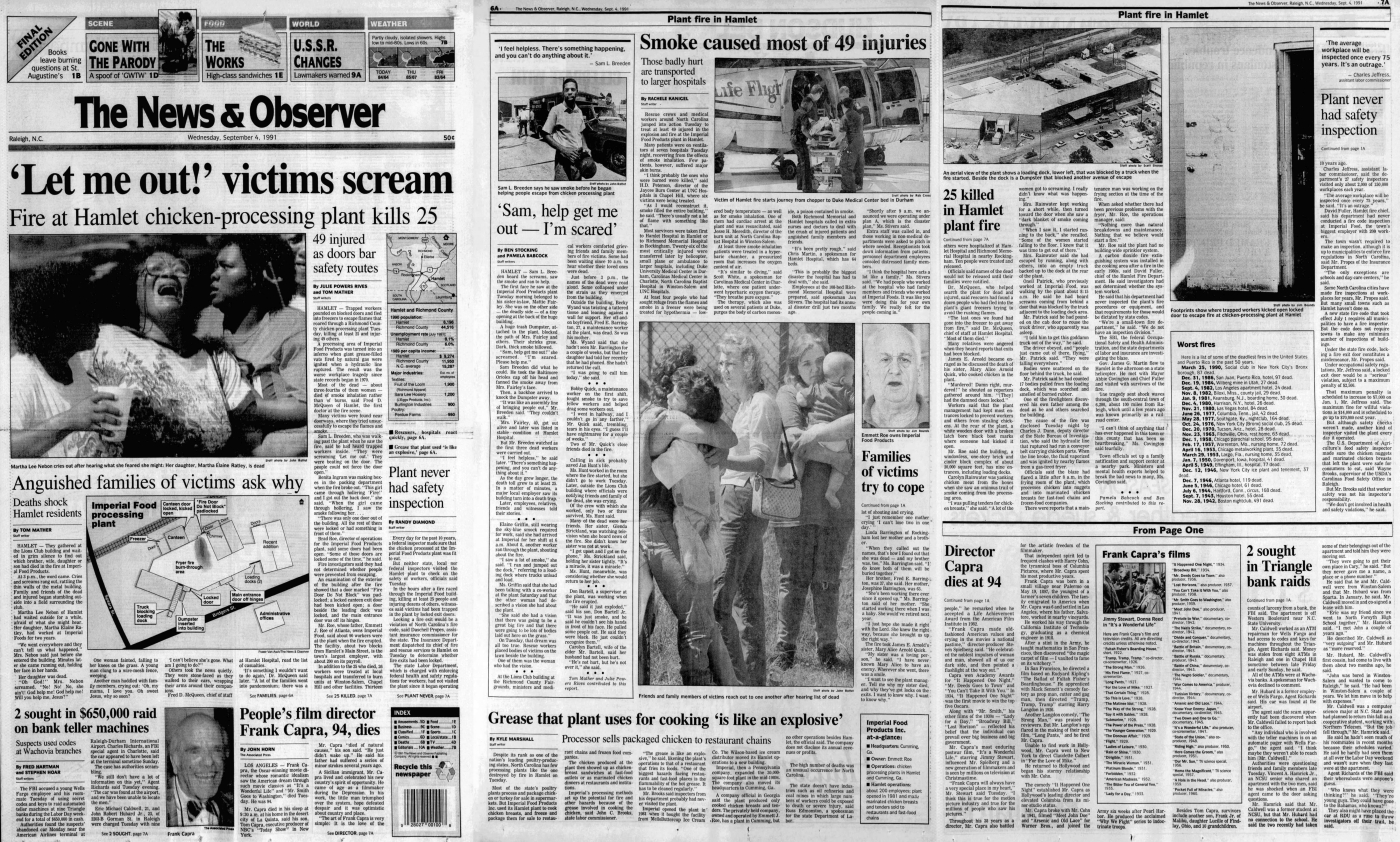
Presenting reporting by the Raleigh News & Observer on September 4, 1991, the day after the deadliest structure fire in the state’s history in Richmond County, at a food processing plant in Hamlet. 

“Let me out!” victims scream
Fire at Hamlet chicken-processing plant kills 25
49 injured as doors bar safety routes

By Julie Powers and Tom Mather
Staff writers

HAMLET — Trapped workers pounded on blocked doors and fled into freezers to escape flames that roared through a Richmond County chicken-processing plant Tuesday, killing at least 25 and injuring 49 others.

A processing area of Imperial Food Products was turned into an inferno when giant grease-filled vats fired by natural gas were ignited when a hydraulic line ruptured. The result was the worst workplace tragedy since state records began in 1970.

Most of the dead — about three-fourths of them women — died of smoke inhalation rather than burns, said Fred D. McQueen of Hamlet, the first doctor at the fire scene.

Many victims were found near doorways, where they tried unsuccessfully to escape the flames and smoke.

Sam L. Breeden, who was walking past the plant when he saw the fire, said he had heard trapped workers inside. “They were screaming, ‘Let me out.’ They were beating on the door. The people could not force the door open.”

Benita Ingram was making boxes in the packing department when the fire broke out. “This girl came through hollering ‘Fire!’ and I got out the back door,” she said. “When she said some smoke was coming through, hollering, I saw the smoke following her.”

“There was only one door out of the building. All the rest of them were locked or had something in front of them.”

Brad Roe, director of operations for the Imperial Food Products plant, said some doors had been open. “Some of those doors are locked some of the time,” he said.

Fire investigators said they had not determined whether people were prevented from escaping.

An examination of the exterior of the building after the fire showed that a door marked “Fire Door Do Not Block” was padlocked; a locked canteen exit door had been kicked open; a door beside the loading dock was locked; and the main entrance was one of the few ways out.

Mr. Roe, whose father, Emmett J. Roe of Atlanta, owns Imperial Food, said about 90 workers were at the plant when the fire erupted. The facility, about two blocks from Hamlet’s Main Street, is the town’s largest employer, with about 200 on its payroll.

In addition to the 25 who died, 26 workers were treated at local hospitals and transferred to burn units at Winston-Salem, Chapel Hill and other facilities. Thirteen others were treated at Hamlet Hospital, read the list of casualties.

“It’s something I wouldn’t want to do again,” Dr. McQueen said later. “A lot of the families went into pandemonium; there was vomiting, screaming. I really didn’t know what was happening.”

Continue reading ‘News & Observer Coverage of Imperial Foods Fire – September 3, 1991’ »

Facebook Comments

Wayside Fire Department Ends Operations

This is a blog version of a Facebook posting from January 1, 2025.

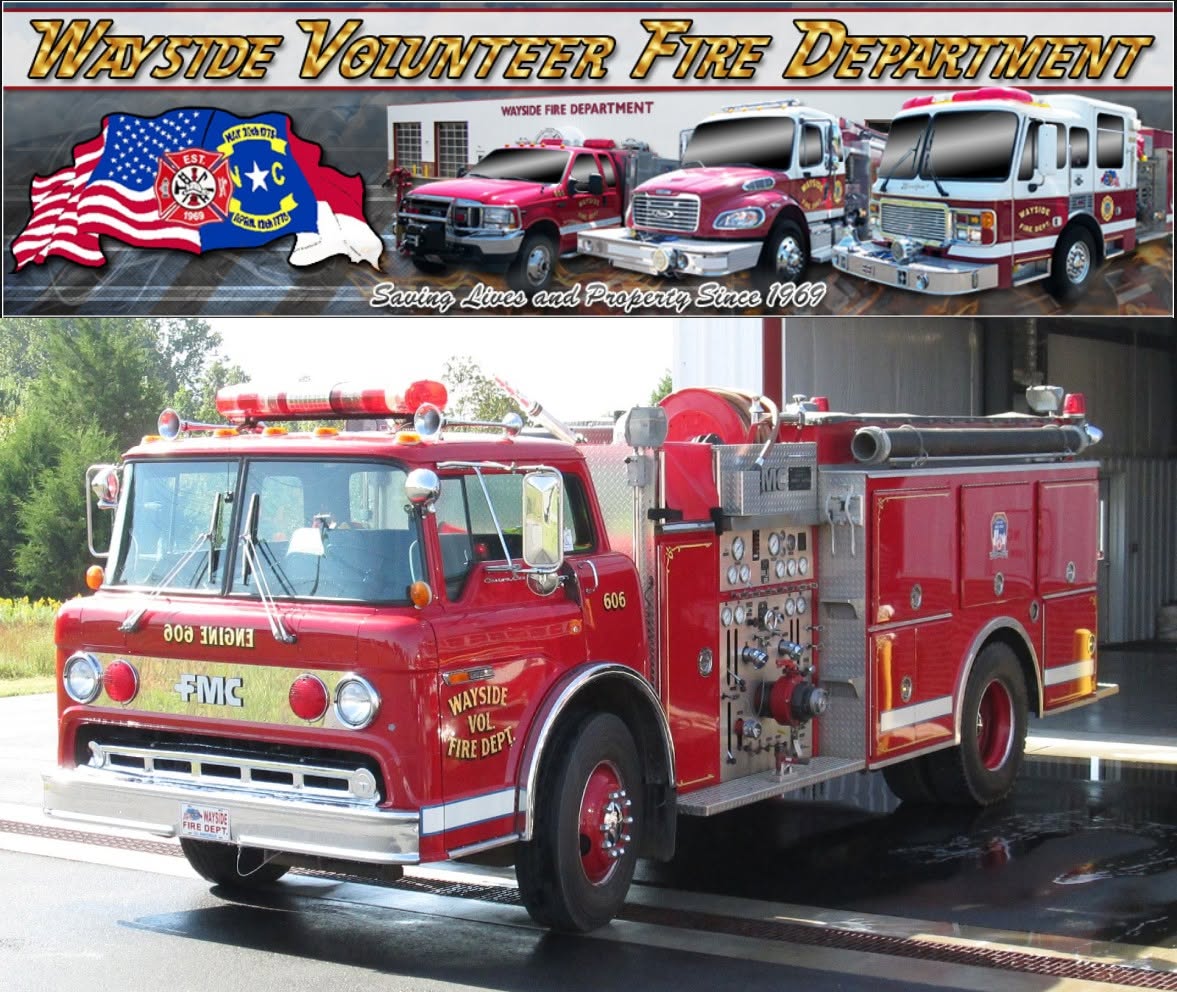
Effective 0800 on Tuesday, December 31, 2024, Wayside VFD officially ceased operations and Shepherds Fire-Rescue had taken over the responsibility for their response area, reported Iredell Firewire. Below is a bit of background and some history of the department, which was organized in 1969. Shown is a web site excerpt + their vintage 1989 Ford/FMC pumper-tanker.  

Background

In August, county commissioners at their meetings began discussing minimum fire response requirements and specifically regarding Wayside VFD, where issues had presented, despite the department’s efforts to meet those requirements.

The county eliminated funding for WVFD and subsequently cancelled their contract. The county also considered a few options for continuing service to the Wayside district, ranging from splitting the district between two neighboring departments, to placing county fire personnel at the Wayside fire station.

The county commenced working with Shepherds FD to absorb Wayside VFD’s facilities, staff, and equipment, as well as expanding the Shepherds Fire Insurance District to include the previous Wayside Fire Insurance District.

Source: Iredell County Commissioner meeting documents. These are a little hard to find, as there are a couple different county minutes sites out there. Here’s the secret sauce, https://iredellcounty.civicweb.net/Portal/VirtualLibrary.aspx

Search on Wayside, Shepherds, etc. to read the entire recent history.

History

Wayside VFD department was organized in 1969, by community members wanting to add more fire protection to areas covered by Cool Springs VFD. The latter was organized in 1960.

Their first apparatus purchase was a tanker with a body built by J. C. Beck Machine Shop in Welcome, NC, and mounted on a commercial chassis. The first fire station was built at 2349 Salisbury Road beside Wayside Grocery, which was adjacent to the intersection of Bethesda Road. The initial response area was set with inputs from Cool Springs VFD, Troutman VFD, Shepherds VFD, and Statesville FD.

The first chief was Ray Warren. The first apparatus was the aforementioned 1969 Ford/Beck tanker, 1000 gallons, a 1969 Ford/Howe pumper, 750/___, and a 1952 Dodge brush truck, converted from an ex-military weapons carrier.

The department and its fire district were officially established around June 1970. Over subsequent years and decades, the fire station was expanded to house additional apparatus. In 2011, construction started on a second station at 234 Bethesda Road. The department relocated to the new station in December 2011. In [goes here], a substation was opened at 1486 Ostwalt Amity Road.

Later fleet additions included a 1979 Chevy/shop brush truck, a 1989 Ford pumper, a 1989 Ford/FMC pumper-tanker, 1250/1000, a pair of 1991 EEI pumper/tankers, a 1994 GMC pumper/tanker, a 1998 American LaFrance Eagle pumper-tanker, 1500/1000, a 2004 Ford/Anchor Richey brush truck, and a 2011 _____/Pierce pumper-tanker, 1250/1000.

Read more at https://www.waysidevfd.org via Internet Archive

Facebook Comments

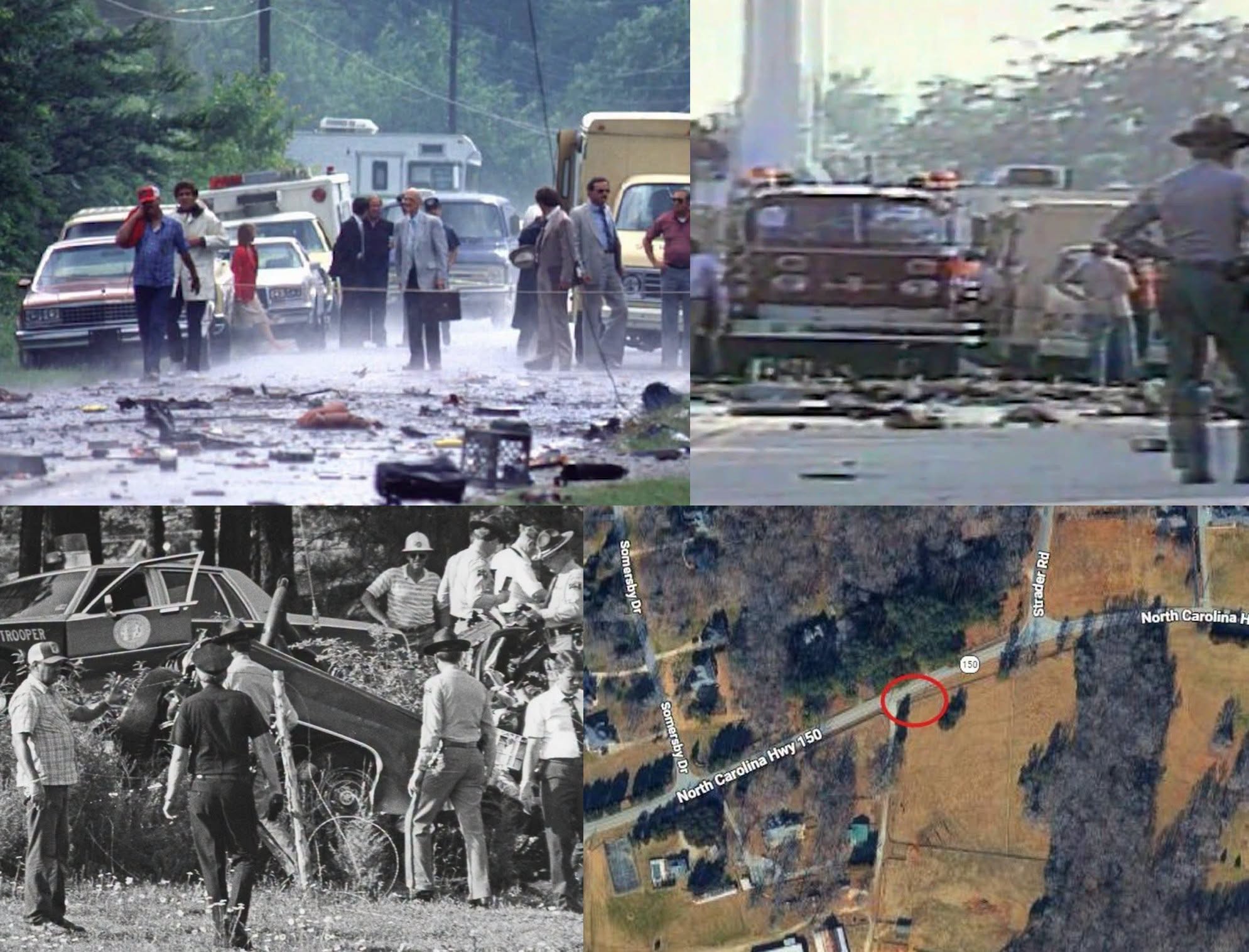
Bitter Blood Shooting, Chase, and Vehicle Explosion – Guilford County – June 3, 1985

Photo source: Summerfield Fire District posting on Facebook

Bitter Blood Shooting, Chase, and Vehicle Explosion

Guilford County, North Carolina — June 3, 1985

Chronological narrative created by ChatGPT and compiled from the Greensboro News & Record, June 4, 1985. Plus annotations by Legeros

By June 3, 1985, law-enforcement officers in North Carolina and Kentucky were seeking Frederick “Fritz” Klenner III and his first cousin, Susie Sharp Newsom Lynch, in connection with five murders. The victims were Lynch’s mother and maternal grandmother, killed in Winston-Salem in May 1984, and Klenner’s mother, sister, and young nephew, killed in Kentucky in July 1984. Investigators suspected that the two sets of murders were related to a child-custody dispute involving Lynch and her former husband.

Continue reading ‘Bitter Blood Shooting, Chase, and Vehicle Explosion – Guilford County – June 3, 1985’ »

Facebook Comments

Emergency Landing of AirTran Airways Flight 913 in Greensboro – August 8, 2000

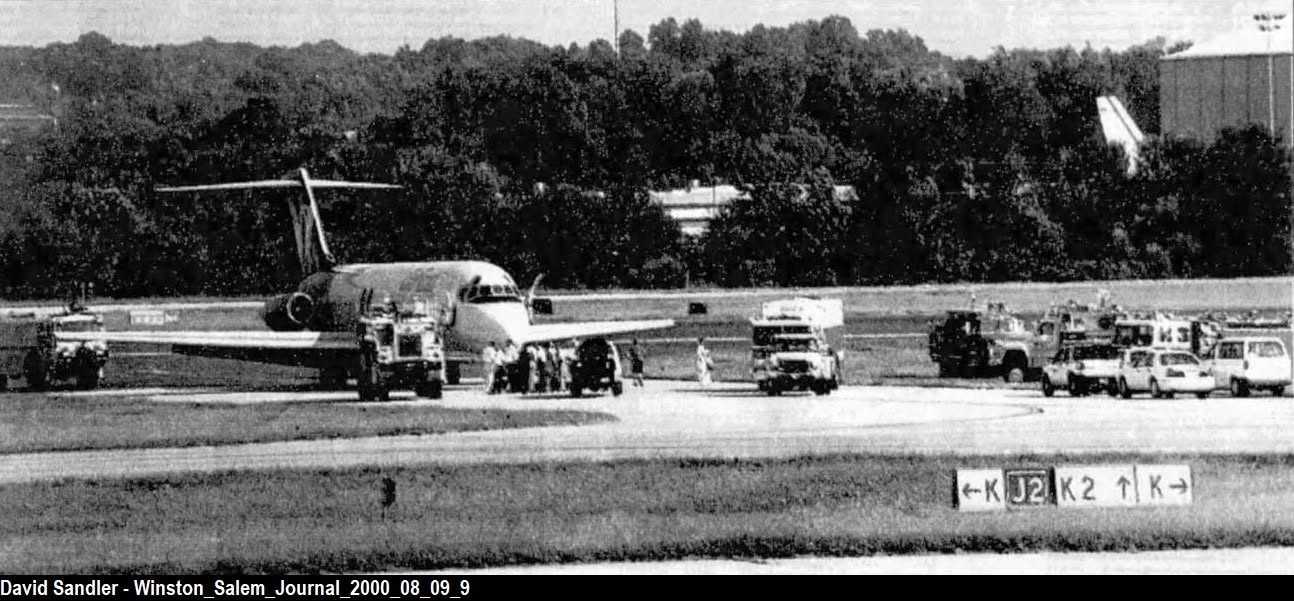
Looking back at the emergency landing of AirTran Airways Flight 913 on Tuesday, August 8, 2000.

About twenty minutes after the DC-9 departed Piedmont Triad International (PTI) Airport at ~3:15 p.m., the pilot reported thick smoke in the cabin.

The captain declared an emergency and requested permission to return to the airport. The jetliner was 15 miles into the flight. There were 62 souls aboard, including five crew members.

Said one passenger later in the next day’s Winston-Salem Journal, “I could see gray smoke in the air, smoke coming from the plane’s cockpit.” The passenger was sitting three rows from the door to the cockpit. And, as the plane was heading back to the airport, “the smoke got thicker and thicker.”

Another passenger recounted in the next day’s Greensboro News and Record that she “smelled a strong odor similar to burning rubber” and also saw “thick gray smoke in the front of the airplane.”

On the plane’s intercom system, the passengers were calmly told that the plane was returning to Greensboro. But neither the pilot nor the flight attendants said what was wrong.

After the pilot announced that their flight was returning to Greensboro, the flight attendants repeatedly shouted instructions to the passengers: bend over and keep their heads down.

The plane landed at ~3:45 p.m. The passengers and crew performed an emergency evacuation using the inflatable slides.

Emergency Response Continue reading ‘Emergency Landing of AirTran Airways Flight 913 in Greensboro – August 8, 2000’ »

Facebook Comments

Nine Killed in Car Train Collision in Charlotte, 1931

This is a blog version of a Facebook posting on July 30, 2025.

In the wake of last week’s multi-fatality accident on I-485 that killed six people in a three-vehicle collision, let’s look back at the worst car accident in the history of the Charlotte area.

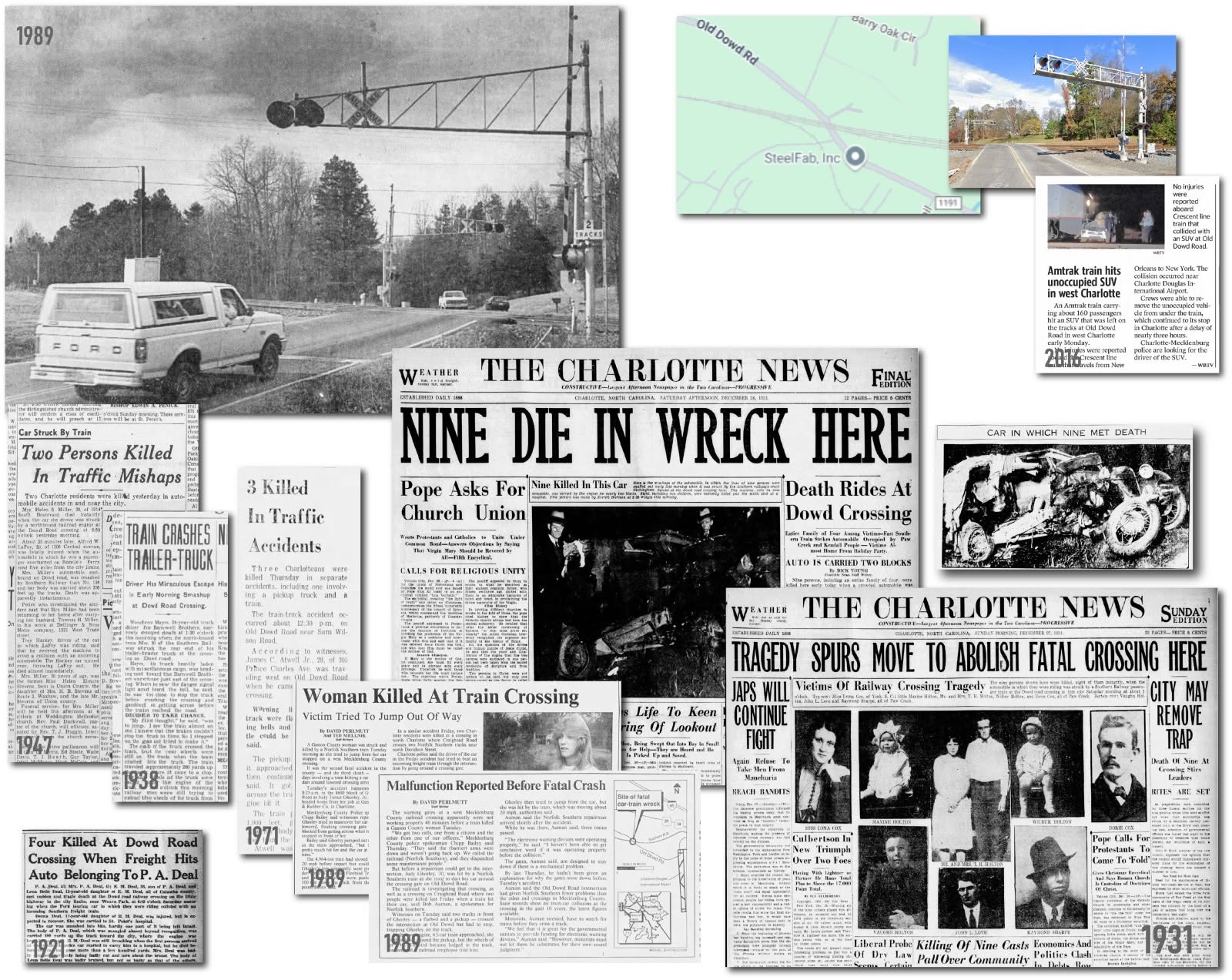
Early Saturday morning, December 26, 1931, nine people were killed when their “light touring car” was struck by a “northbound Birmingham special” at the Dowd Road crossing. Shown in the montage are the next day’s and subsequent day’s headlines in the Charlotte News, one of the city’s two newspapers at the time.

Also shown are other crashes that have occurred at the Dowd Road crossing over the decades, including another that killed five people on New Year’s Day, 1921. See those news stories in this Google Drive folder.  

Blind Crossing From Three Approaches

Reported news accounts from after the deadly collision in the wee hours of December 26, 1931, the Dowd Road crossing was a “blind crossing” from three of the four approaches to the tracks.

Continue reading ‘Nine Killed in Car Train Collision in Charlotte, 1931’ »

Facebook Comments

Three People Killed in Charlotte Balloon Crash on October 21, 1976

This is a blog version of a Facebook posting from September 24, 2024.

Morning history. Here’s the story of another multi-fatality hot-air balloon crash in North Carolina. See prior posting on the subject.

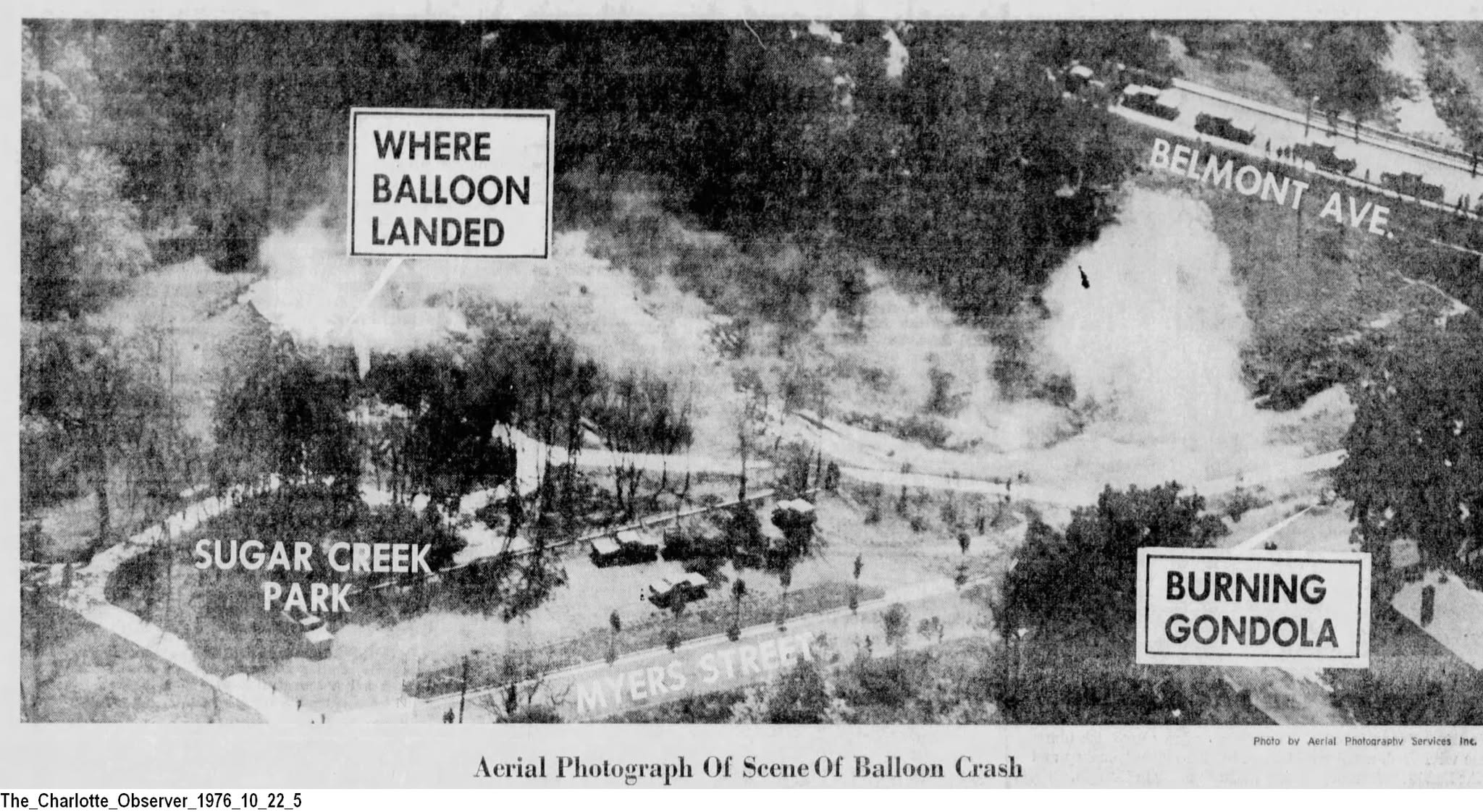
At 12:53 p.m. on October 21, 1976, a hot-air balloon crashed in downtown Charlotte. The two pilots and their passenger were killed. It struck high-tension power lines above Sugar Creek Park, about a mile east of the city center. The wires severed the balloon’s basket and the burning gondola dropped into the street. The deflating balloon traveled about 100 more yards before landing.

The balloon was named “Spirit of America” and was built by Dakota Industries in Sioux Falls, SD. It was red, orange, blue, and yellow, and had pictures of presidents Abraham Lincoln and Ulysses S. Grant on the side. It was built for the 1968 movie “The Great Bank Robbery” and later sold by Warner Brothers.

Continue reading ‘Three People Killed in Charlotte Balloon Crash on October 21, 1976’ »

Facebook Comments

Two Alarms on Wyatt Brook Way

Photo credits: Justin Fairfax (first two), Mike Legeros (remaining)

See photos | watch drone video | | watch ground video | listen to radio traffic

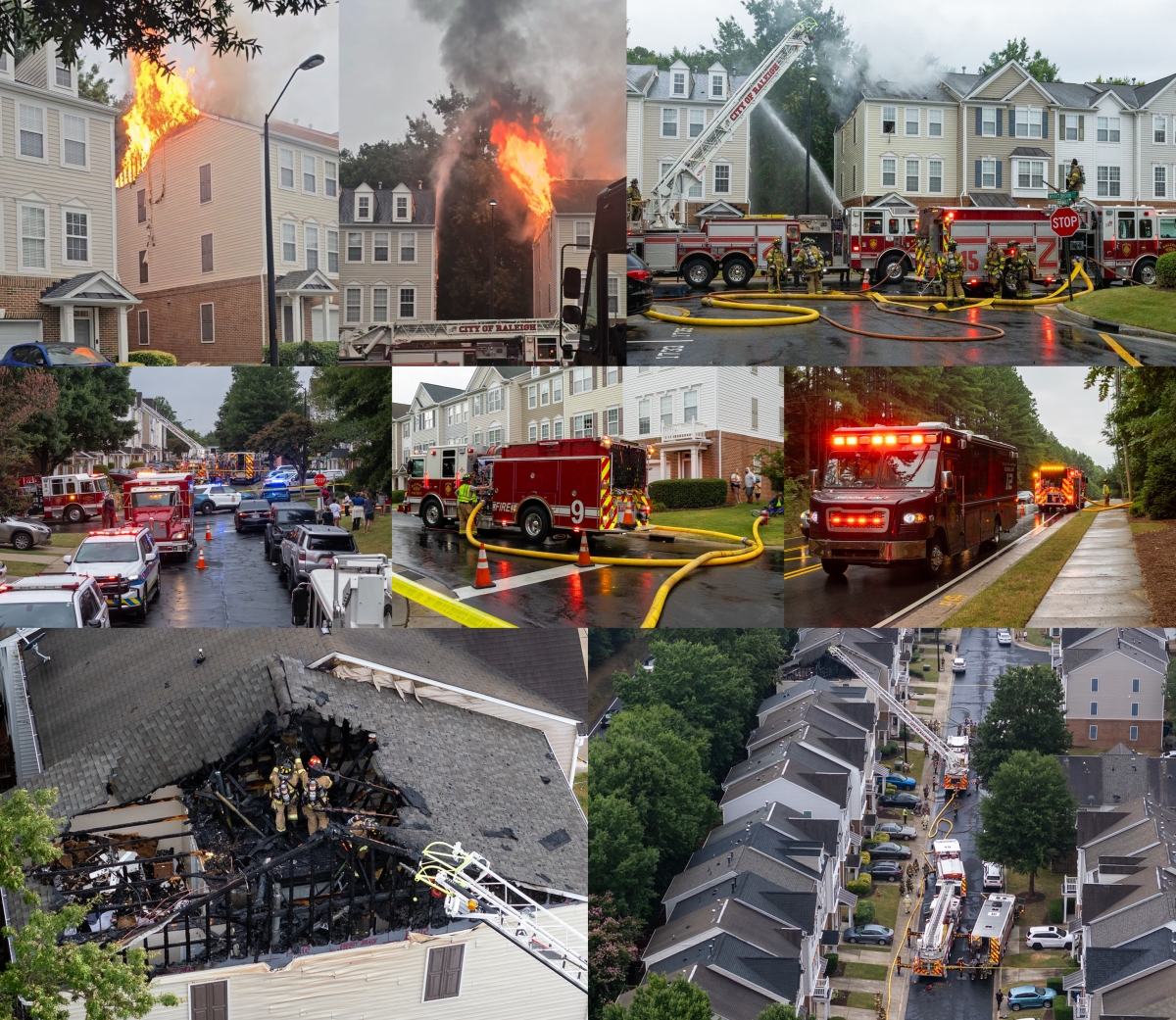
Two alarms were struck on Wyatt Brook Way off East Millbrook Road on Friday, August 21, 2026.

Dispatched ~4:41 p.m. for E15 E19 E9 E16 L15 L4 R16 BC5 BC1 ISO14 as a structure fire at 4823 Wyatt Brook Way.

Upgraded to working fire while units were en route, after multiple reports. Working fire dispatch added A28 BC2 DC1 INV1 at ~4:43 p.m.

Engine 15 first-arriving with fire through the roof of a three-story, end-unit townhome building.

Battalion 5 took command at ~4:47 p.m. Secondary size-up of a three-story, wood-frame, multi-family dwelling, measuring approximately 150′ by 50′, with heavy fire showing from the roof division on the Bravo side.

Continued: Units making fire attack and establishing water supply. Ladder 15 doing “all-in search.” Command in Alpha division. Headquarters, I need a second alarm.

Second alarm added E27 E21 L22 L6 SQ7 at ~4:49 p.m. Plus Rehab 12 at ~4:51 p.m.

E4 added themselves at ~4:52 p.m.

Request for a portable monitor or two-inch line for exposure protection between the two buildings. (Hand line was deployed.) Ladder 4 crew was directed to set up Ladder 15, which was raised, but did not flow. Engine 15 also prepared a deck gun but did not flow.

Additional water supply was established on the Charlie side by Engine __, but did not supply any units or lines. Total of three hydrants (?), two on Wyatt Brook Way and one on Old Wake Forest Road.

By about 4:55 p.m., the bulk of the fire had been contained. Marked under control at ~5:16 p.m.

Caused by lightning strike. From news reports, two families in two townhome units were displaced, with fire damage in one unit and water damage in second. No one was home in the fire unit, when the fire started.

Technical notes. These include “rain ops” pics at the outset, e.g. single camera plus umbrella. Limited range of motion/options. First photo about 15 minutes after dispatch.

Run Card

1st – E15 E19 E9 E16 L15 L4 R16 BC5 BC1 ISO14
WF – A28 BC2 DC1 INV1
2nd – E27 E21 L22 L6 SQ7 Rehab 12
Added E4 + Assistant Chief of Logistics
EMS – M67 EMS80 D9 

Facebook Comments