Vintage Photos from Shelby – Green Aerial Ladder & Red Water Tower

From the files of reader/contributor David Raynor, here are vintage photos of two unusual rigs from Shelby, NC. That’s Cleveland County, to the west.

Top is Water Tower 30 (also called Ladder 30 at some point), a 1983 Ford F800 with local bodywork and a 35-foot articulating “water tower.” A former electric company bucket truck, it was later sold to Grover Rural FD. 

Bottom is a green (!) 1974 Seagrave aerial ladder, formerly Mill Creek, DE. Had a 1500 GPM pump, no tank, and 100-foot ladder. After serving in Shelby, it was repainted white over read, and served at nearby Cherryville. They later retired the truck, cut off the front of the cab, and used same as a teach podium at their fire station.

Both were photographed in December 1996. Thanks to Micah Bodford for the extensive apparatus details. Click to enlarge:


David Raynor photos

Facebook Comments

Vintage Mystery Rigs – Pumper, Tractor-Drawn Tanker

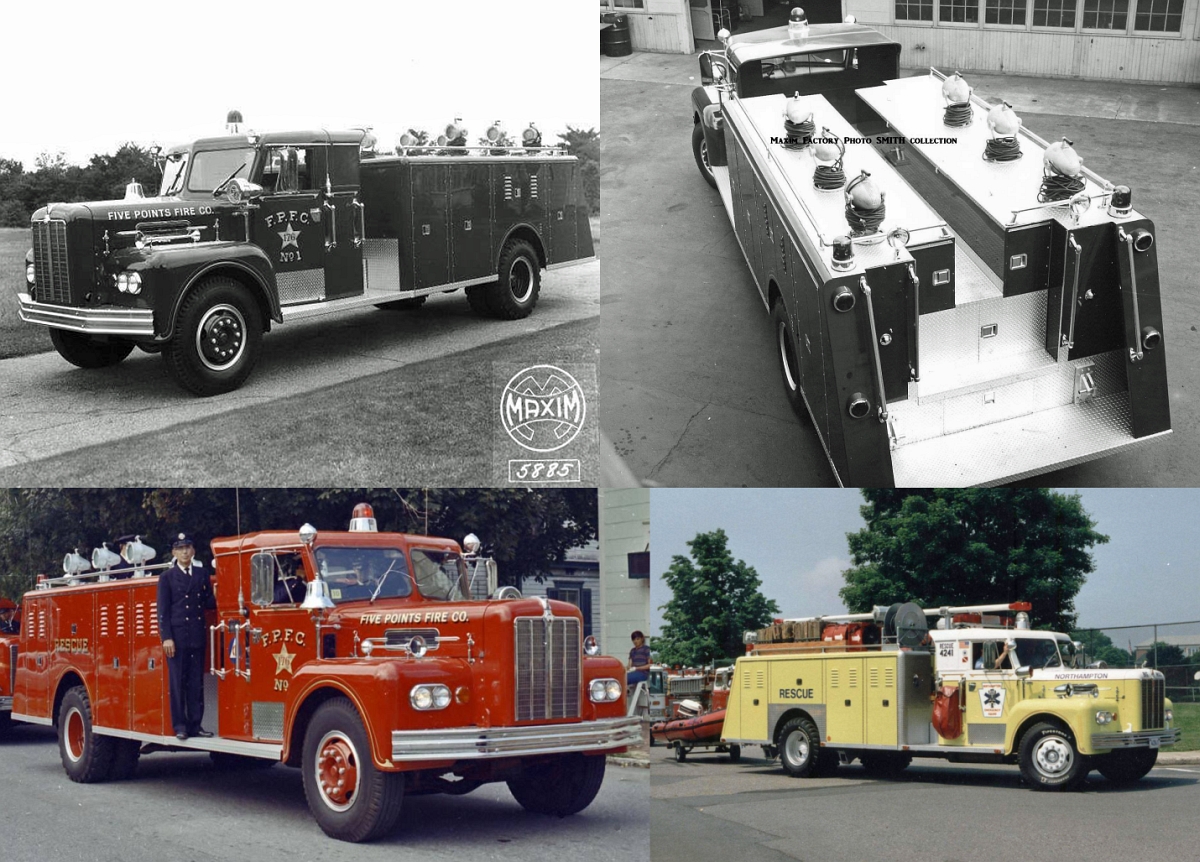
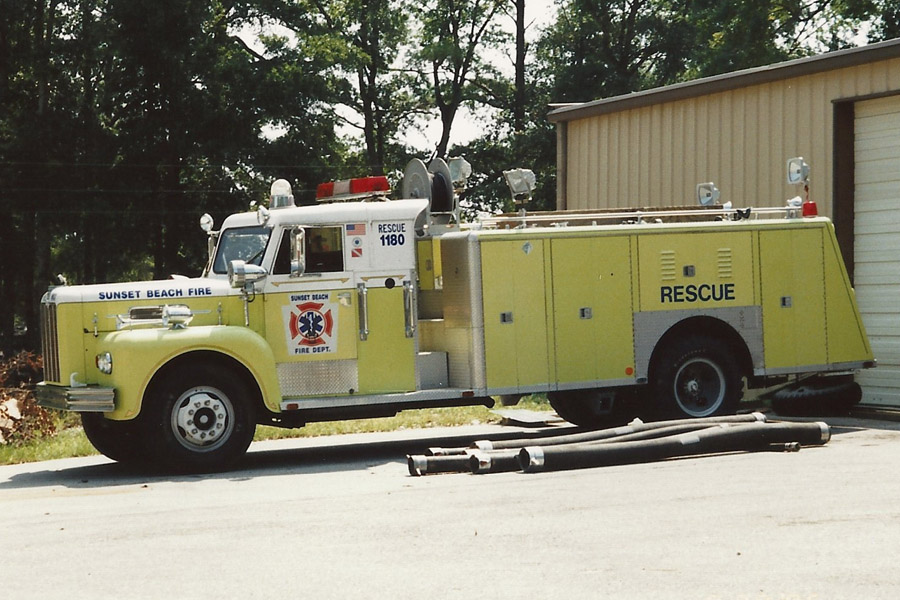
From the files of reader/contributor David Raynor, here are a pair of rigs photographed in 1995, somewhere in North Carolina. He didn’t record the location. Readers, can you identify?


David Raynor photos

Facebook Comments

Forty Years (Almost) of Raleigh Fire Academies

For your Friday enjoyment, here’s a montage of Raleigh Fire Department recruit academy academy class photos from 1978 to 2016. Includes Academy 41, which graduated last night in downtown Raleigh. Congratulations!

This one’s an incomplete collection, however. Some of the group didn’t either a formal or even informal photo. See the entire collection of class photos. Photo credits include a lot of Lee Wilson pictures, a couple from Mike Legeros (Yours Truly), and a couple from our friend Jeff Harkey.

For more information on Raleigh FD academy histories, see this summary page and this research document (PDF). Click once or twice to enlarge:

2016-08-18-rfda

Recruit Academy Numbering

Reprinted from the Winter 2013 edition of the Raleigh Fire Department Newsletter:

When was the first recruit academy? And how did the numbering start? Let s answer the second question first. In 2006, Historian Mike Legeros conducted research on earlier fire academies. Through a combination of records and oral histories, he compiled the details and rosters of academies going back to 1978.

That was, we thought, the first year that recruits were required to become certified as EMTs, notes Legeros. So that seemed a good starting point for numbering the academies.

Asst. Chief of Training Tommie Ann Styons reviewed the research, and agreed with the numbering convention that Legeros proposed. The first group of firefighters hired on February 1, 1978, and who graduated on April 11, were retroactively named Recruit Academy 1.

Since the time of that research, I ve learned a few more things. The eight recruits hired on April 4, 1977, also had EMT training. It was a last-minute addition to their training, he adds.

And there were prior groups of new firefighters hired in large enough numbers that they also warrant being labeled a class . Eight members hired in November 1976, for example. And twenty-four firefighters hired in June 1974.

How will recruit classes before 1978 be retroactively numbered? Legeros has an idea. At some time in the future, we ll resume the research. And maybe we ll work backwards, using letters. The 1977 class might be Recruit Academy A. The one before that might be Academy B. To answer the original question, when was the very first recruit academy? To be determined.

Facebook Comments

Raleigh Fire Department Recruit Academy 41 Graduates on Thursday, Aug 18

Raleigh Fire Department Recruit Academy 41 graduates on Thursday, August 18, at 7:00 p.m., in a ceremony to be held at the Duke Center for the Performing Arts.

The thirty-seven recruits started their twenty-nine week academy on January 25, 2016. The program included classroom and practical instruction, as well as daily physical fitness training. They’ll graduate with state certifications as Firefighter II, Emergency Medical Technician, and Hazardous Materials Responder.

  • Corey H. Ault
  • Tyler J. Barefoot
  • Kevin C. Brandt
  • Adam S. Caban
  • Christopher B. Dillard
  • Jeremy M. Dillard
  • Jordan K. Friese
  • Scott W. Garner
  • Marcus L. Guess
  • Timothy W. Guffey Jr.
  • Grace L. Hannigan
  • Rachel V. Harless
  • Alex R. Hellard
  • Michel A. Hernandez
  • Christopher J. Hinton
  • Brantly R. Hobbs
  • Sean W. Jamieson
  • Jason S. Joyner
  • Kenneth N. Larry II
  • Danielle N. Low
  • Rodney D. McGee
  • Davin C. Olsen
  • Joshua R. Overton
  • Jesse B. Ray
  • Lucas D. Rice
  • Kevin L. Ricks
  • Brittany L. Rountree
  • Jonathan K. Rynearson
  • Mark T. Shimmel
  • Jacob A. Slominski
  • Alexander M. Soucy
  • Colton G. Spain
  • Greyson W. Talbott
  • Ethan B. Tart
  • Marques L. Townsend
  • Matthew S. White
  • Shane M. Whittington

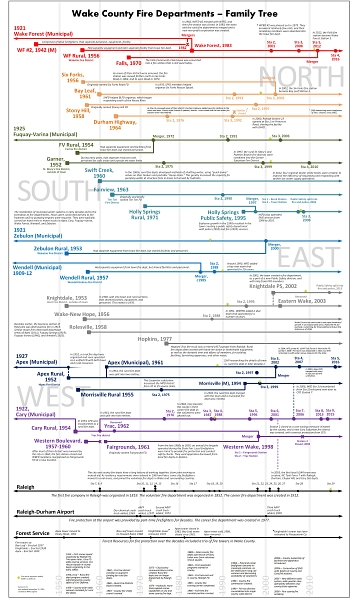
The graduating class include a number of second-generation (Dillard, Overton, Ricks, Tart, White), and third-generation Raleigh firefighters (Spain, Whittington), as well as other family relations. We’ll update our family tree (PDF) accordingly. (There’s also a Guffey in there, son of the Knightdale Fire Chief!)

The program was led by Academy Coordinator Capt. Jamie Hill and Academy Capt. Jake Jackowski. Their instructors were Lt. Frankie Beasley, Lt. Bryan Kirk, Lt. Jesse Richardson, Lt. Tony Todd, and Senior Firefighter Carl Hardee, along with EMT instructors Capt. Doug Campbell and First Class Firefighter Patrick Collins. The majority of their training was conducted at the Keeter Training Center.

Recruitment started in July 2015, with 1,059 completed applications. Of those, 977 were invited to the written aptitude test. The test was taken by 495 individuals and 388 passed. Those who passed were invited to the physical agility test, which was passed by 299 individuals. Upon completion of background investigations, ninety-one candidates were interviewed.

For more information about working as a firefighter for the Raleigh Fire Department, visit their recruitment web site.

See more photos of the recruits. Or look back at earlier academy class photos.

Facebook Comments

Run Card For Reported Shooting at Crabtree Valley Mall

See photos by Mike Legeros

Here’s a run card and narrative about yesterday’s reported shooting at Crabtree Valley Mall. Gunshots were reported on the second floor, near the food court, just after 2:30 p.m. The mall was placed on lockdown, and then evacuated as law officers secured each location. The mall occupants (employees, shoppers) were evacuated to the lawn and parking lot of the Marriott hotel, across the street.

No victims with gunshot wounds were located [nor subsequent evidence of any gunfire], but other medical emergencies were reported both during and after the evacuations. None were reported as life-threatening.

Wake County EMS managed the resulting multi-patient incident over a number of hours, with resources including over twenty paramedic ambulances, four district chiefs, a special operations unit, and a medical ambulance bus. They also performed responder rehab, and assisted with helping the evacuees stay hydrated. The heat index was over 100 degrees.


Mike Legeros photos – See more

The shooting was reported just after 2:30 p.m. The first EMS call was dispatched at 2:40 p.m., for a fall. Additional units were soon added. At 2:52 p.m., an obstetrics call was dispatched. More additional units were dispatched to the mall. At 3:14 p.m., an EMS box alarm added Truck 1. At 3:28 p.m., an EMS Alarm 4 was dispatched.

By the ninety-minute mark (when Yours Truly arrived), EMS and other command branches were located on Marriott Drive, in front of the hotel. They later moved inside into a conference room. EMS staging was located in the parking lots near the Best Buy and Barnes & Noble. The three engine companies had also relocated to Marriott Drive or nearby Glenwood Avenue. The roadway was closed between Lead Mine and Creedmoor roads.


Mike Legeros photos – See more

Nine people were transported to hospitals, with an additional eleven patient contacts by EMS personnel. The medical evacuation bus Evac 1 was also utilized for rehab. Bottled water was also brought to the scene by the Wake County Fire Marshal, with supplies coordinated by Wake County Emergency Management.

Additional rehab supplies were furnished by a State Medical Assistance Team unit out of WakeMed. They brought canopies, fans, and misters to the scene.

Mall employees, hotel employees, and many others helped the incident remain manageable. As were the positive attitudes of the hundreds of evacuees over the course of an uncomfortable afternoon outdoors.

The first press conference was held just before 6:00 p.m., with Raleigh police and Wake EMS providing updates. With the hour, evacuees were being escorted by to their vehicles, in small groups either on foot or by bus. Fire and EMS units began clearing after 7:00 p.m. The mall remained closed through the evening.

Google for numerous news stories for more information about the incident.

See more photos by Mike Legeros.

Run Card

Law Enforcement
Raleigh Police
Wake County Sheriff
State Highway Patrol
Crabtree Special Police
CCBI
SBI
ATF
FBI
Others?

EMS
Twenty-one paramedic ambulances from Wake County
EMS1, EMS3, EMS4, EMS5, EMS6, EMS7, EMS8, EMS10, EMS13, EMS14, EMS15, EMS18, EMS31, EMS 34, EMS35, EMS 36, EMS39, EMS51, EMS55, EMS62, EMS63

Two convalescent ambulances and ambulance mini-bus from Samaritan. Two paramedic ambulances were also requested from Durham County, but were unavailable.

Other EMS
Two Medics – M93, M95
Four District Chiefs – D1, D3, D4, D5
Truck 1 (Special Operations)
EVAC1 (Medical Ambulance Bus)
Chief 203 (PIO)
Chief 500 (Cary EMS Chief)
MD-1 (Director)
WakeMed/SMAT with two rehab units

Fire
Four engines (E16, E9, E5, E24), Battalion Chief (B4), Division Chief
Wake County FM with cargo trailer with bottled water

Wake County Emergency Management
North Carolina Emergency Management

Buses
CAT, Go Raleigh, Wolfline

Facebook Comments

Raleigh Fire Hydrants Turning Yellow

Belated news. Raleigh fire hydrants are turning yellow. As announced in this June 10 press release, the public fire hydrants within the city limits will now be painted yellow. They’re currently painted red. Private fire hydrants will remain red.

What’s the difference between a public and private fire hydrant, as defined here? They’re both connected to the city’s water supply, and conform to the same specs. Public hydrants are installed on roads and streets and public sites, and they’re maintained by the city. They are over 16,000 public fire hydrants in the city.1

Private hydrants are typically found at apartments, HOA-managed residential developments, and commercial properties. They’re maintained by the property owners, and are always located outside the City right-of-way. There are 4,400+ private hydrants in the city.2

The city’s water system also supplies Garner, Knightdale, Rolesville, Wake Forest, Wendell, and Zebulon. In those other communities, the hydrants are yellow, which in turn follows a recommendation from the National Fire Protection Agency (NFPA). The change in the city aligns with this standard.

We’re told that hydrants caps will be always chrome (e.g. reflective) silver. No varied colors to note hydrant capacities. The change is immediate. Yellow hydrants are already appearing around town. The timeframe for total conversion will be a number of years.

Public Utilities handles hydrant maintenance including testing and painting. In days of old, the fire department was the paint crew, and also did testing. Those tasks were transferred a number of years ago.

The city’s system of fire hydrants was installed in 1887. Firefighters originally powered their hose streams from hydrant pressure, prior to use pumping engines. Here’s a blog archives post with that historical perspective.

See also these related blog archives postings: Hydrant Map from 1903 (January 2011), Raleigh Hose Thread History (April 2014).

What other hydrant systems are used around Raleigh or Wake County, outside the city-operated system? Readers, please add!

1Subtracting 4,400 below from 22,000 cited in the press release, for “over 16,000.”

2From the Winter 2014 issue  (PDF) of the Raleigh Fire Department newsletter: “There are an estimated 4,400 public fire hydrants in the City of Raleigh.”

Facebook Comments

Celebrate Forty Years of Wake EMS on Thursday, August 4

Wake County EMS will celebrate four decades of service to the community at a public event in downtown Raleigh on Thursday night, August 4, at 7:00 p.m. at Meymandi Concert Hall, at the Duke Energy for the Perform Arts. Or what we called Memorial Auditorium back in the day.

They’ll be celebrating their history and expressing their appreciation to the many partners and stakeholders who have worked so hard to bring success to the Wake County EMS System.

Static Display – Retro Ambulance, Evac 1, and More

From 6:00 p.m. to 7:00 p.m. on the front plaza of the performing arts center, facing South Street, will be a static display of Wake County EMS vehicles:

  • “retro ambulance” with the original green-over-white colors
  • medical ambulance bus Evac 1
  • Major Operations Support Unit Truck 1
  • EMS special events cart
  • paramedic bike team.

Formal Program

Beginning at 7:00 p.m. in Meymandi Concert Hall, the formal program will include:

  • Welcome by Chairman James West of the Wake County Commissioners and Wake County EMS Director Dr. Jose Cabanas.
  • Remarks from partner hospitals Duke Raleigh, Rex, and WakeMed.
  • Video history of Wake County EMS including tribute to partners and stakeholders.
  • Greetings by current and past directors: Dr. Jose Cabanas, Dr. Brent Myers, Skip Kirkwood, Barry Britt, Gerald Brown and Russell Capps.
  • Music performance by a group of current and past members of Wake County EMS.
  • Open microphone opportunity for audience members to make brief reflections.

This program is about the people of our past, the people our present, and the countless partners and stakeholders who have helped make this EMS system one of the best in the nation. You are invited, and we hope you’ll come and help us celebrate.

Learn More History

Visit these web sites to learn more about the history of Wake County EMS, and the earlier years (and decades) of ambulance and rescue squad service in Raleigh and Wake County:

2016-08-01-ems

Facebook Comments

Fire on the Mall! Thirty-Fives Years After the Mangel’s Building – July 7, 1981

Thirty-five years ago this month, on July 7, 1981, the Mangel’s Building on the Fayetteville Street Mall burned. The four-alarm fire was one of the largest in the city’s history. Hundreds watched as thick smoke blanketed the pedestrian mall, and as firefighters fought a difficult fire in an 80+ year-old building that was “built to burn.”

Historian Mike Legeros has compiled stories, photos, diagrams, and data about the fire, including oral histories from Raleigh Fire Department members who were there that day. Even log book entries are included.

The document is available on the Raleigh Fire Museum site in both PDF (preferred) and web page format: www.raleighfiremuseum.org/content/mangel.

Any updates, such as new stories uncovered, will be added to an “additions” page on the site, to be created.


Left to right, top to botom, photos by William Artis, Robert Ott, Gary Knight, Seny Norasingh, News & Observer

Facebook Comments

Vintage Photo & Advertisement – Scotland Neck’s Oren Pumper

Found for sale on eBay, magazine advertisement from 1943 for Oren Fire Apparatus in Roanoke, VA, showing Scotland Neck’s Engine No. 1. Maybe readers can share some history of the rig. Click to slightly enlarge:

Facebook Comments

Vintage Photo of Vance Apartments and Fire Trucks, 1972

The Raleigh Public Record posted a story today [link expired:http://raleighpublicrecord.org/news/development-beat/2016/07/25/development-beat-miscellaneous-monday-2/] about a parking lot at the northeast corner of Edenton and Wilmington streetst that’s slated for development. The site was once occupied by Vance Apartments, a three-story, 36-unit complex that was the largest of Raleigh’s then-four apartment buildings. But no one has photo for the building, save a reader-submitted aerial view on the Wake County IMAPS site from 1981.

Enter your friendly neighborhood fire historian, who has the below News & Observer image in his files. Date is July 4, 1972, after apartment fire. Told the next day’s Raleigh Times, the fire was discovered in a second-floor apartment shortly before 10:00 a.m. The maintenance man, who found the fire, began alerting residents. Some 30 units were evacuated. The appears to have been quickly extinguished, and with no injuries.

It started in the bedroom area of the aprtment. There was also smoke and water damage to the apartment directly below, and some smoke damage throughout the second floor. Said Fire Chief Jack Keeter, it could’ve been an electrical fire, or started by a cigarette. The total damage amounted to about $3,000. The building was owned by Dr. J. L. Johnson. Click to slightly enlarge:


Courtesy (Raleigh) News & Observer

Facebook Comments