Mecklenburg County Line of Duty Deaths – Historical Perspective

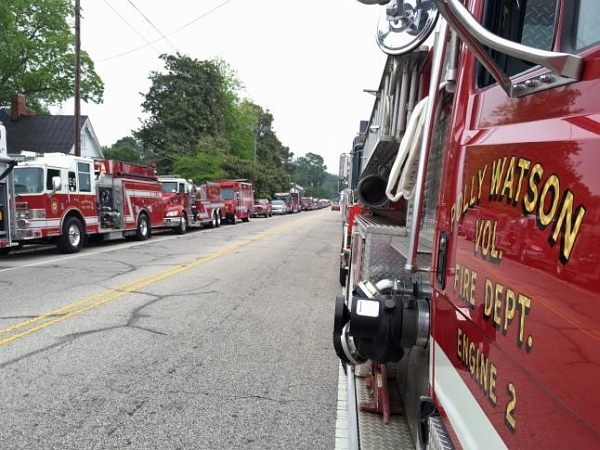
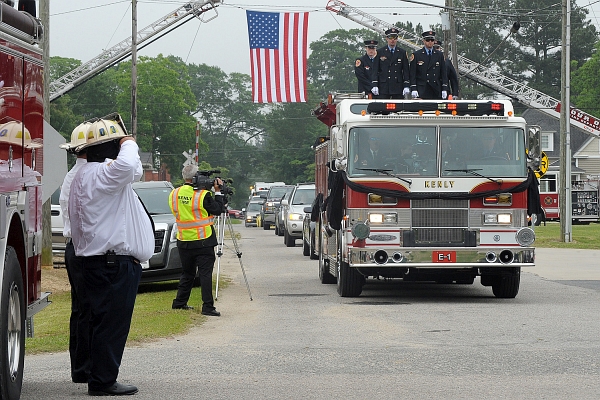
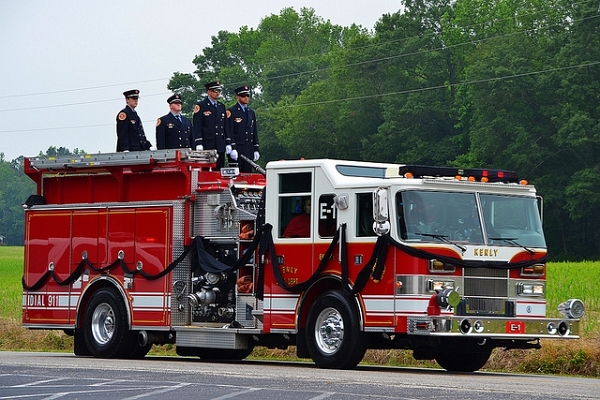
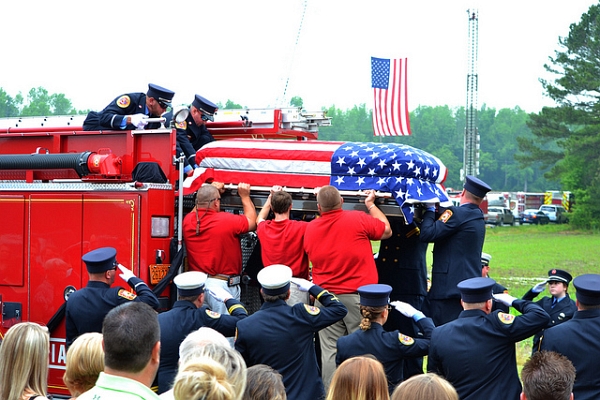
Arrangements were announced today [link expired] for Pineville Firefighter Richard Sheltra, who died in the line of duty at a strip mall fire in Charlotte on Saturday. Sheltra is the seventeenth line-of-duty death in (or from ) Mecklenburg County. The first were recorded in 1914, when Charlotte Fire Chief J. Harvey Wallace and Captain William B. Glenn were killed while fighting a barn fire, when dynamite exploded in a nearby house.

From 1914 to 2016, twelve members of the Charlotte Fire Department have died in the line of duty, and four members of the North Carolina Air National Guard. They were detailed to South Dakota and killed in an air tanker crash in 2012.

Mecklenburg County has also experienced the greatest number of LODDs in the state, followed by Forsyth County (14), Wake County (11), and Buncombe (10) and Cumberland (10) counties.


Top to bottom, left to right: Wallace, Glenn, Spittle, Mendenhall, Cathey, Westnidge, Black, Munday, Pettus, Long, Copeland, Franklin, Cannon, David, McCormick, Mikeal, Sheltra

From my fallen firefighter database:

Name Age Rank Death Department Narrative
J. Harvey Wallace 40 Chief 07/01/14 Charlotte Both killed while fighting a barn fire, when dynamite exploded in a nearby house.
William B. Glenn 49 Captain 07/01/14 Charlotte
George W. Spittle 39 Firefighter? 03/10/17 Charlotte Died of injuries sustained after the engine he was riding was struck by a street car, while responding to a call.
Robert E. Mendenhall 37 Captain 05/17/28 Charlotte Died after being ejected from the engine he was riding, after a collision with a grocery truck while responding to a county-assistance call.
W. Graham Cathey 24 Firefighter 01/08/29 Charlotte Killed when struck by a utility pole, while working on the fire alarm system.
Joseph S. Westnedge 30 Firefighter 03/06/34 Charlotte Died at Presbyterian Hospital in Charlotte, from injuries after the engine he was riding struck a tree, while responding to a fire.
Pruitt L. Black 29 Firefighter? 04/01/34 Charlotte Died after he tripped on his bunker pants and fell headfirst down the pole hole at Station 4.
James M. Munday 50 Assistant Chief 03/08/55 Charlotte Died of coronary occlusion in 800 block of East Trade Street.
Marshall G. Pettus 55 Captain 03/19/68 Charlotte Died at Mercy Hospital, thirty minutes after suffering a coronary occlusion.
Kent F. Long 44 Firefighter II 12/01/06 Charlotte Died after collapsing at Station 23 while exercising and after responding to multiple calls during his shift.
Michael W. Copeland 50 Captain 01/25/03 Charlotte Died of a heart attack at a live fire training exercise, after just stepping off the apparatus to take command of the incident.
Mark T. Franklin 46 Engineer 11/30/03 Charlotte Died of a massive pulmonary embolism as a result of a knee surgery to repair damage sustained while pulling hose at a fire on Apr 18, 2003.
Robert S. Cannon 50 Senior Master Sgt./Flight Engineer 07/01/12 NC Air National Guard Four members of the 145th Airlift Wing were killed when their Air Force C-130, carrying a modular forest firefighting system, crashed in South Dakota on the White Draw fire near Edgemont.
Ryan S. David 35 Major/Navigator 07/01/12 NC Air National Guard
Joseph M. McCormick 36 Major/Instructor Pilot 07/01/12 NC Air National Guard
Paul K. Mikeal 42 Lt. Col./Evaluator Pilot 07/01/12 NC Air National Guard
Richard Sheltra 20 Firefighter 4/30/16 Pineville Died as result of inhalation of products of combustion, while fighting a three-alarm fire at a strip mall.
Facebook Comments

New Oshkosh Striker 3000 Delivered at Airport

On Thursday morning, a new crash truck was delivered to Raleigh-Durham International Airport. The 2016 Oshkosh Striker 3000, 2000/3200/420/450#/460# plus Snozzle is first new ARFF rig since 2000, and the first lime apparatus in a quarter century.

The truck was purchased with 85% of funding from federal and state sources, and thus the safety yellow color. Which is a requirement of the program. Designated CFR 4, it will replace a 2000 Oshkosh T-3000, 1950/3000/420/450#. The airport is evaluating retaining the older truck as a reserve rig.

Here’s a video of the apparatus being unloaded:

View on YouTube

And a posed picture, before it was moved into a bay at the maintenance building.

See more photos, from both Legeros and RDU Fire-Rescue. Next steps including receiving and mounting equipment, and training of personnel from Oshkosh reps.

Read more about the truck and it’s features, in our prior posting.

Historical Perspective

Click once or twice to enlarge:

Photo credits, top to bottom, left to right: Durham Morning Herald, Lee Wilson, News & Observer, RDU Fire-Rescue, Dale Johnson, Lee Wilson, Pete Brock.

By my count, this is the tenth crash truck delivered to the airport:

  • 1946 International/Bean, likely Army Class 125, with high-pressure 50-60 GPM pump, 300/20 f.
  • 1969 International/Ansul Magnum 480 dry-chemical unit, 1350#/200 l.w.
  • 1959 Walter Class 1500, 1500/950/200 f. (obtained circa 1970)
  • 1973 Walter CB3000, 1500/300/500 f. (later rehabbed by CRES in 1990)
  • 1977 Walter B1500, 1000/1500/180 f. (later rehabbed by CRES in 1990)
  • 1989/1977 CRES/Walter B1500 , specs. TBD
  • 2000 Oshkosh TI-1500, 1500/1500/210 f./450#
  • 2000 Oshkosh TI-1500, 1500/1500/210 f./450#
  • 2000 Oshkosh TI-3000, 1950/3000/420 f./450#.

Not counting mini-pumpers and smaller trucks with dry chemical equipment:

  • 1952 Chevrolet pick-up with dry-chemical equipment, 450#/50 l.w.
  • 1959 Chevrolet pick-up with dry-chemical equipment, 400#
  • 1966 Chevrolet pick-up with dry-chemical equipment, 400#
  • 1979 Chevrolet/Reading/Ansul rescue truck with dry-chemical unit, 450#/50 l.w.
  • 1991 Ford/E-One mini-pumper, 250/200/30 f.
  • 2001 Ford F-550/4 Guys mini-pumper, 500/250/20 f.

Read more history.

Facebook Comments

Travel Report – Hose Reels & Hose Houses

In days of old, when crews were bold, and motor trucks hadn’t been invented, hydrant pressure was used to fight fire. Simply supply hose and nozzles–and a water system with hydrants–and your fire department was equipped. Reels of hose pulled by hand were common, and notably in small towns. (Though they were used in cities of all sizes as well.1)

Hose houses were small structures where reels and equipment were stored. Or just large boxes, placed beside fire hydrants, and containing hose, nozzles, and equipment. (Industrial and institutional facilities also employed such methods.)

Here are examples of both, as found while roaming Nevada last week. Top photos were taken at the Central Nevada Museum in Tonopah, and show a hand hose reel and hose house from the town of Manhattan, circa 1906. Bottom are hose houses and equipment therein in Belmont.

Belmont also has a fire station and, from the size of the building, at least a couple pieces of apparatus. Saw, say, four or six of these hose houses among the handful of streets that constitute the town center. There may have been a couple more.

Why have both? Belmont is the site of a ghost town, and appears to have a small quantity of residents. In the event of fire, any persons could connect and attack, and without waiting for the fire department to arrive. Or its presumably volunteer members to reach both the town and the station.

Click once or twice to enlarge:

1Hydrants and hand reels were added in Raleigh in 1887, and soon switched to horse-drawn hose wagons. Wendell used hand reels starting around 1919. Wake Forest added theirs in 1921. Zebulon added their reels about the same time.

Facebook Comments

Fallen Firefighter Research Resource – Find a Grave

On Saturday, May 7, 2016, the annual memorial service for North Carolina’s fallen firefighters will be held at Nash Square in downtown Raleigh. More about that event in an upcoming. ‘Tis also the season for Mr. Blogger to update his records, notably his fallen firefighter database.

Rediscovered a nifty research resource on that front. Find a Grave, a web site with burial records on 145 million (!) people. Did a cursory search on about a dozen fallen firefighters (across decades and centuries) and found records for eight.

What’s so great about burial information, you ask? For research purposes, the entries may also contain complete names, birth and death dates, biographical information, and narratives about their deaths. In one case, a scanned death certificate was also included.

My first findings?

Details about Robert Young, a volunteer fireman in Winston-Salem, killed in a race riot in 1918. (He’s being added to the state memorial this year.) Proper first name for John Gaskill, a New Bern fireman killed in 1904. My records always listed him as “Johnnie.” And a full name for Henry Barnett, one of three Asheville fireman killed in a train wreck in 1891, as they were returning from the state fireman’s convention.

Give it a whirl.

Facebook Comments

Raleigh Fire Department Newsletter – Spring 2016

Here’s the spring issue of the Raleigh Fire Department Newsletter–now in its tenth year of publication!–freshly posted to www.raleighfirenews.org. Contents include facilities updates for Station 6, Station 5, and the training center; FireWatch retooled for the web; annual stats and a year in review; firefighter awards; and retirements, promotions, appointments, and passings. The newsletter is a quarterly publication for personnel, retirees, and citizens. The editor is Mike Legeros. Thanks this issue to all content contributors! Read the new issue (PDF).

Facebook Comments

UPDATED – New Crash Truck Coming to RDU Airport

Note: See subsequent posting about the truck’s delivery on April 28, 2016.

Production is complete on the airport’s new 2016 Oshkosh Striker 3000, 2000/3200/420/450#/460# + Snozzle. It’s also the first lime apparatus since the 1990s. Here are some pictures from the pre-delivery inspection last week, shared by our friends at RDU Fire-Rescue. Delivery is expected next week. Click once or twice to enlarge. Then scroll down for specs, details, and more.

Production is underway on a new crash truck for Raleigh-Durham International Airport. Our friends at RDU Fire-Rescue have passed along some pictures and detailed information.

The 2016 Oshkosh Striker 3000 (with Snozzle!) will replace CFR 4, a 2000 Oshkosh T-3000. It was purchased by the airport authority with 85% of the funding from federal and state sources, via the Airport Improvement Program. The truck will be painted safety yellow, which is a requirement of the program. (The department’s fleet is presently white with blue striping.)

Check out these pics, which include a trio of similar trucks awaiting delivery to Charlotte. Then keep scrolling for specs and more information. Click to enlarge:


Bottom photo showing a trio of Strikers in production for Charlotte.


Stock picture. The RDU truck will be solid yellow.

Specifications

Engine Deutz TCD 16.0L V8, 670 HP, 1950 ft. lbs. of torque at 1400 RPM, US Tier 3
Transmission Allison 4800 EVS automatic
Suspension Oshkosh TAK-4 independent system
Pump Power divider driven Waterous CRQB, single stage, pump and roll capable, 2000 GPM at 240 PSI
Water 3000 gallons
Foam 420 gallons (3% AFFF)
Dry Chemical 450 pounds (nitrogen propellant)
Halotron 460 pounds (argon propellant)
Special Features Snozzle, 50 foot extendable boom, 500/1000/1250 GPM.
High volume, low attack bumper turret, 1250 GPM.
Driver s Enhanced Vision System (DEVS)

About the Snozzle

This is a first for the airport’s crash trucks. Called a High Reach Extendable Turret (HRET), it adds the ability to:

  • Flow 500 GPM (low flow), 1000 GPM (high flow), or 1250 GPM (with limited horizontal travel). Plus 250 GPM through the piercing tip. (The airport’s current crash trucks flow 300 GPM from the bumper.)
  • Flow water, foam, and dry chemical.
  • Deliver precise and controlled piercing over the wing, under cargo areas, and from high angles of aircraft.
  • Extend the reach of extinguishing agents, so the vehicle can be positioned away from escape slides and triage efforts.
  • Flow a full master stream at ground level, for such uses as extinguishing burning tires and/or hot brakes quickly and effectively.
  • Deliver a wide spray pattern to reach under an aircraft, for cooling fuel tanks and cargo areas.
  • Master stream can be adjusted to deliver a quick mass decontamination shower.
  • Lift up to 500 pounds.
  • Can be used as a stand pipe.

About the Driver’s Enhanced Vision System

This is another new capability for the airport’s ARFF units. DEVS is a moving map display that helps vehicle operators safely navigate in low visibility conditions. Such as rain, sleet, fog, or smoke from a fire. It displays the location of the truck on the airfield, and also provides alerts as the vehicle approaches runway holding markings and runway safety areas. (Called an Imbedded Runway Incursion Warning System.)

Additional features of DEVS are:

  • Waypoints and crash site information can be placed on the map for easier low visibility navigation.
  • Routes can be programmed into the system to avoid unsafe areas and for most efficient routing.
  • Ability to create geographic zones to avoid areas of construction and other obstacles.
  • Full internet access from within the vehicle.
  • Document storage gives personnel access to schematic drawings of aircraft, hazardous materials information, GIS maps, etc.
  • Allows for vehicle location tracking for incident commanders.

Production Status

The fire department just finished with their mid-construction inspection at the Oshkosh/Pierce plant in Appleton, WI. Their pre-delivery inspection is scheduled for mid-April.

Delivery is anticipated at the end of April. After it has arrived, two weeks of hands-on training will be provided by Oshkosh for all personnel. That training hasn’t been scheduled, and the timeframe for in-service is still being determined. Maybe by mid-June.

Airport administration, meanwhile, is evaluating retaining the current CFR4 as a reserve truck. (The fleet currently consists of front-line rigs only.) They’re also looking at replacing CFR 2 and CFR 3 in a future budget year.

Current Crash Trucks

The current fleet of ARFF apparatus at Raleigh-Durham International Airport:

  • CFR 1 – 2001 Ford F-550/4 Guys mini-pumper, 500/250/20 foam
  • CFR 2 – 2000 Oshkosh TI-1500 4×4, 1500/1500/210/450 pounds dry chemical
  • CFR 3 – 2000 Oshkosh TI-1500 4×4, 1500/1500/210/450#
  • CFR 4 – 2000 Oshkosh TI-3000 6×6, 1950/3000/420/450#

Plus support units including a 2001 Ford Excursion command vehicle (CFR 10), a 2015 Ford F-350/UPF brush truck 300/300/10 (CFR 12), and a 2015 Command Support Products foam trailer 1000/265×3.

Learn more about the airport fire department and its history on my web site.

Facebook Comments

Wake County EMS – Then & Now – 1976 vs. 2016

This is the third in a series of blog postings about Wake County EMS, and their celebration this year of their 40th anniversary. Read the first posting and second posting.

Wake County EMS – Then & Now

Comparing the trucks, the equipment, the medics, the call volume, the response areas, and more.

View the chart (PDF).

Facebook Comments

South Atlantic Fire Expo Golf Tourney – August 8-9, 2016

The South Atlantic FIRE RESCUE Expo moves to Charlotte this year (and next year). The annual golf tournament will be held on Monday, August 8, and Tuesday, August 9, at the Verdict Ridge Golf & Country Club in Denver, NC.

Shotgun start at 10:00 a.m. on Monday, and 9:00 a.m. on Tuesday. Plus practice rounds available Monday through Thursday that week. And a night of fellowship at the historic Charlotte Fire Department Palmer Building on Monday night, with food, drinks, annual drawings, and other prizes.

Tournament entry fee is $110. Registration deadline is August 1, 2016. See this flyer for more information. Visit the conference web site, for full details on the expo.

See you on the links!

Facebook Comments

10th Annual National Fallen Firefighters Golf Tournament – Monday, June 20

The Raleigh Fire Department Golf Committee has announced their hosting of the 10th Annual Golf Tournament and Fundraiser to support the National Fallen Firefighters Foundation (NFFF).

The tournament will be held on Monday, June 20, 2016, at Bentwinds Golf and Country Club in Fuquay-Varina. See this registration information.

And new this year, you can donate to the NFFF even if you don’t play in the tournament. Visit this web site to donate.

The National Fallen Firefighters Foundation needs your help more than ever before. In 1992, Congress created the NFFF. However, they did not allocate federal funding for the organization. Thus the Foundation survives on grants, donations, and corporate partners. In recent years, many NFFF grants have dissipated making donations more vital than ever. Please support this great organization.

How can you help?

  1. Go to the web site and donate.
  2. Send this information to all of your friends.
  3. Post the information on your Facebook page.
  4. Share this information with any organizations or companies you work with.
  5. Sign up with a team for the tournament
  6. Become a sponsor for the event.

Thank you for your support, for the families of our fallen brothers and sisters.

See this document for contact and event information.

2016-04-18-nfff

Facebook Comments

High Shoals Fire > North Gaston Fire

From a blog reader (thanks Greg), High Shoals Fire Department in Gaston County changed their name last year to North Gaston Fire Department. They are Station 21 in the county system. 

HSFD was incorporated as High Shoals Volunteer Fire Department Inc. on June 9, 1960. They changed their name to High Shoals Volunteer Fire and Rescue on January 27, 2009.

On August 26, 2015, they changed their name to North Gaston Volunteer Fire and Rescue. And again on October 9, 2015, to North Gaston Volunteer Fire and Rescue Inc.

From the department’s web site at http://firehouse21.com, they cover 16 square miles and 52 road miles in Gaston and Lincoln counties. They operate three engines (including a telesquirt), a tanker, a rescue, a brush truck, and a QRV.

Continue reading ‘High Shoals Fire > North Gaston Fire’ »

Facebook Comments