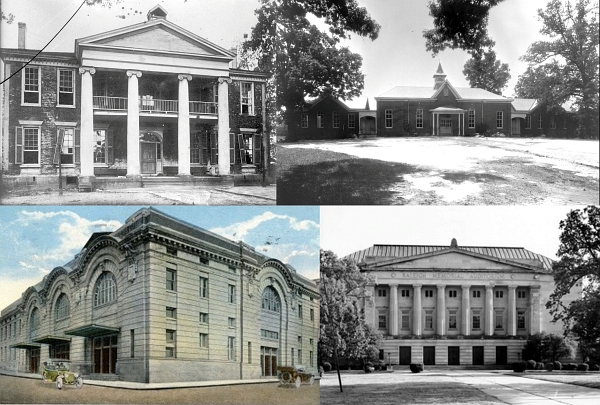
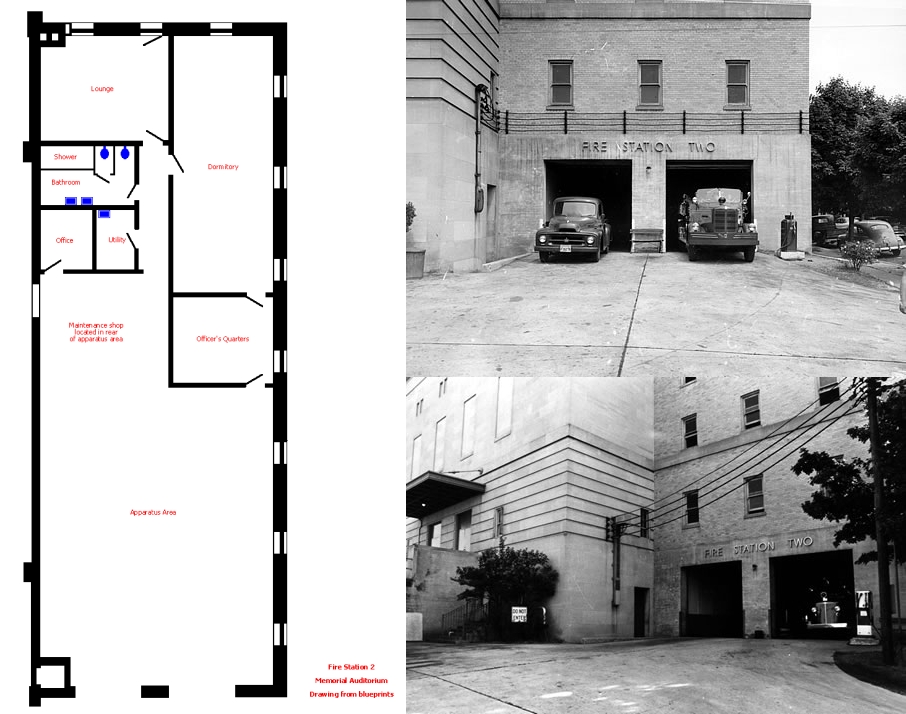
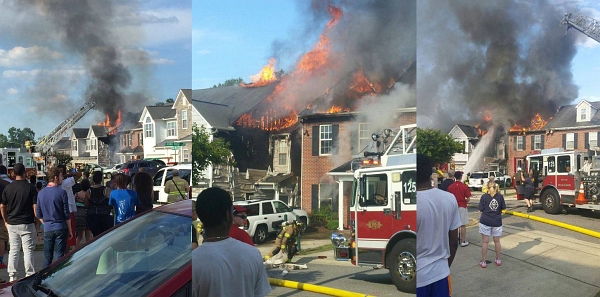
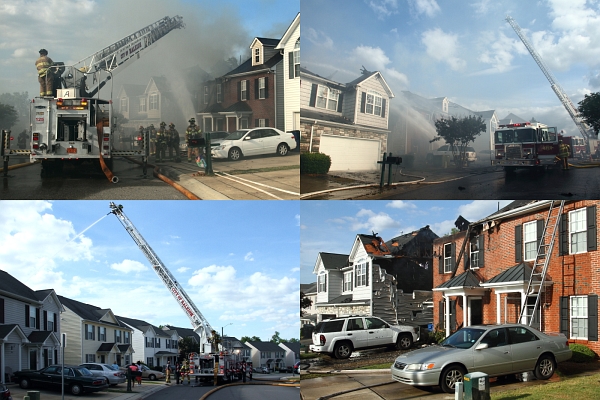
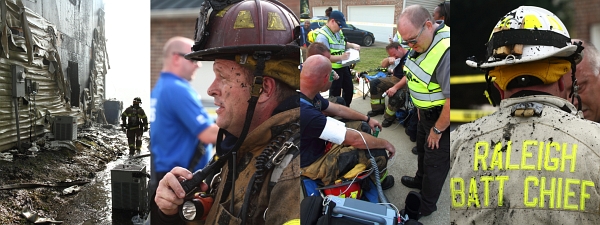
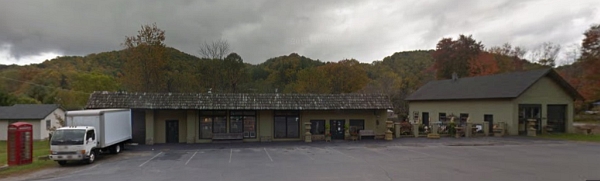
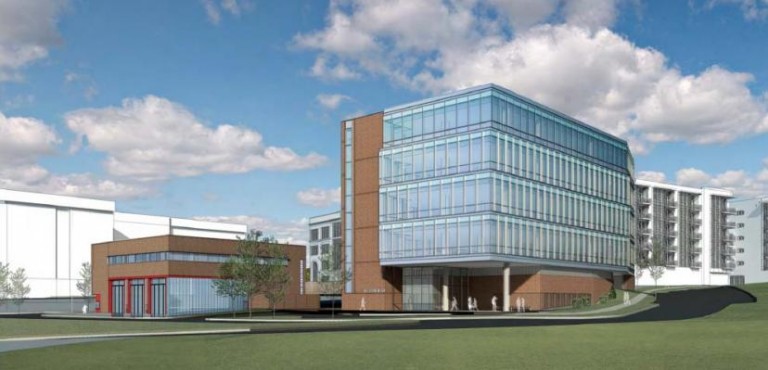
The Raleigh Fire Department has started producing short informational videos, in the style of the long-running (and now discontinued) FireWatch television series, which was broadcast on the local cable channel RTN. This clip is about the rebuilding of Fire Station 6. See this playlist for all videos to date.
Seagrave Deliveries in North Carolina – 1906 to 1951
June 23, 2019
Here’s a posting about the entire painter’s log, added to my new digital history library: https://legeros.com/blog/seagrave-paint-log-1906-1951.
March 20, 2016
What do the pages of the painter’s log look like? Here’s an example:

And here’s a page that mentions Tarboro, North Carolina. Page 119, from 1933. The notation says something like “April 18th, Mr. Wolfe J. Fleming and C. Babcock went to Tarboro, N.C., came back April 29th, 1933.” Why did they travel? Was their trip related to the rigs on that page, or the earlier Tarboro rig? No idea.
March 18
Here’s a list of Seagrave apparatus deliveries in North Carolina, as transcribed from a copy of the Seagrave Master Painter’s Record, which recorded all trucks painted at their plant in Columbus, OH, from May 1906 to September 1940, plus four entries from September 1942, and from September 1943 to December 1951. (There were gaps during World War II.)
It constitutes the only known record of Seagrave serial numbers, which were job numbers used for its own internal manufacturing and cost record system. (And when apparatus was returned for repairs or repainting, the notes note, the apparatus received a new serial number.)
How complete is this list? First, we’re hoping for zero transcription errors. Did multiple passes, so crossing fingers there. What about deliveries not record in the painters log? Such as rigs produced for our state during World War II. We’ll see if readers have information about other trucks, or supplementary information worth noting.
Also, the first entry in the book in Gastonia’s wagon. Two-horse wagon. How many of these are horse-drawn rigs? Guessing the first couple, tops. Thirty-two rigs are listed. That’s far fewer than American LaFrance delivered during the same period. ALF was the predominant builder of motor fire engines in our state, during that time. Somewhere over 350 rigs.
| Page | Code | City | Note | Number | Date | Color |
| 2 | Gastonia | 2 horse wagon | 1805 | 5/9/06 | ||
| 5 | T | Tarboro | 2273 | 1907 | ||
| 11 | Auto T | Asheville | 3198 | 1908 | ||
| 17 | City T | Statesville | 4849 | 9/10/10 | ||
| 22 | CW | Asheville | 6392 | 2/17/11 | CP red 4891 | |
| 22 | CW | Asheville | 6393 | 2/17/11 | White | |
| 27 | W | Smithfield | 8763 | 6/6/13 | SC PR 4891 | |
| 29 | T | Black Mountain | 10146 | 12/2/13 | 4891 | |
| 29 | T | Tryon | Spelled “Tyron” in log | 10145 | 12/3/13 | 4891 |
| 31 | Auto CW | High Point | 11176 | 6/6/14 | white | |
| 32 | City C T | Asheville | 12044 | 11/6/14 | CPR 4891 | |
| 68 | P | Charlotte | 34045 | 5/5/23 | CPR 4893 | |
| 82 | P | Hamlet | 42115 | 12/16/25 | CPR 4893 | |
| 89 | P | Smithfield | 47725 | 3/31/27 | DUCO 1623 | |
| 93 | Service T | New Bern | 49750 | 10/22/27 | DUCO 1623 | |
| 103 | P | Thomasville | 57445 | 6/19/29 | Battleship Gray | |
| 108 | B P | Graham | 60830 | 3/13/30 | 4893 | |
| 110 | B P | Rockingham | 61955 | 6/25/30 | 4893 | |
| 111 | P | Tarboro | extra fancy | 63420 | 9/24/30 | Battleship Gray |
| 121 | P | Durham | No. 2 | 78225 | 11/18/34 | 5137 |
| 121 | P | Durham | No. 5 | 78226 | 11/27/34 | 5137 |
| 121 | P | Charlotte | repaint / repair | 78255 | 12/15/34 | 5137 |
| 131 | P | Pinehurst | 88110 | 10/18/37 | 5137 | |
| 132 | P | Gastonia | 88080 | 11/2/37 | 5157 | |
| 137 | Quad T | Wilmington | 93140 | 2/13/39 | 5157 | |
| 141 | Ford P | Aberdeen | A4160 | 2/15/39 | Spec bk [book] | |
| 150 | Ford 500 | St. Pauls | B9900 | 2/9/44 | P & R____ Gold t____ [trim?] |
|
| 153 | 80.750 pump | Carthage | C4080 | 2/16/45 | Red | |
| 154 | J1000 P | High Point | C4815 | 9/_/45 | Red | |
| 177 | 66-750 | Gastonia | E2525 | 8/15/49 | Red | |
| 182 | J-1000 CB[?] | Charlotte | E8260 | 4/18/50 | Red | |
| 187 | J-1000 | Charlotte | F3055 | 5/10/51 | Red |
Abbreviations:
- C – Chemical
- P – Pumper
- T – Truck, service ladder
- W – Wagon, hose
- CW – Combination Wagon, chemical and hose
Color codes:
- CP – Coach Painter’s
- CPR – Coach Painter’s Red
New Org Chart for Wake County Fire Services
Wake County Fire Services has implemented a new organizational chart, with two new Deputy Director positions reporting to the Fire Service Director, a new Logistics Manager position, and a couple other changes. Let s chat with Fire Services Director Nick Campasano for a closer look.
The new structure was originally conceived by [prior Fire Services Director] Mike Wright, notes Campasano. It was designed to provide additional support for both the Fire Tax District and the county fire departments. Wright retired in 2014, as readers recall, and here s a great blog post about him and his career.

Above is the new organizational structure. Notable changes include:
- Repurposing the Director s two direct reports Chief of Training and Chief Fire Marshal as deputy directors, and with the functions of Chief of Operations and Fire Prevention/Response.
- The Chief of Operations still oversees training (and suppression and now logistics functions), but has additional duties including as liaison with the county fire departments, and supporting the OSFM rating reviews.
- Under Chief of Operations, a third functional area added. Operations (with a Logistics Manager position) joins the functions of Training and Suppression.
- The Logistics Manager oversees the apparatus purchases, inventory control, and other capital purchases, such as PPE, SCBA, and thermal imaging cameras. They are also responsible for developing the replacement schedules and apparatus maintenance programs.
- Under Fire Prevention/Response, one supervisor position removed under the functional area of Inspections. The inspectors now report directly to the Deputy Director.
The transition to the new configuration has been a gradual one, notes the Director. We hired Grant Vick as the Logistics Manager and Darrell Alford as the Operation Chief, back in the fall, says Campasano.
He adds that the Fire Training Chief position went away in December, when Ricky Dorsey retired. We are currently in the process of hiring a Fire Training Manager, so the reorg is still a work in progress.
Are future changes planned?
Says Campasano, At this time, there are no future changes contemplated. As the current organizational layout is very new, we would need some time to determine how it is working and what future tweaks it may need.
Other Details
Looking closely at the chart, here are a couple other things:
- The Rolesville Firefighter is the last of the county-paid firefighters. They re assigned to the Rolesville Fire Department and work full-time on a 24-hour schedule. Believe there were other funded firefighters in the past, with members who retired or left. Maybe readers can advise.
- The Emergency Response personnel are position that staff WC1. That s the emergency response unit that provides 24/7 support for fire departments in Wake County (both county-funded and otherwise), for functions of fire investigation, logistical support, etc.
- The Business Office is a department under Wake County EMS, but provides business related support to Fire Services. They handle contracts, payroll, invoicing, etc.
Comparing Old and New
Scope of Division
Wake County Fire Services has the mission of fire code enforcement, emergency response, fire investigations, [fire response] planning, fire training, and readiness for emergencies. They accomplish same in five program areas, reflected in the above org chart: Fire Services Administration, Fire Code Enforcement/Fire Prevention, Fire Services Training, Emergency Response, and Fire Suppression Operations and Support. They have seventeen full-time positions, and a budget in FY2016 of $1.669,732.
The division also works closely with nineteen fire departments in Wake County that provide service in the Fire Tax District. Thirteen departments are non-profit corporations, and six are municipal fire departments. The Fire Tax District includes most of the unincorporated areas of the county, along with the town of Wendell. These departments use a combination of full-time staff, part-time staff, and partially compensated volunteers. What’s the total count of personnel or units or stations, and/or area or population served? Maybe one of our readers will crunch those numbers.
Wake County has twenty-three fire departments total. The four not contracted by the county are Holly Springs, Knightdale, Raleigh, Raleigh-Durham International Airport. The North Carolina Forest Service also has a base in Wake County, and provides fire suppression services and support. Wake County Fire Services also provides support to these agencies as well.
Historical Perspective
Here s a blog post and accompanying research document (PDF) with a historical perspective on the Fire Services division. Some highlights:
- In 1953, the first rural fire departments were formed. Subsequent departments are organized to provide protection to people living outside of municipalities. Funding includes some support from the county.
- In 1954, first full-time Civil Defense director position was created. Later renamed Director of Civil Preparedness, then Emergency Preparedness, then Emergency Management. The office also provides support to the county fire departments.
- Between the 1950s and the 1980s, the Fire Marshal was created as role of the Director. When did this exactly happen? To be determined!
- By 1986, the Fire Marshal position is a function of the Director of Emergency Management, who was also EMS Director until 1980.
- In 1986, a full-time Fire Marshal position was created.
- In 1987 (on July 1), the division had four full-time positions, including two fire inspectors. When were the first county fire inspectors hired? To be determined!
- In 1988, a fire trainer position was created. This followed completion of the Wake County Fire Training Center in 1985.
- In 1989 (on July 1), the division had seven full-time positions. Three were added in January 1989.
- In 1990 (on July 1), the division was expanded to eight full-time positions.
- In 1992 (on July 1), the division had 11.5 positions.
- In 1994, Fire Marshal s Office was restructured, after a study of county fire protection recommended these actions: Hire a county fire administrator, who leads office with three divisions: Fire Marshal. Support Services, and Human Resources. Create two additional fire inspectors/investigators ASAP. More clearly define FM role and authority in area of emergency response.
- In 1995, the position was renamed Fire/Rescue Director.
- In 1998, the Wake County Fire Commission was formed, as an advisory board to both the Fire/Rescue division and County Commissioners. That function was previously served by the Wake County Fire Chief s Council, which had operated since 1963.
- In 1999, a single fire protection service tax district was created. Previously, county fire protection as financed through twenty-one separate fire tax districts.
- By 2011, the position was renamed Fire Services Director.
- During the 2000s and 2010s, the Fire Service Division has waxed and waned between 17 and 22 full-time positions. (During some of that time, Emergency Management was part of the division and included in that count.)
Wake County Fire Commission Meeting – March 17, 2016
The next meeting of the Wake County Fire Commission is Thursday, March 17, at the Wake County EMS Training Facility, in the lower level of the Commons Building at 4011 Carya Drive in Raleigh. The meeting starts at 7:00 p.m.
Agenda is below. View the meeting documents.
- Meeting Called to Order: Chairman Lucius Jones
- Invocation
- Roll of Members Present
- Items of Business
- Adoption of Minutes for January 21, 2016 Regular Meeting
- Adoption of Minutes for March 3, 2016 Special Called Meeting / Work Session
- Regular Agenda
- Approval of the FY 2016 Fire Services & Fire Commission Labor Market Study and Wake
County Fire Services Compression Study Data - Approval of the revised Wake County Fire Compensation Administrative Guidelines
- Approval of the FY 2016 Fire Services & Fire Commission Labor Market Study and Wake
- Information Agenda
- Fire Tax Financial Report
- Standing Committee Updates
- Administrative
- Apparatus
- Budget
- Communications
- Equipment
- Facility
- Staffing and Compensation
- Steering
- Training
- Chair Report
- Fire Services Director Report
- Operations Director Report
- Logistics Manager Report
- Other Business
- Public Comments
- Comments from the public will be received at the time appointed by the Chairman of the Fire Commission for 30 minutes maximum time allotted, with a maximum of 3 minutes per person. A signup sheet for those who wish to speak during the public comments section of the meeting is located at the entrance of the meeting room.
- Adjournment
- Next Meeting May 19, 2016
Rebuilding Fire Station 6 – Page Has Moved!
This blog posting has moved!
Please updated your bookmarks or links to: http://legeros.com/blog/rebuilding-fire-station-6
Redwood’s New Tanker
The Redwood Fire Department in Durham County recently received this 2016 Kenworth T-800/U.S. Tanker Patriot elliptical tanker, capacity 3000 gallons, plus pump. Designated Tanker 715. See more photos from Lee Wilson.
Updated – Details on Renovations of Fire Station 5
December 7
Project updates:
- Station 5 re-opened on November 10.
- Station 5 closed on April 11. Engine 5 was relocated to Station 6, as temporary quarters.
March 6
The Raleigh Public Record on Friday posted a story by James Borden, with a detailed look at the Fire Station 5 renovation project.
The $950,000 renovation was solicited for bids in January, and awarded to Engineered Construction in February, and permits issued by the end of the month. As the author notes, the city’s “certainly not wasting any time!”
Built in 1961, this is the second engine house at the corner of Oberlin Road and Park Drive. The original Station 5 was a two-story, single-bay structure that opened in 1926. It was located in the southeast corner of the station site.
Left to right, top to bottom: North Carolina State Archives photo, Sanborn Fire Insurance Map from 1950, News & Observer photo, Lee Wilson photo
Starting Soon
Construction should start in April, we’re told. Engine 5 will relocate to Station 6 for the duration of the project, which should be completed in six months. The companies will later swap locations, and Engine 6 will move to Station 5, for the rebuilding of Station 6, which is planned to start in 2017.
Here’s a summary of the renovations as noted in Borden’s story, from the original bid invitation:
Complete renovation of approximately 4,700 square feet located within an existing fire station. Work will include demolition and renovation of interior spaces, including casework and finishes, interior and exterior door replacement, exterior paint, exterior wall tuck-point, patch and penetration repair, new fire sprinkler, new fire alarm system, update to electrical and telecom systems, new mechanical systems, domestic water and sanitary sewer replacement, lighting replacement, and new security camera systems.
What’s all-new in these specs? Security camera systems, which are a first for a Raleigh fire station.
The author also tracked down the plans for the project, as posted on the web site of Riggs Harrod Builders. See those documents in this folder [no longer available, as of March 10, 2016].

Floor Plans
Here’s an annotated floor plan from myself. Yours Truly has intimate knowledge of Station 5, as he worked there on “A” platoon for a year-and-a-half, during his short stint as a Raleigh firefighter from 1989 to 1991. My “cube” was right under the buzzer. Click to enlarge:
And here’s the existing floor plan, for comparison. Click to enlarge:
Future Station Renovations
This is the first of a multi-year project to renovate numerous “legacy” fire stations in the city. The planned schedule appeared in the recently published Raleigh Fire Department 2015-2020 Strategic Plan (PDF):
| Fiscal Year | Design | Construction |
| FY16 | Sta 2, Sta 5 | Sta 5 |
| FY17 | Sta 10, Sta 15 | Sta 2 |
| FY18 | Sta 8, Sta 16 | Sta 10, Sta 15 |
| FY19 | Sta 9, Sta 17 | Sta 8, Sta 16 |
| FY20 | Sta 18, Sta 19 | Sta 9, Sta 17 |
| FY21 | Sta 4, Sta 20 | Sta 18, Sta 19 |
| FY22 | Sta 21, Sta 22 | Sta 4, Sta 20 |
| FY23 | � | Sta 21, Sta 22 |
How old are these fire stations? See this (outdated) fire station facility survey of mine. How about photos and histories? But of course. See my fire stations history page.
Vintage Image of Greensboro’s Power Truck
Found on eBay, vintage image of Greensboro’s lighting unit, which appeared in a 1954 ad for Onan.
Notes the accompanying ad copy, “built to the specifications of the [department], this power unit incorporates many new ideas. Both sides of the truc, for instance, hold identical equipment. Located in the many steel compartments are four 500-watt floodlights, five 150-watt hand lights, electric saws, suction fans, electric drills, two 300-feet reels of light cord, an acetylene cutting and welding outfit, and dozens of other items.”
Also, “Four more 500-watt floodlights are mounted on top of the truck on standards which can be raised to 4 1/2 feet above the truck roof.” And “power for all electrical equipment is supplied by an Onan heavy-duty, 10,000-watt, water-cooled electric plant. Its dimension allow it to be plced across the truck body behind the cab. The plant is started electrically.”
The truck chassis is a Dodge. Maybe readers know the model. Presuming 1954 model year. How long did the truck serve? Unsure. Might’ve had a chassis upgrade in the 1970s or 1980s. Recall a cab-over truck with a similar body.
Also, GFD operated a salvage unit beginning in the 1955. Here’s a blog archives article about that truck.

Vintage Photos of Camp Lejeune Engines
March 6
Updated with picture of Camp Lejeune Engine 3, also posted to the aforementioned Facebook group. 1973 Chevrolet/Ward LaFrance, 750/300. Photo credit again Raoul K. Denton Collection.
Raoul K. Kenton Collection via Fire Trucks at War on Facebook
March 4
Here’s a vintage photo of Camp Lejeune Engine 2, as posted to the excellent Fire Trucks at War Facebook group. Cited as a 750 GPM with 300 gallons of water. Looks like a 1970s Chevy chassis. Body by FTI, per reader comment below. Photo credit is Raoul K. Denton Collection.
Raoul K. Kenton Collection via Fire Trucks at War on Facebook
New Deliveries in Lee, Harnett, Johnston Counties
The Sanford Fire Department in Lee County is the latest local (er, area) department to place a new Rosenbauer in service. Their new Engine 204 at Station 1 is a 2016 model, 1500/500/50. Was placed in service on February 26. Lee Wilson photographed the new truck on Monday. See his pictures.
Lee Wilson photo
Meanwhile in Harnett County, Angier Black River has a new Spartan/Smeal, a 2016 pumper-tanker, 1500/100, that Lee photographed on Sunday. See those pics of Engine 944.
Lee Wilson photo
And in Johnston County, the Brogdon Fire Department has received their new Truck 2. It’s a 2016 E-One Typhoon pumper-tanker, 1500/750, that replaces an equipment truck and a front-mounted pumper-tanker. (Does that make it a rescue-pumper-tanker?) See Lee’s photos, also from Friday.
Lee Wilson photo
Who else has new trucks in the central Piedmont area?