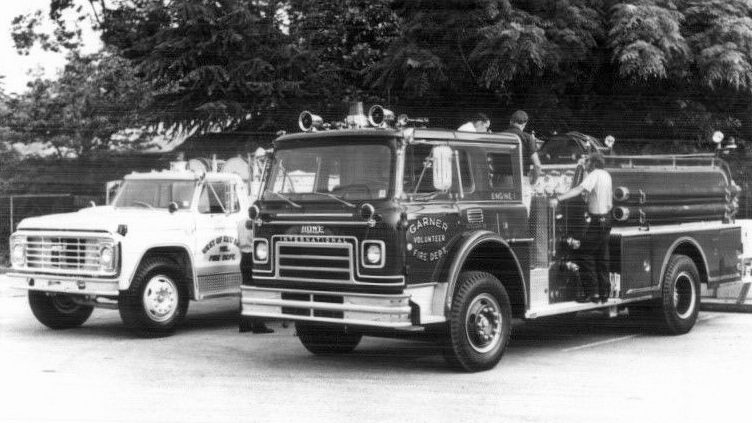
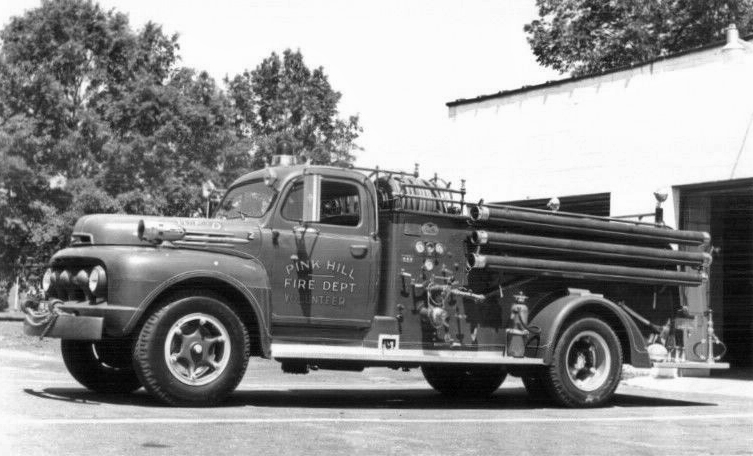
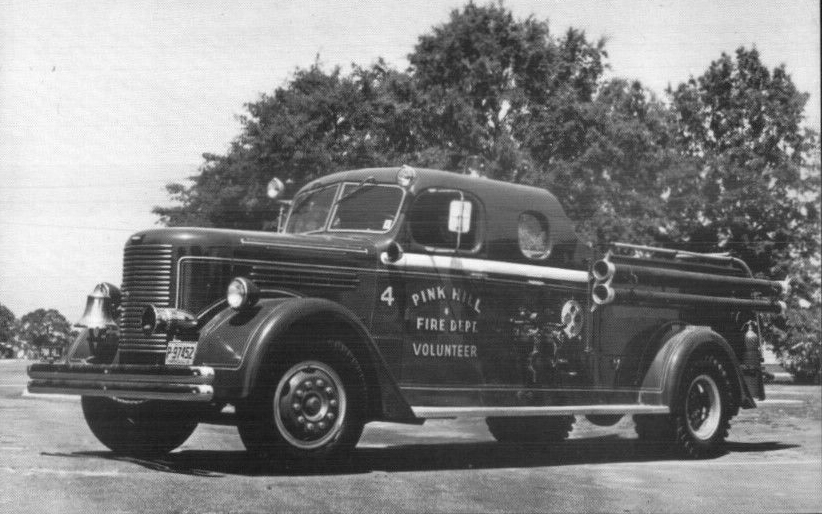
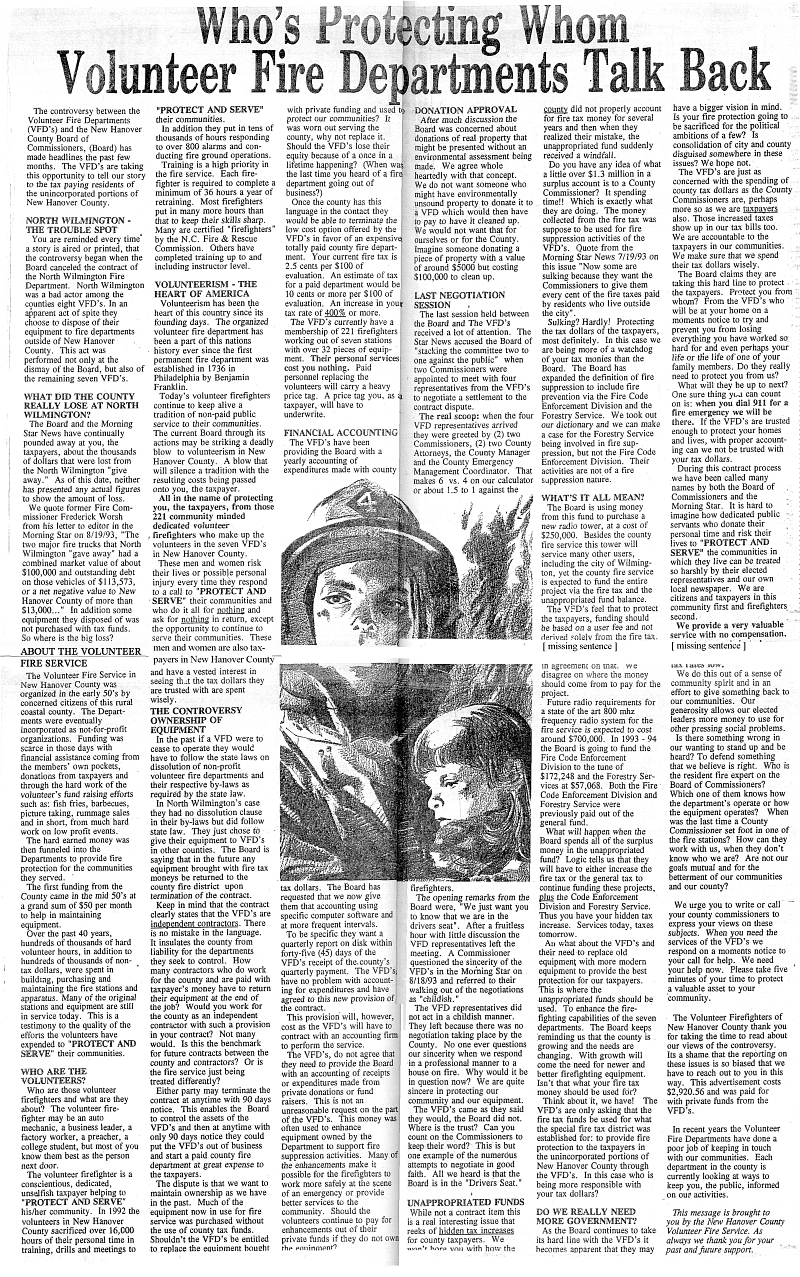
From the July-August 1973 issue of Hose & Nozzle.
Memo to self, update my blog history of Durham city/county rescue services.

From the July-August 1973 issue of Hose & Nozzle.
Memo to self, update my blog history of Durham city/county rescue services.

Presenting a deep-dive into Chapel Hill FD history, via a transcription of town minutes excerpts [both exact and paraphrased]**, originally recorded in typewritten form. Date of original unknown. Likely compiling all references to fires and fire protection, from the first decades of the town’s governance. Photographed from a copy in the CHFD archives, with optical character recognition via software prior to hand-corrections. Consider all typos mine!
** September 4, 2018 – Legeros subsequently compared these excerpts with the originally handwritten minutes. They are not always an exact match, and, in places, are missing a word, or have incorrectly interpreted a detail. May updated in the future, with annotations.
HISTORY OF FIRE DEPARTMENT
BOOK I – Page 630 – March 2, 1896
A petition of certain citizens proposed to operate a Fire Company if equipped by the Town was read & laid on the table. The project was looked on with favour but the municipal year was near its end with no funds, so it was thought not necessary to agitate the matter.
BOOK II – Page 76 – September 23, 1901
Board authorized the Finance Committee to purchase for the town a hook & ladder outfit for fire protection – the same to cost not exceeding $200.00. Town also authorized to provide a suitable place for housing it and the 2 reels of hose to be supplied by the University & a part of the fire protection outfit for joint use of Town & University.
May 12, 1902 – P.96
First Fire Chief: John O’Daniel elected. Also Fire Commission: W. S. Roberson, A.A. Kluttz & W. W. Pickard.
May 30, 1902 – P. 103
A fire limit established in view of the fact that no wooden buildings be erected except with approval of the Board of Aldermen.
July 14, 1902 – P.107
J. D. Webb submitted plans to Fire Committee for approval. Permit granted to Webb & Lloyd to erect a building in accordance with plans submitted.
Note: Plan sketch attached to P.107: 1 or 2 stories high, on Franklin Street. To be built of good brick & glass; tin roof; concrete floor in both stories. 30 or 40 ft high.
September 26, 1902 – P.112
Permission granted S. J. Brockwell to build a privy on his premises under the direction of the Fire Committee.
March 2, 1903 – P.119
Moved & seconded that a committee be appointed to confer with J. F. Maddry concerning a settlement on fire wagon, & to report back to Board. W. S. Roberson & W. W. Pickard appointed as Committee.
April 6, 1903 – P.120
J. Frank Maddry bid 190.00 for hook & ladder outfit.
Continue reading ‘Chapel Hill Town Minutes – 1896 to 1922’ »
From the Daily Tar Heel, January 12, 1941, via Digital NC / North Carolina Newspapers:
Airport Burns; Seven CAA Planes Destroyed
Defective Wiring Attributed Cause
By Bucky Harward
All ten airplanes and the hangar at the University airport were completely demolished last night between 7 and 8 o’clock by a fire which resulted from a short circuit and caused an estimated damage of $10,000 to $11,000.
The blaze started in the cockpit of a plane on which Bill Sharkey, an assistant mechanic, was working, quickly spread to the other planes in the hangar, ignited gas tanks and two drums of fuel oil, and within 30 minutes reduced the hangar and airplanes to smoking, twisted steel.
University officials promised last night that “the University flight training program will be resumed as soon as possible.”
Entirely alone at the airport, Sharkey, 18-year-old son of an instructor, was removing the gas tank from one of the new Piper Cubs. He deposited an electric droplight, connected by an extension cord to the wall of the hangar, on the cockpit seat from which the cushions had been removed.
Fire Starts
While working on the engine at the front of the ship, he noticed the reflections of flames on the wall of the hangar. Seeing flames spreading from the cockpit to the right wing and realizing that the highly inflammable fabric was burning too fast to use any of the available chemical extinguishers, he ran to remove the plane nearest the door 20 feet outside the hanger.
By the time he returned to the remove the first plane which now had space to reach the door, the flame had spread over its fuselage and wings so that it could not be gripped. Another of the closely-group ships had caught fire which fed rapidly on the tinder-like fabric.
Seeing that nothing else could possibly be done in the hangar, he ran out to find that the plane removed had either caught fire from sparks or the intense heat. The gas drained from the first plane [then] exploded within the hangar and the other tanks followed rapidly. While the explosions were still occurring, Sharkey phoned for the fire department from the office shack on the side of the hangar and began to drag out the parachutes.
Instructor Jesse Lassiter arrived and started to help him. Remembering that highly explosive acetylene tanks were just inside the hangar, Sharkey shouted a warning and the two ran a safe distance. Probably because of a cracked valve, the acetylene tanks failed to ignite, but the plane tanks were still exploding. The instructor and assistant had to stand by “while everything just went.”
Spectators began to gather and stayed to watch the fire die down. Since no water was available for fighting the blaze and the fire was too great to be extinguished by chemicals, the town fire department did not answer the call.
Seven of the ten planes were Piper Cub trainers belonging to the University. Three had been purchased only six weeks ago. The remaining three planes were privately owned. The University planes [that] one of those students owned are insured. Absolutely nothing is salvagable except possibly the motor of the plane removed.
Nothing remains of the hangar but the melted beams of the steel framework and the concrete foundation. The wooden weather boarding collapsed even before the composition roof caved in.
Several other items were lost in the fire. Two 50-gallon drums of fuel oil and the acetylene tanks aided the blaze. A $350 transit and other surveying instructions, a great number of WPA tools, grading notes and the original field drawing, all of which are being used in the recently begun $208,000 WPA project, were totally destroyed. Other equipment and mechanics’ tools were lost tool. Grading plans and the log books of several instructors were demolished, but had already been transcribed for the most part.
The small house directly behind the hangar contained student flight statistics and escaped the flames. As an extra precaution, the valuable records were brought into town and several men with fire extinguishers were stationed all last night to prevent flying sparks from igniting the house.
University officials did not give an accurate estimate of the damage last night.
Thirty-four of the 38 students enrolled in the fall training were supposed to complete the course by February 1 when 50 others are scheduled to begin flying.
The Wake County Fire Commission meets on Thursday, March 26, at the Wake County Emergency Services Training Center, 220 S. Rogers Lane, Suite 160. Meeting starts at 7:00 p.m. See supporting documents in the agenda packet.
Agenda
From excerpts of town minutes, as recorded as a nine-page typed document for the fire department.
Aug. 9, 1921 – P.154
Contract for new Fire House with J. T. Squires for $3,988. 18 X 40 ft. inside. Wall foundation to be 21″ thick; 1st story 13″ thick; 2nd story 8″ thick. 1st floor to be 4″ concrete, 1 part cement, 3 parts sand & 5 parts stone, etc. Stairway to be built in the usual way, with rail and bolsters. All woodwork to have two coats of good paint.
Plumbing: Shower bath of standard quality. Vitreous china toilet combination. One enameled iron sink with hose connection. Sewer to be standard cast iron from house to main.
Electric Wiring: Nine electric lights to be installed . Wiring to be conduit.
Middle of Columbia Street
Said fire station was built of brick. It was ordered erected in a meeting on August 4, 1921. The location was “the middle of Columbia Street just north of Rosemary Street.” The cost was approximately $4,000. Mayor J. S. Roberson appointed Dr. Pratt and M. W. Durham to serve with the Fire Committee as a Building Committee to “let contract and supervise construction.”
Here’s the building depicted in a Sanborn Fire Insurance map from 1925. See this January 2015 blog archives posting for more information about prior and later fire station locations. Click to enlarge:
Vintage Image
Here’s a vintage image of the building, circa 1920s. It was used until 1938, when a Town Hall and fire station was built beside this location, at the corner. Click to enlarge:

This month marks a grim anniversary–fifty years since the assassination of Dr. Martin Luther King Jr. on April 4, 1968. He was shot at a motel in Memphis and pronounced dead at 6:05 p.m. EST. Riots soon erupted across the state* and nation**. It was the greatest wave of social unrest in the United States since the Civil War, notes Wikipedia.
Beginning on April 4, the Raleigh Fire Department responded to dozens of reported fires over several days, and most of which were intentionally set. They were assisted and protected by the Raleigh Police Department.
Every available on- and off-duty city officer was deployed, along with dozens of state troopers, and other local law officers. The National Guard also responded, with 1,200 soldiers eventually patrolling city streets.
Daily curfews were enacted and enforced until April 10. The city also declared a state of emergency, which prohibited the sale of firearms and ammunition, and prohibited parades and demonstrations. The Governor also enacted a statewide ban on selling alcoholic beverages.
Continue reading a new retrospective of the events, through the lens of the fire and police response: https://legeros.com/history/stories/riots.
*See this blog archives posting which recounts riot-related incidents faced by fire departments around the state and a subsequent state training curriculum that was created.
**Rioting impacted over 100 cities across the country between April and May 1968. Over 45 people were killed and over 2,500 people were injured. Over 15,000 people were arrested.
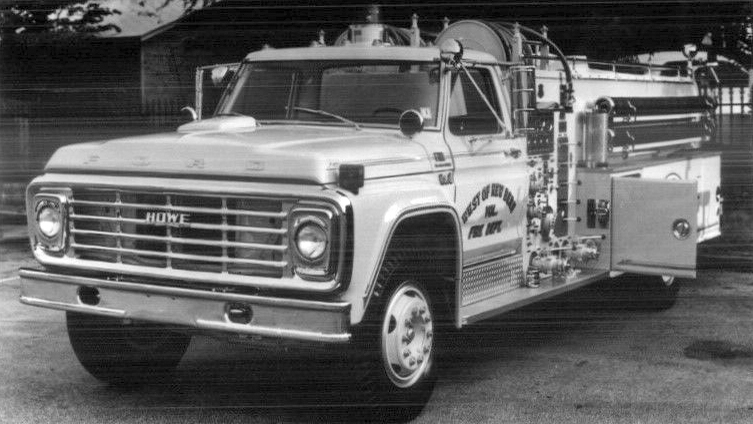
From somewhere around here. Can you name the department and the make, model, and year?
Or join the conversation over at Legeros Fire Line on Facebook.
Click to enlarge:
Chapel Hill’s new platform ladder was delivered last week. Tower 72 arrived on Thursday, March 29. Photographer Lee Wilson was there, and took these photos. See that album.
‘Tis a 2018 Sutphen Monarch, 1500/300/100′, with a one-off grey-over-Carolina-blue color scheme. (Grey to blend with the boom color.) It’ll be placed in service at Station 3, and replace Tower 73, a 2006 KME 1500/250/100’. (Maybe as early as this week?) The older truck will be sold.
Then some weeks later, it’ll be moved to Station 2, which is being rebuilt on South Hamilton Road. That project is nearing completion. When it opens, Tower 72 will be moved there. Here’s a prior blog posting about the project.
Engine 32 is currently operating from a temporary station, just around the corner on Finley Golf Course Road. Here are some photos of their temporary quarters.


Lee Wilson photos
Built in Ohio
The $1.3 million apparatus was constructed in Dublin, Ohio. It took ten months to build. The replacement was needed as the older ladder has been plagued with mechanical problems, as this town news release notes.
Funding for the truck was paid for by two-thirds general obligation bond funds that the Town Council approved on January 18, 2017. That issuance of bond funds also completed payment for new radios.
That completed a four-year project adding APX three-band radios for the entire Operations division. Crews previously carried three different radios on their apparatus, for communicating with mutual aid units.
Second Ladder Company
Chapel Hill is also adding a second ladder company. Around the time that Station 2 opens, Ladder 74 will be placed in service as Station 4.
It will operate the current Engine 35, a 2014 Sutphen Monarch 1500/500/75′ mid-mount aerial ladder. With existing personnel. No new firefighters have been hired. (If staffing drops below a set level on a given day, Engine 34 will go out of service.)
Here’s the run-down on station assignments, after Station 2 opens and the moves are completed:
Watch this space for updates.
Station Map
Here’s a map of the town’s five fire stations and their primary response areas. Click to enlarge:
History Notes
The town’s first ladder truck was a 1959 American LaFrance 900 Series mid-mount aerial ladder, 100-foot. The $90,000 cost was split with the university. And it may have been purchased as late as 1961. (Source: Daily Tar Heel, July 6, 1961.)
It was originally housed at Station 1, though it wasn’t staffed as a ladder company. One person was assigned to the truck, to drive to calls if needed.
(Sidebar: In 1975 [not 1971], the town merged the fire and police departments into a public safety department. Thus *all* apparatus may have operated with less than full staffing. Need to check. Fire and police were separated in 1993, and by that time, full fire companies were staffed.)
Chapel Hill’s next aerial apparatus was a 1972 Ford C/American LaFrance 55-foot telesqurt that operated at Station 3. It was bought for Station 1, but couldn’t fit in the doors, as the story goes. Only Station 3 could accommodate its size. The truck was nicknamed “Myrtle the Turtle” and was considered a hybrid engine/truck. when moved to Station 5, upon its opening in 2001. [ Truck didn’t serve as Station 5.] (Source: Oral histories.)
The first ladder company was activated after delivery of the town’s first aerial platform, a 1992 Simon-Duplex/LTI aerial platform, 1500/300/100-foot, rear-mount. It operated as Tower 71, starting at Station 4 and then moved to Station 3. It replaced the 1959 American LaFrance ladder.
Next was a 2001 HME quint, 1250/500/65-foot. And the first ladder truck with their signature Carolina blue colors. Operated as Engine 35. Then the three rigs, listed above: 2006 KME, 2014 Sutphen, 2018 Sutphen.
Here’s a full fleet listing (PDF) from a couple years ago. See also this virtual exhibit[1] from the Chapel Hill Museum.
[1] Link now broken, http://chapelhillmuseum.org/aperry/chfd/
Click to enlarge these photos:
Photo credits: Chapel Hill Fire Department, Lee Wilson, Mike Legeros
On January 6, 2018, the Raleigh Fire Department activated a fifth haz-mat station. On that date, personnel and equipment were transferred to Station 18 at 8200 Morgan’s Way.
Haz-Mat 5 and the foam trailer were moved there. They are a 2002 International/SVI medium-duty rescue truck re-purposed as a spill control unit, and a 2012 Combat Support dual-axle trailer with a high-capacity deluge gun and foam concentrate cells.
They join Engine 18, which operates a 2000 Spartan MetroStar/Quality pumper, 1250/500.

Four Air Monitoring Groups
Haz-Mat 5 has also been upgraded as an air monitoring group. This adds a fourth air-monitoring group, along with Haz-Mat 1 (Station 2), Haz-Mat 2 (Station 27), and Haz-Mat 3 (Station 8). See map below.
Station 18 has also been assigned the responsibility of air monitoring equipment maintenance.
Also in the pool of resources is Haz-Mat 4 at Station 22, the decontamination unit. However, they’re not part of an air monitoring group.
Engine 18 and Haz-Mat 5.
Backstory
Why the change? Though the number of technicians per platoon hasn’t change—total of 20—it provides an additional officer, and additional coverage when the Regional Response Team (RRT) has responded somewhere.
See, when a regional response is requested, HM2, HM3, and HM4 leave the city. Before, only HM1 remained available for city and county coverage. Now, both HM1 and HM5 are available for calls.
Foam trailer at Station 18
Fleet Listing
Here’s the complete listing of fire department haz-mat units:
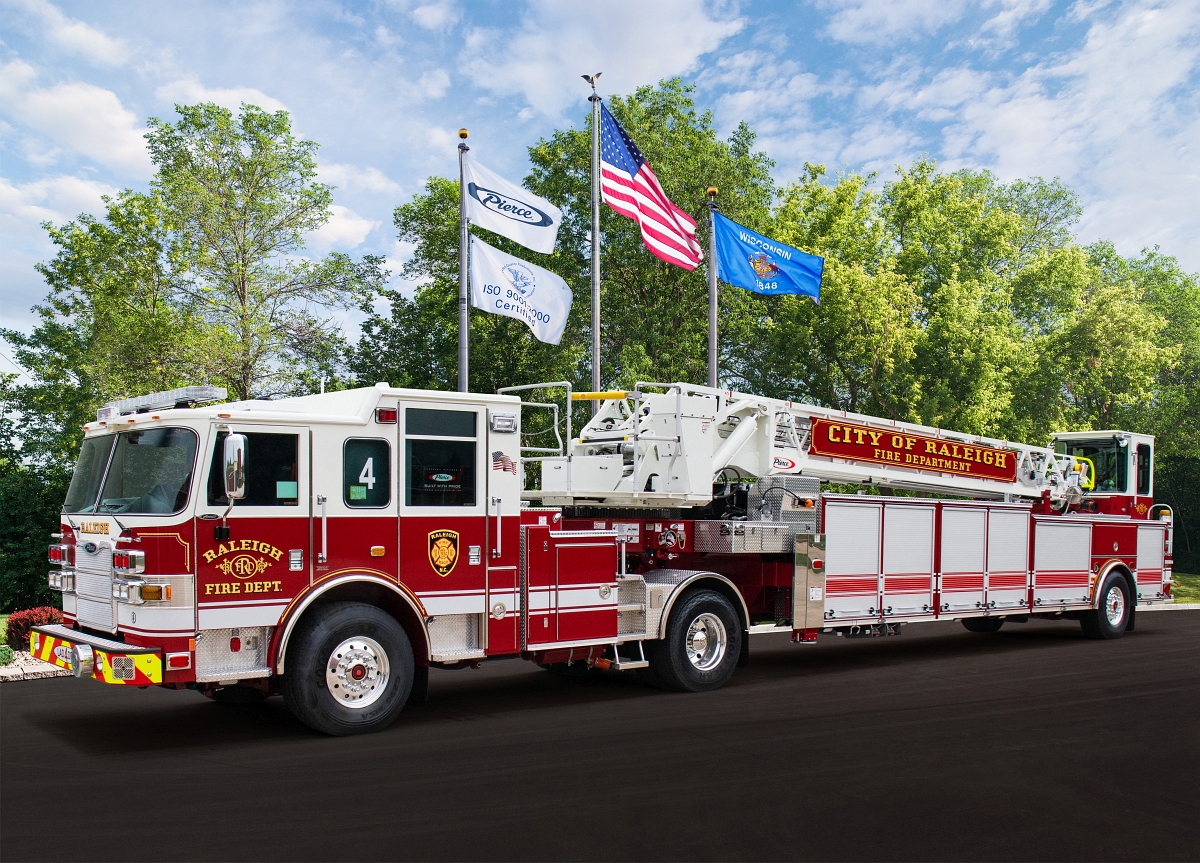
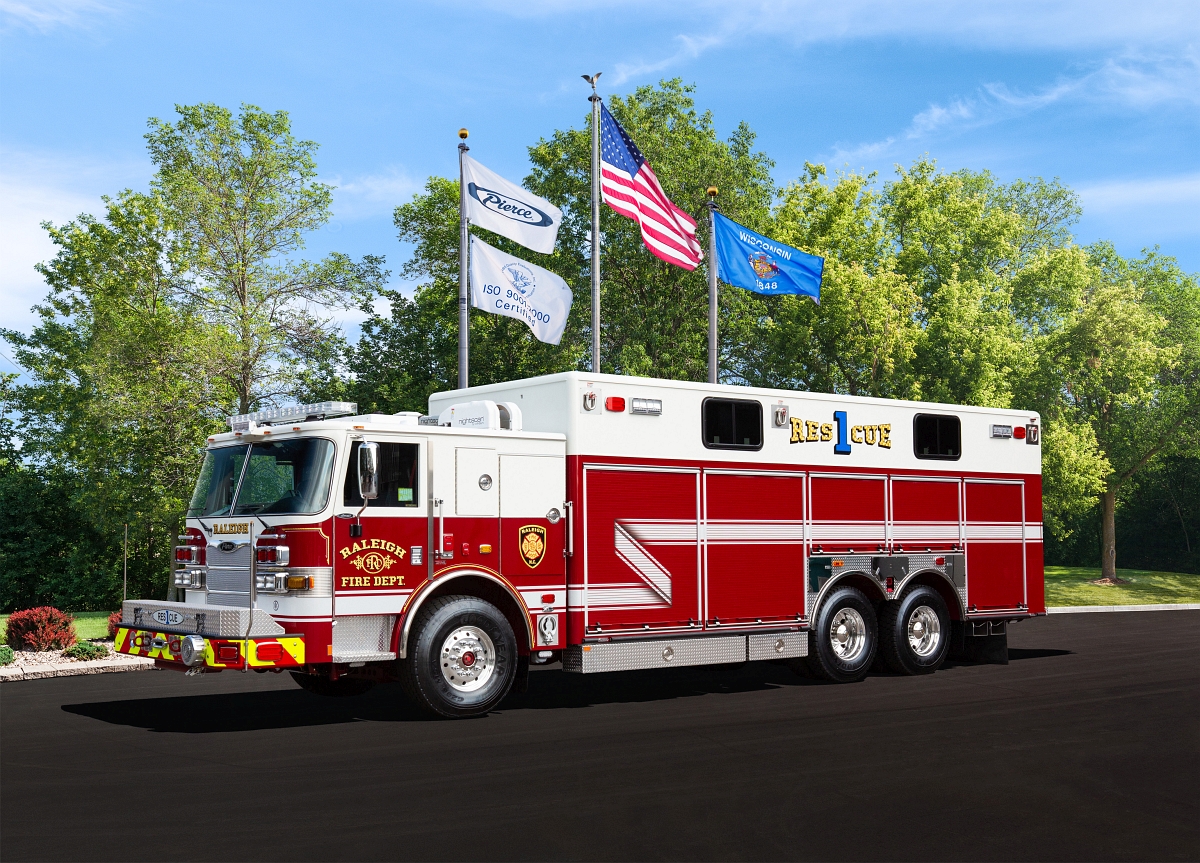
Note: Upon delivery of Raleigh’s new Pierce rescue this summer, Haz-Mat 5 will receive the reserve rescue, a 2007 Pierce Enforcer. The current Rescue 1 is an identical 2007 Pierce Enforcer.
Map of Air Monitoring Groups
This map shows the response areas of the four air monitor groups, located at Stations 2, 8, 18, and 27. Click to enlarge:
News from Asheville. They’re getting a tiller!
KME won the bid, over Smeal and Seagrave. 101-foot, stick only. No pump, no tank. Due for delivery this year. It’ll be Asheville’s first tiller since 1923, which was its first motorized TDA. Click to enlarge this proposal drawing:
Current Tiller Count
What’s the current tiller count, statewide?
Station 13
Construction of Station 13 on Broadway (east side of the street) at Magnolia will begin after completion of a department Master Plan. Three-story, two-bay engine house, we’re told. The third floor will likely house the Arson Task Force.
An engine house for the Montford/Richmond Hill area has been touted for years. And, if anything, could’ve been initiated after the Highland Hospital fire in 1948. The city’s deadliest fire occurred on March 10, 1948, and killed nine women including author Zelda Fitzgerald. (See my database for the state’s deadliest fires.)
The site was purchased in 2014. The project budget is $3.9 million, per the FY18 budget. For more info, this AshVegas story from 2015.
Engine 13 will be first-due to the Montford Area west, and second-due with Engine 7 to UNC-Asheville. It’ll also be the closest company to future Interstate 26, toward Woodfin. It’ll also respond downtown for structure fires, on the first alarm.
Two More Engines Coming
In February, new Engine 6 was delivered. The 2018 KME Predator, 1500/500 (read specs[1]) is the first of three engines with a new “RIT” (Rapid Intervention Team) spec, with more storage capacity, among other features. New Engine 1 is due after FDIC, where it’s planned for display. New Engine 9 is due in June.
[1] Link now broken, http://www.kmefire.com/featured-deliveries/pumper/gso-10612
Engine 6 is notable for historically styled lettering, similar to the design from their horse-drawn days. Notes an Asheville FD historian, apparatus is lately lettered “Asheville Fire Department” since 2010[1]. Previously rigs were lettered “Asheville Fire-Rescue” since 1989. Before then, they said “City of Asheville” since 1941.
Engine 6 is also the first Asheville rig equipped a RotoRay. Has three white LED lights. The coming tiller will also have one. It’s also the first with bumper lettering of “ENG6INE”.
[1] With one exception, the 1977 American LaFrance Century Snorkel was also lettered “Asheville Fire Department”.